How Are Retail Spaces Affected by Biophilic Design?
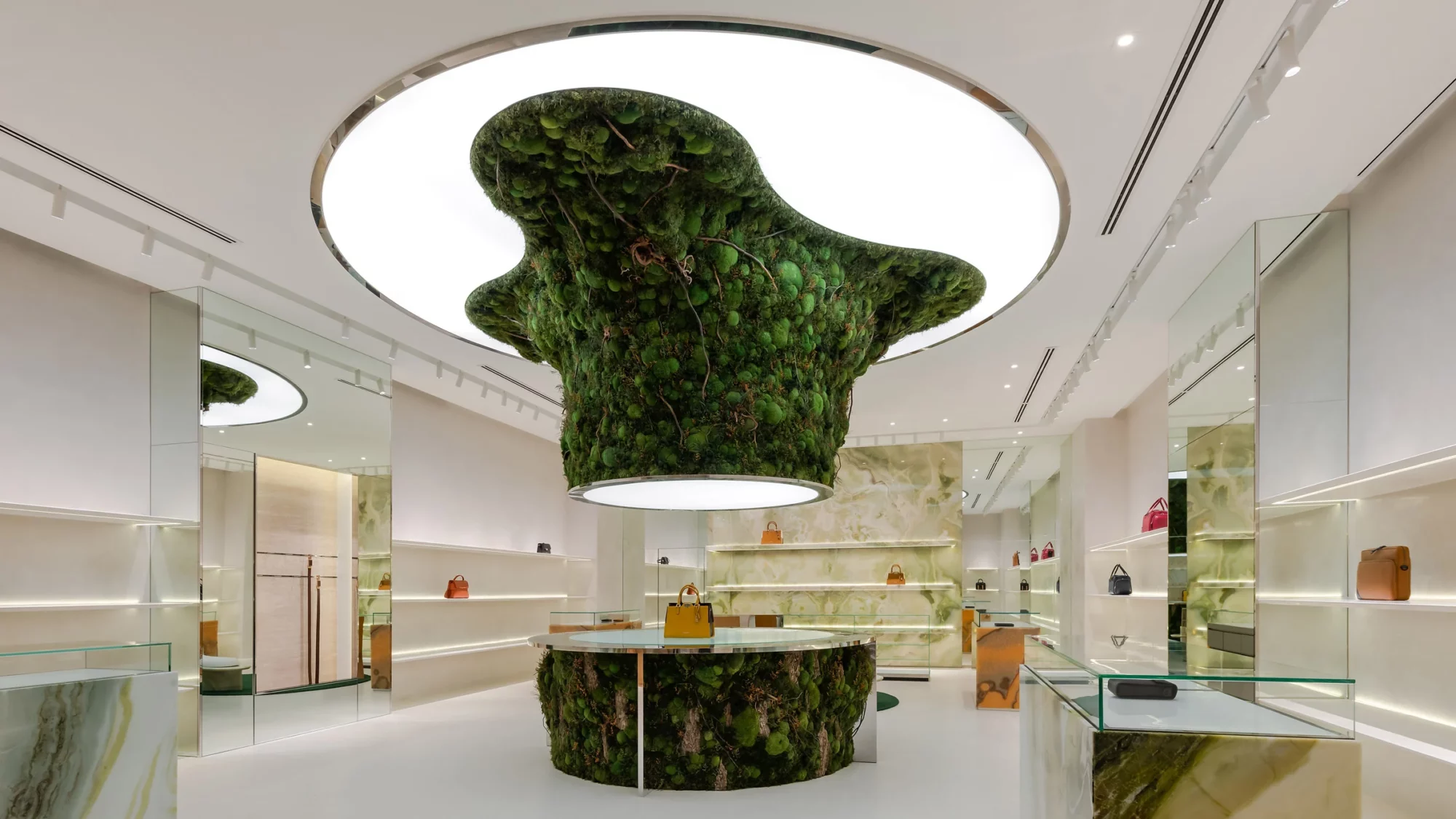
In an era where online shopping is just a click away, brick-and-mortar stores are under pressure to offer something beyond mere transactions. Enter biophilic design—a concept rooted in humanity’s innate affinity for nature. Coined by biologist Edward O. Wilson, the term encapsulates how environments inspired by natural elements can enhance human well-being. In retail spaces, biophilic design is no longer a novelty but a strategy to captivate customers, elevate employee morale, and drive business success.
The Principles of Biophilic Design
Biophilic design goes beyond sprinkling a few potted plants around. It’s about creating spaces that evoke a visceral connection to the natural environment. Three key principles make this possible:
Natural Elements
Incorporating natural elements such as greenery, water features, and natural light engages the senses and evokes a sense of calm. For instance, Lululemon’s flagship stores often feature living walls and skylights, reducing the need for artificial lighting and enhancing the customer experience.
Patterns and Materials
Using natural materials like wood, stone, and biomorphic patterns emulates the randomness of nature. Retailers like Apple blend smooth wood finishes with expansive glass to create harmonious retail spaces that integrate nature seamlessly.
Sensory Connections
Lighting that mimics natural daylight and sounds like water trickling creates appealing spaces. These elements establish a visual connection with nature and promote mental and physical health, reducing the need for artificial lighting.
By integrating these biophilic design principles, retail spaces transform into environments that not only attract but also retain customers, encouraging them to linger and explore.
Impact on Customer Behavior
Imagine walking into a store with a green canopy overhead, sunlight streaming through skylights, and the gentle trickle of water in the background. You’re likely to feel relaxed, engaged, and in no rush to leave. Research supports this: a study by the Journal of Retailing found that biophilic design increases dwell time by up to 30%.
Example of Biophilic Design
Take Starbucks Reserve Roasteries, for instance. These stores feature lush greenery, natural wood counters, and open spaces, encouraging customers to immerse themselves in the ambiance. The result? Customers spend more time in the store, leading to an increase in sales and a more positive shopping experience.
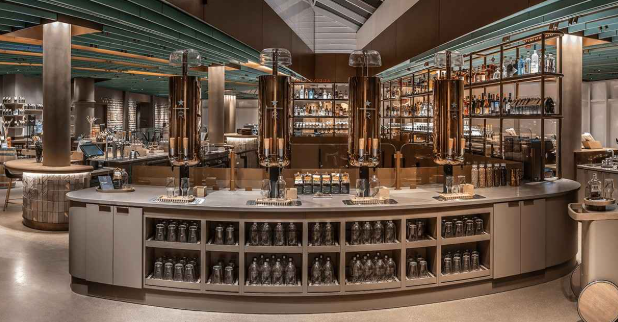
Starbucks Reserve Roasteries feature lush greenery, natural wood counters, and open spaces.Starbucks Reserve Roasteries, Image Source: Tasteofhome.com
Biophilic design improves the shopping experience by subtly influencing buying behavior. Calming environments reduce stress, which lowers decision fatigue, making customers more likely to make purchases. This psychological benefit, coupled with the visual allure of biophilic elements, creates an irresistible retail design.
Employee Well-being and Productivity
Retail staff are the backbone of any store, and their well-being directly impacts customer satisfaction. Biophilic design in retail contributes to healthier, happier employees by reducing stress and promoting mental clarity. A report by the World Green Building Council highlights that workplaces with biophilic elements see a 15% boost in productivity.
Biophilic Architecture in Office Spaces
Consider the Amazon Spheres in Seattle, which double as retail and office spaces. Filled with over 40,000 plants, these commercial spaces provide a sanctuary for building occupants. The result? Higher engagement, creativity, and well-being among employees.
When employees feel connected to their environment, their interactions with customers naturally improve. A friendly smile, genuine assistance, and attentive service can make all the difference in a retail setting.
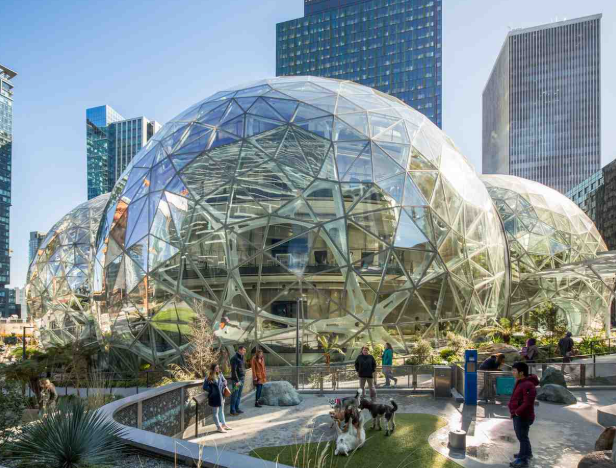
The Amazon Spheres, housing 40,000 plants, enhance employee engagement, creativity, and well-being in their dual-purpose retail and office spacesThe Amazon Spheres, Image Source: ArchDaily.com
Challenges and Considerations
While the benefits are compelling, implementing biophilic design isn’t without its challenges. The initial cost of incorporating living walls, natural features, and expansive windows can be prohibitive. Maintenance is another concern—plants need care, and water features require regular cleaning.
However, innovative biophilic design solutions exist. Artificial green walls offer the visual appeal of nature without the upkeep. Retrofitting older buildings with modular systems can make biophilic design more accessible. For example, the Westfield Shopping Centre in London seamlessly integrated biophilic elements into its existing architecture, creating a lush, inviting atmosphere without major structural changes.
Future Trends in Biophilic Retail Design
As technology and sustainability continue to advance, biophilic design in retail spaces is poised for evolution. Augmented reality (AR) could bring virtual gardens into commercial spaces, offering an immersive connection to nature without physical constraints. Sustainable materials, such as recycled wood or biodegradable fabrics, are set to play a more significant role, aligning with consumers’ growing environmental consciousness.
Biophilic Design Aims for Innovation
The future also promises smarter integration of biophilic design elements. Imagine a store where lighting adjusts to mimic the natural circadian rhythm or where indoor air quality is enhanced by advanced green building technologies. These innovations will make retail environments not just places to shop but destinations to recharge and reconnect with nature.
Conclusion
Biophilic design bridges the gap between commerce and connection, creating retail spaces that resonate with both the heart and the wallet. By prioritizing natural elements, sensory engagement, and well-being, retailers can craft environments that captivate customers and energize employees.
As we move toward a more nature-conscious world, the question isn’t whether to adopt biophilic design but how creatively it can be implemented. As architect Frank Lloyd Wright once said, “Study nature, love nature, stay close to nature. It will never fail you.” Let this philosophy guide your next project, whether you’re a student drafting ideas or a professional shaping spaces that inspire.The future of architecture is bright, but are your skills keeping pace? Kaarwan's architecture-specific courses provide you with the knowledge and tools to confidently navigate the AEC industry. Gain valuable insights, master in-demand software, and stand out with designs that impress!
FAQs
- What is biophilic design in retail?Biophilic design in retail incorporates natural elements like greenery and light into store layouts to improve customer experience and create inviting spaces.
- How do biophilic design principles improve retail spaces?They enhance customer engagement, reduce stress, increase dwell time, and create visually appealing environments that boost satisfaction and sales.
- What are examples of natural elements in retail design?Examples include living walls, natural lighting, water features, and materials like wood or stone, evoking a connection with nature.
- What are the benefits of biophilic design for retailers?Benefits include happier employees, improved mental well-being, enhanced customer experiences, and increased revenue from extended shopping durations.
- How can retailers implement biophilic design cost-effectively?Use affordable options like artificial green walls, nature-inspired décor, maximizing natural light, and adding small water features or indoor plants.