Landscape Lighting Techniques
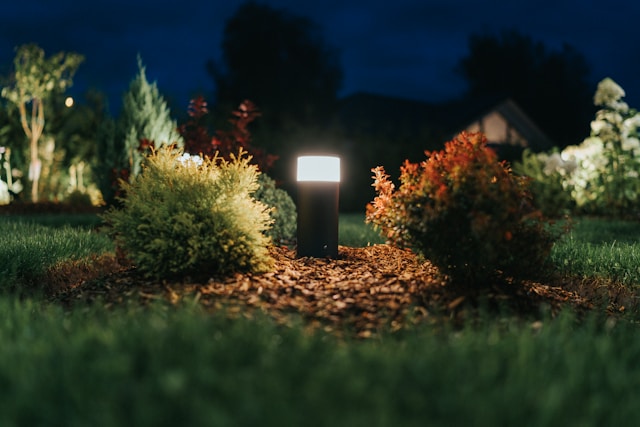
Landscape lighting plays a crucial role in extending the usability, safety, and visual appeal of outdoor spaces beyond daylight hours. In architectural design, it is not merely about illumination but about shaping spatial experience, highlighting elements, and creating atmosphere. Through strategic placement and direction of light, designers can emphasize textures, define forms, guide movement, and establish hierarchy within a landscape. Different lighting techniques are used to achieve specific visual effects—some mimic natural conditions, while others dramatize architectural and landscape features. From soft, diffused lighting that recreates moonlight to sharp, directional lighting that casts bold shadows, each method contributes uniquely to how a space is perceived at night.
Understanding these techniques allows architects and landscape designers to create outdoor environments that are both functional and emotionally engaging.
Moonlighting
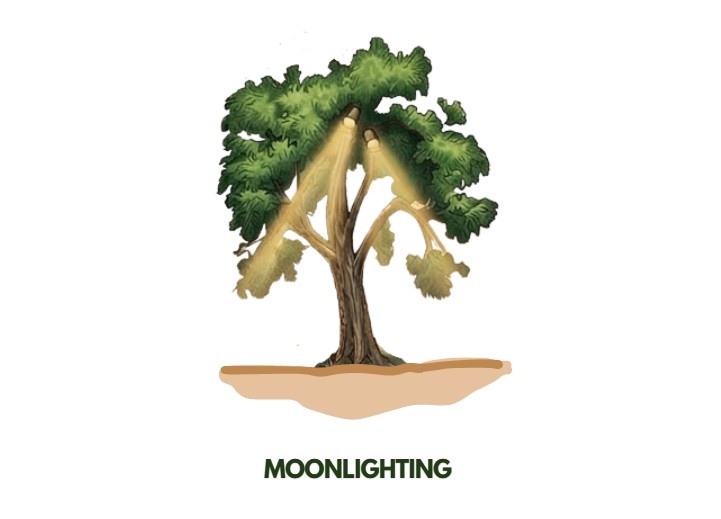
Moonlighting is a technique where light fixtures are mounted high within trees or elevated structures to cast a soft, diffused illumination downward, closely mimicking the effect of natural moonlight. In landscape design, this approach creates a subtle wash of light across pathways, lawns, and planting beds without producing harsh glare. The filtered light passing through foliage introduces gentle shadow patterns, enhancing the natural character of the landscape. Architecturally, moonlighting is used to maintain a low visual impact while still ensuring visibility and safety, making it ideal for residential gardens, parks, and pedestrian pathways where a calm and ambient nighttime atmosphere is desired.
Silhouetting
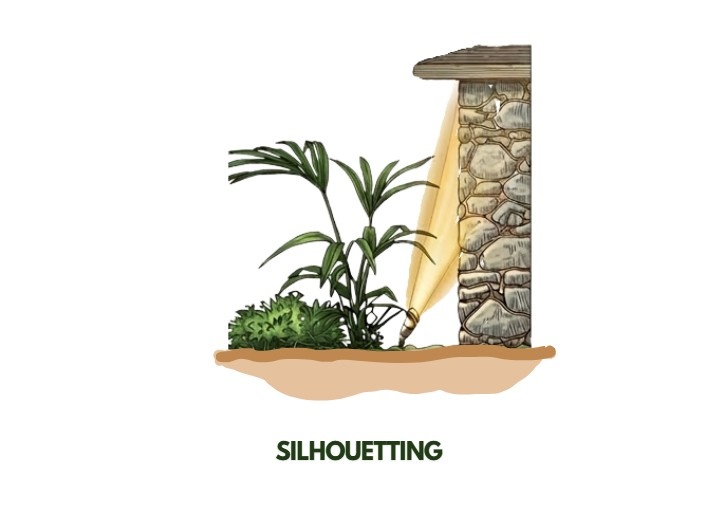
Silhouetting involves placing a light source behind a plant or object, directed toward a vertical surface such as a wall, so that the object appears as a dark outline against an illuminated background. This technique emphasizes the form and profile of landscape elements rather than their surface detail. In architectural landscapes, silhouetting is particularly effective for highlighting sculptural plants, trees, or built elements with distinct shapes. It creates a strong visual contrast and can be used to establish focal points or enhance the perception of depth within a space, especially in courtyards, boundary walls, or façade-adjacent planting zones.
Backlighting
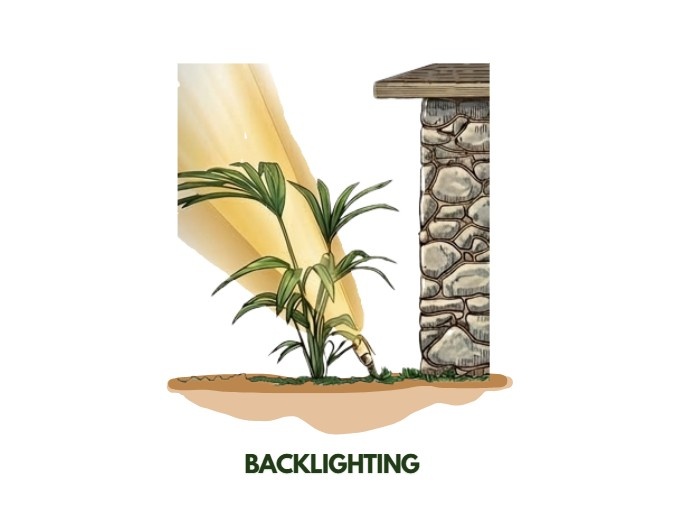
Backlighting is achieved by positioning light sources within or behind planting masses without necessarily projecting onto a solid backdrop, allowing light to pass through foliage and partially illuminate it. This technique reveals the translucency, layering, and depth of plants, creating a soft glow that enhances the spatial richness of the landscape. In architectural applications, backlighting is often used in dense planting beds, around feature trees, or near semi-transparent elements where designers want to create a sense of depth and subtle visual intrigue rather than sharp contrast. It is particularly effective in contemporary landscapes where layered compositions are emphasized.
Cross Lighting
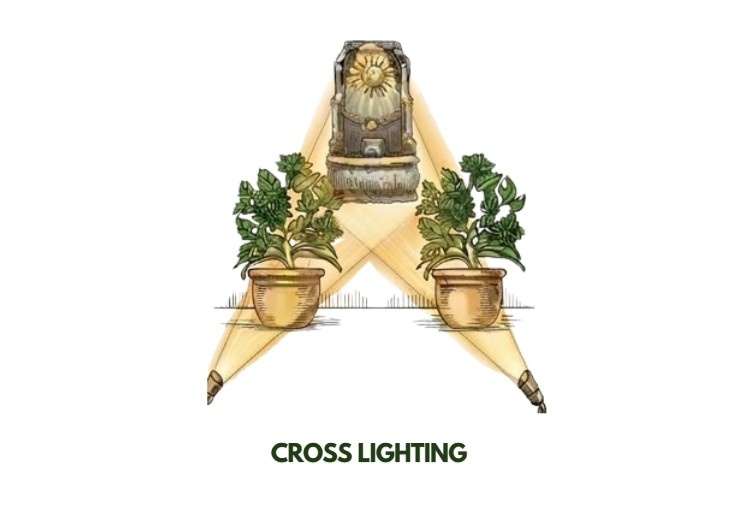
Cross lighting uses two light sources placed at different angles to illuminate a single feature or planting area. This technique reduces harsh shadows and enhances the perception of texture, volume, and three-dimensionality. In landscape architecture, cross lighting is commonly applied to trees, sculptures, or textured surfaces where a single light source would appear flat or overly dramatic. By balancing light from multiple directions, designers can achieve a more evenly lit composition while still retaining depth and visual interest, making it suitable for plazas, feature zones, and high-visibility outdoor spaces.
Grazing
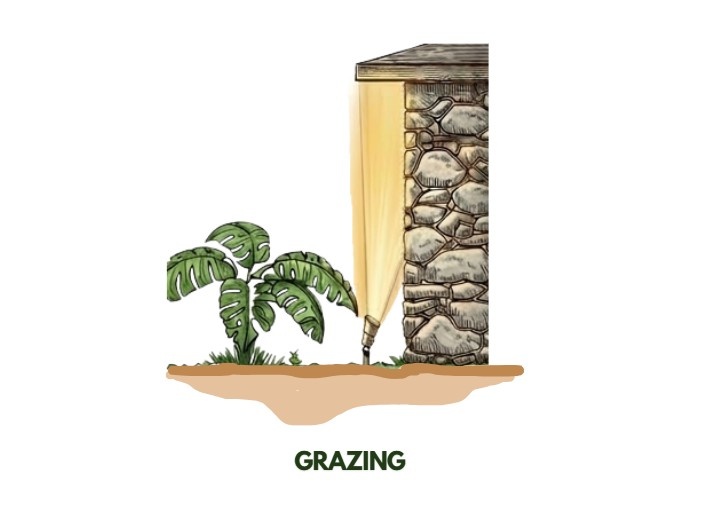
Grazing involves placing a light fixture very close to a vertical surface and directing the light upward or along the plane, so that it “grazes” the surface. This technique highlights the texture and relief of materials such as stone walls, textured concrete, or even dense vertical planting systems. In landscape design, grazing is used to accentuate materiality and craftsmanship, bringing out shadows within surface irregularities. Architecturally, it reinforces the tactile quality of surfaces and is often used in boundary walls, retaining walls, and façade elements to create a dramatic and refined nighttime appearance.
Shadowing
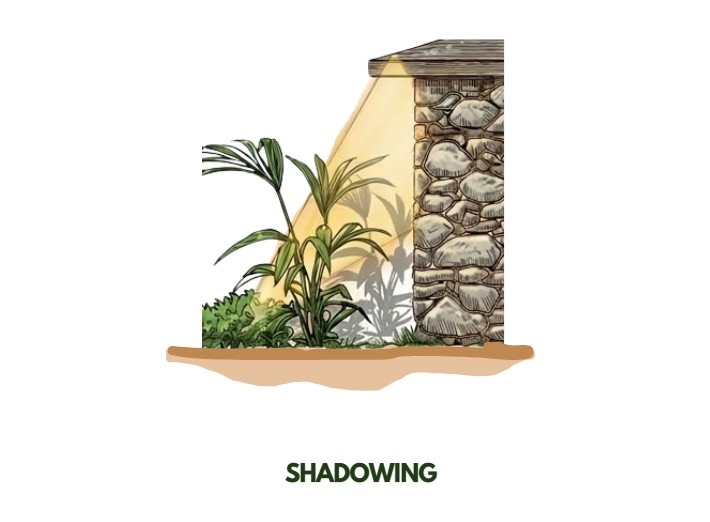
Shadowing is created by placing a light source in front of an object so that it casts shadows onto a surface behind it. Unlike silhouetting, where the object itself appears dark, shadowing emphasizes the projected shadow patterns rather than the object directly. In landscape design, this technique is often used with plants or sculptural elements to create dynamic and artistic compositions on walls, screens, or ground surfaces. The resulting shadows introduce movement and visual interest, making the space feel more engaging and layered. Shadowing is particularly effective in courtyards, feature walls, and intimate outdoor settings where visual storytelling through light becomes a key design element.
Landscape lighting techniques are essential tools in shaping the nighttime identity of outdoor spaces.
Conclusion
By carefully selecting and combining methods such as moonlighting, silhouetting, backlighting, cross lighting, grazing, and shadowing, designers can control how landscapes are perceived after dark. Each technique serves a distinct purpose—whether it is creating ambient illumination, emphasizing form, revealing texture, or adding depth and drama. When integrated thoughtfully, these lighting strategies enhance not only the aesthetics of a space but also its usability and emotional impact. Ultimately, effective landscape lighting transforms outdoor environments into immersive experiences, reinforcing the connection between architecture, nature, and human perception.