Ever wonder how designers produce amazing, natural forms that seem to challenge gravity? Combining parametric design tools such as Grasshopper with Kangaroo Physics lets builders replicate real-world forces, therefore improving buildings for both aesthetics and efficiency. Knowing Kangaroo Physics in Grasshopper can help you approach architecture whether your goal is professional skill refinement or student exploration of computational design.
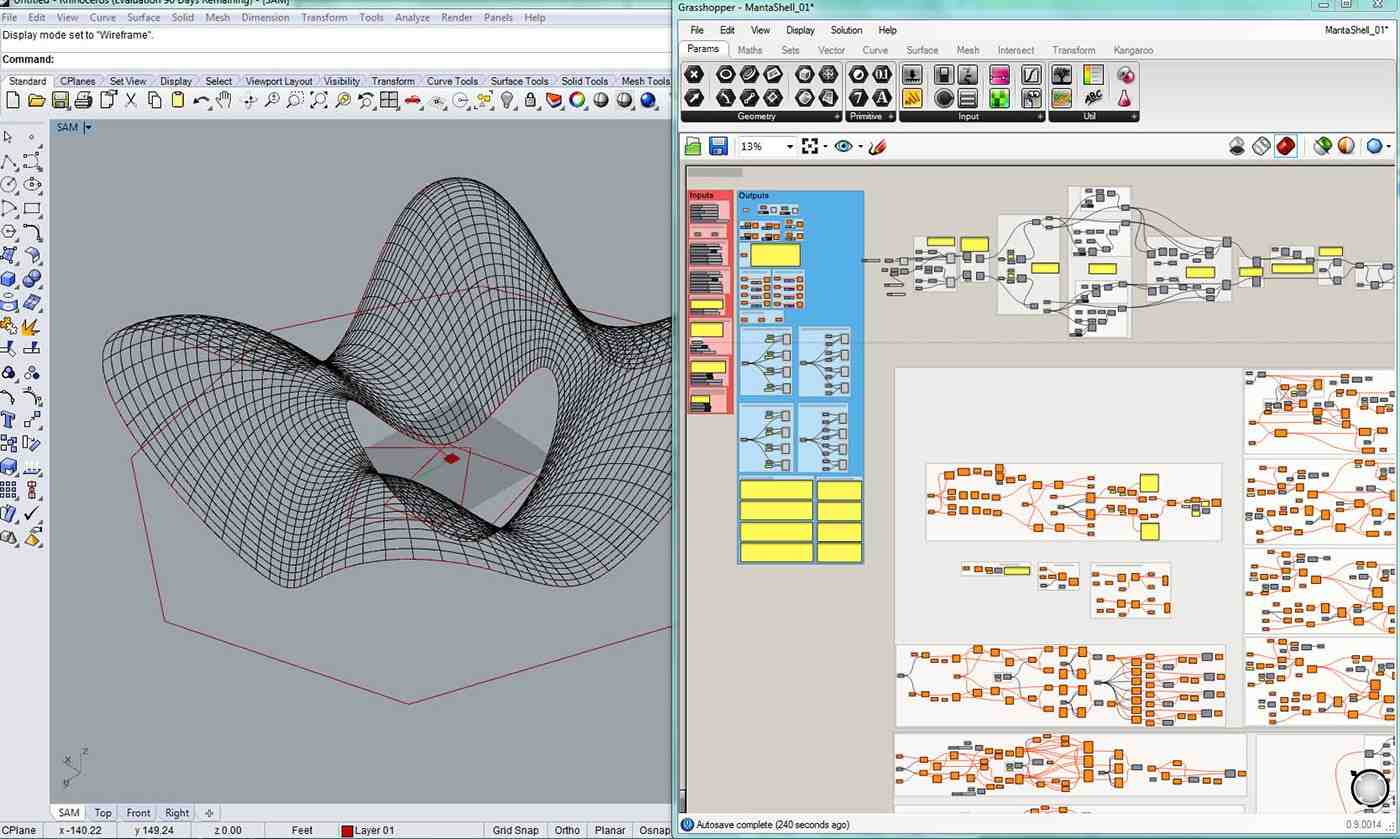
Image Credit: Parametric Architecture
I'll walk you through the principles of Kangaroo Physics, its uses in architecture, and how you might use it for structural optimisation in this post. You will have a strong basis at the end to begin Grasshopper's physics-based simulation experiments.
Also read: Harnessing Weaverbird & Kangaroo for Parametric Design
Grasshopper: What is Kangaroo Physics?
Within Grasshopper, Kangaroo is a physics engine allowing real-time modelling of pressures, tension, and gravity as well as other forces. Designed by Daniel Piker, it finds great use in responsive design, structural optimisation, and form-finding in architectural design. Kangaroo lets you create forms dynamically depending on physical restrictions, unlike conventional modelling which depends on predetermined geometry.
Why Should Architects Use Kangaroo?
- Structural Efficiency – By modelling stresses and reducing structural waste, it helps to maximise material consumption.
- Organic Form-Finding – Helps one to create fluid, natural forms motivated by physical principles.
- Real-Time Feedback – Interactive design processes let creators dynamically improve geometry.
- Integration of Sustainability – Helps create buildings that react to environmental pressures such as load distribution and wind.
Also read: Top 10 Must-Know Plugins for Rhino and Grasshopper in 2024
Beginning Kangaroo Physics in Grasshopper
You must understand the foundations before delving into sophisticated simulations. This is a detailed guide on configuring Kangaroo in Grasshopper:
1. Install Kangaroo
Should you not already have Kangaroo installed, it is built into more recent Rhino and Grasshopper versions. To access the most recent features, be sure you have Rhino 6 or later.
2. Recognising Kangaroo Elements
Kangaroo comprises several elements that define the interaction of forces on a construction. The main ones are:
- Force Objects – Specify forces including springs, anchors, and collisions.
- Solver Engine – Updates geometry dynamically and handles the forces in a process.
- Parameters – Control the intensity and action of several forces.
Also read: Top Plugins to Enhance Grasshopper's Functionality
3. Building a Basic Simulation
Kangaroo allows us to build a basic tensile construction:
- Establish anchor points using the Divide Curve component in a grid.
- Apply forces using gravity to replicate weight, anchor points for fixed places, and length restrictions for tension.
- Execute the Solver – Link every element to the Kangaroo Solver and change settings for best performance.
- See real-time form modifications by varying anchor points or force strengths.
_1741693735668.jpg)
Image Credit: Rhino Grasshopper Youtube
Modern Uses of Kangaroo in Building Construction
Once at ease with the fundamentals, you can investigate advanced uses of Kangaroo Physics in Grasshopper:
1. Structural Optimisation
Kangaroo aids in structural load distribution analysis and optimisation. Architects can hone shapes for material efficiency and stability by modelling gravity and tension.
Also read: Unleashing Grasshopper's Potential: Top Plugins for Rhino
2. Responsive Facades
Kangaroo is used by designers to produce adaptable building facades responding to environmental variables. These systems control sunshine, air conditioning, and appearance.
3. Membrane and Fabric Constructions
Tensile membrane constructions including pavilions and stadium roofs make great use of Kangaroo. Architects find lightweight but robust designs by mimicking cloth action.
4. Vastu-Inspired Parametric Forms
Combining Kangaroo with ideas from traditional Vastu architecture helps to create ideal environments that fit natural energy flow. This method combines modern computational technologies with conventional design expertise.
Also read: Unlock the Power of Grasshopper for Parametric Modelling
Typical Problems and Strategies for Overcoming Them
1. Unstable Simulations
Should your geometry fall apart or show unusual behaviour, look for:
- Overlapping or contradicting requirements.
- Values of too strong force creating instability.
- Wrongly positioned anchor points.
2. Sluggish Processing
Big simulations might slow down Grasshopper. To guarantee performance:
- Minimise the computation points count.
- Preview results in Fast Solver mode.
- Improve script structure to cut unnecessary computations.
Conclusion
Kangaroo Physics in Grasshopper provides builders with a potent instrument for investigating dynamic, efficient, and environmentally friendly systems. Understanding the interactions among forces inside a model helps you to push architectural form and function's limitations. Kangaroo can improve your work from tensile construction design to material optimisation to responsive facade creation.
If you want to expand your knowledge, look at our Advanced Grasshopper Training Course, which covers Kangaroo, parametric processes, and computational design methodologies applied by eminent architects.
Visit our website Kaarwan for more!
FAQs
1. What is Kangaroo Physics in Grasshopper?
A physics simulation tool in Grasshopper, Kangaroo lets architects dynamically improve designs by simulating real-world forces.
2. In Architectural Design, How Does Kangaroo Find Application?
Kangaroo is used by architects for form-finding, structural optimisation, and interactive design, allowing the construction of lightweight, functional, aesthetically pleasing buildings.
3. Does Using Kangaroo Call for Any Programming Knowledge?
No, Kangaroo is accessible even without knowledge of coding since it runs inside Grasshopper's visual programming environment.
4. Can I Create Large-Scale, Kangaroo-Based Designs?
Indeed, Kangaroo may be used with traditional Vastu architectural ideas to produce forms that fit spatial energy and environmental conditions.
5. Where May I Find Additional Information About Parametric and Kangaroo Design?
Kaarwan's Parametric Design Course will help you to gain practical knowledge with Grasshopper, Kangaroo, and other computational instruments.
Cover Image Credit: Geo Creation Youtube