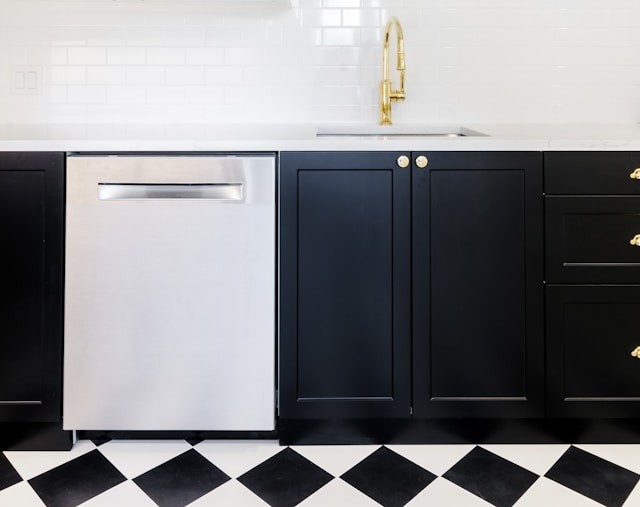
Guide to Kitchen Cabinet Profile Types
Kitchen cabinet profiles are often perceived as minor detailing choices, but from an architectural and interior design perspective, they directly influence usability, durability, and the overall visual language of a kitchen. A cabinet profile determines how a drawer or shutter is accessed, how edges perform under daily wear, and how clean or articulated the kitchen elevation appears. Whether applied to swing shutters or drawer fronts, these profiles affect grip comfort, maintenance effort, cost, and long-term performance. This guide explores commonly used kitchen cabinet profile types and explains their architectural relevance, practical advantages, and ideal use cases.
J-Pull Profile
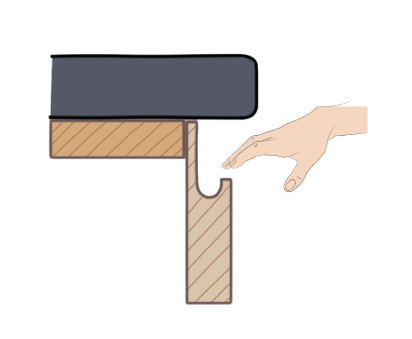
Image Credits: Shivani Chougula @Kaarwan
A handle-less cabinet profile where a J-shaped routed edge allows the shutter or drawer to be pulled open directly.
- Design & Aesthetic: Creates a clean, seamless look commonly used in minimalist and modern kitchens.
- Usability & Durability: Comfortable grip, but routed edges are high-touch zones and require good edge finishing to prevent chipping.
- Application & Cost: Compatible with plywood and MDF shutters; moderately priced and widely used in residential kitchens.
Groove Profile
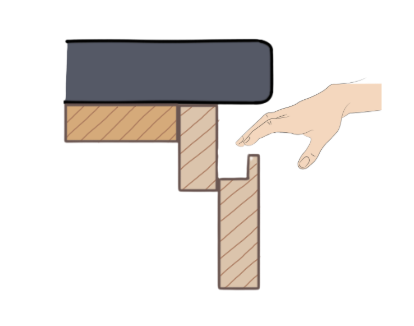
A linear groove cut into the shutter or between cabinet modules to act as a pull.
- Design & Form: Emphasizes horizontal or vertical lines, strengthening the overall geometry of the kitchen elevation.
- Function & Maintenance: Provides basic grip, though deeper grooves can trap dust and grease over time.
- Suitability: A cost-effective option for contemporary kitchens prioritizing visual continuity.
Shadow Line Profile
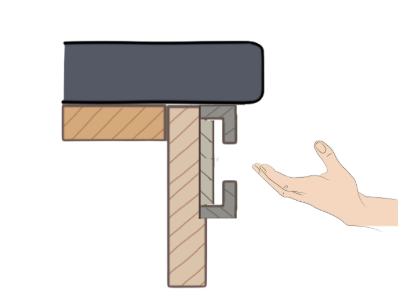
A recessed gap between the shutter and carcass that allows grip while creating a floating visual effect.
- Architectural Detail: Adds depth and shadow without cutting into the shutter surface.
- Performance: Reduced wear since the shutter edge remains intact, improving long-term durability.
- Usage & Cost: Common in premium kitchens; demands precise carpentry and detailing.
Recessed Profile
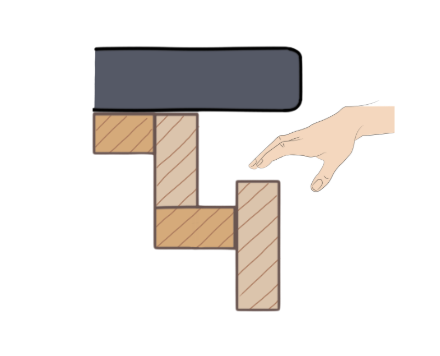
A cabinet profile where part of the shutter face is set back to create a subtle, integrated grip.
- Design Approach: Maintains a flush appearance while introducing controlled depth.
- Ergonomics: Offers better grip comfort than flat profiles with minimal visual disruption.
- Use Case: Suitable for modern and transitional kitchens seeking understated detailing.
Bevel Edge Profile
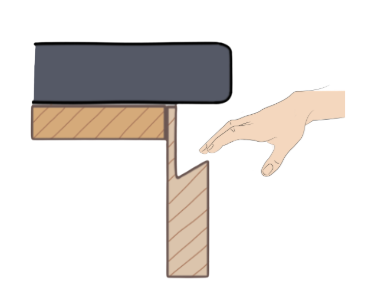
A profile where the shutter edge is angled to form a soft grip and refined edge detail.
- Visual Character: Adds a crafted, elegant look compared to sharp-edged modern profiles.
- Grip & Wear: Provides moderate grip comfort and reduces edge damage.
- Application: Works well in kitchens blending contemporary and classic design language.
Lip Pull Profile
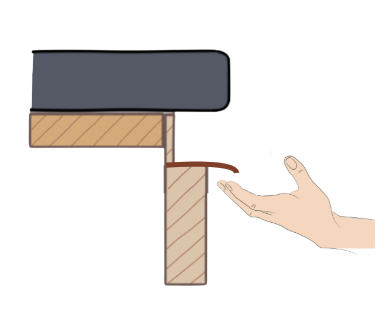
Image Credits: Shivani Chougula @Kaarwan
A cabinet profile using an applied lip—usually metal or wood—fixed to the shutter edge for pulling.
- Functional Design: Clear, ergonomic grip without altering the shutter surface.
- Durability & Maintenance: Highly durable, easy to clean, and replaceable if damaged.
- Popularity & Cost: Widely used in modern kitchens due to longevity and cost efficiency.
Final Thoughts:
Kitchen cabinet profiles are more than stylistic choices; they are integral to how a kitchen functions, ages, and is experienced daily. Each profile—whether routed, recessed, or applied—comes with its own spatial, ergonomic, and maintenance implications. Selecting the right cabinet profile depends on usage intensity, design language, budget, and long-term durability expectations. When approached architecturally, cabinet profiles become key detailing elements that enhance both the performance and visual coherence of kitchen design.