

.jpeg)
Impermanence of Cities & Lessons for Sustainablity
The mythical city of Dwarika—described as magnificent, divine, and ultimately lost to the sea—offers more than a tale of splendour and disappearance. It reminds us of the impermanence of human creations and the fragility of ambition when detached from ecological balance.
For architects, planners, and communities alike, this story invites reflection: What sustains a city across centuries? What causes its decline? And how can modern practice avoid repeating the mistakes of the past?
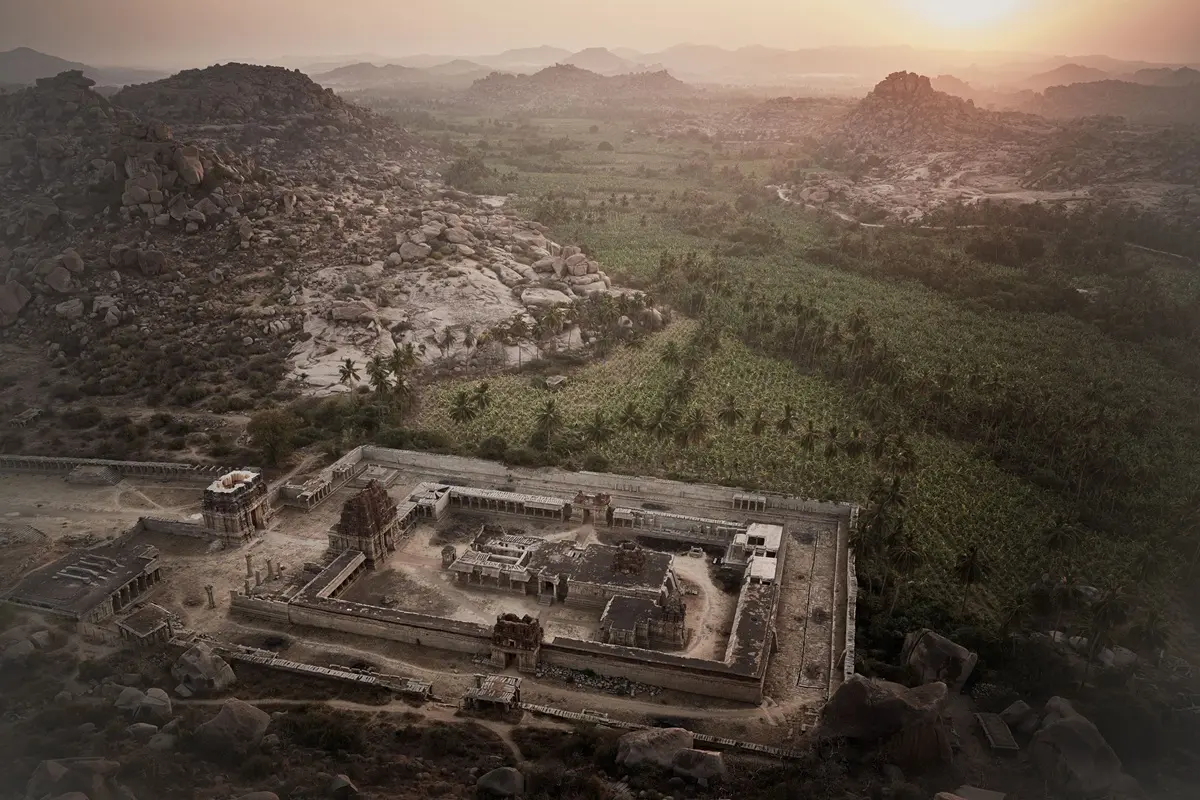
Why Do Cities Rise and Fall?
History is filled with examples of urban centres that flourished brilliantly, then declined when they lost balance with their environment:
- Mohenjo-Daro, Pakistan (2500 BCE) – celebrated for its grid layout and sophisticated drainage, yet likely weakened by climate shifts and river changes.
- Mayan Cities, Central America – thriving centres of astronomy and architecture, which declined due to deforestation, drought, and resource exhaustion.
- Hampi, India – once a vibrant capital with advanced water systems, but overrun and abandoned when political and ecological pressures converged.
The myth of Dwarika may not be an archaeological fact, but its symbolism is clear: no city, however divine or well-planned, is permanent if ecological resilience is ignored.
Mindful Architecture: From Myth to Practice
Spirituality in architecture is less about temples or grandeur and more about intention—designing with humility, balance, and purpose. Mindful architecture considers:
- Material honesty – lime, stone, bamboo, and brick that age gracefully and reconnect to earth cycles.
- Climate attunement – buildings oriented for solar gain, ventilation, and resilience against floods or drought.
- Community spaces – plazas, courtyards, and shaded gathering points that foster human connection.
- Invisible resilience – drainage, water harvesting, and landscape systems that quietly support wellbeing.
_1758189747533.png)
Cities and Architects Who Build with Balance
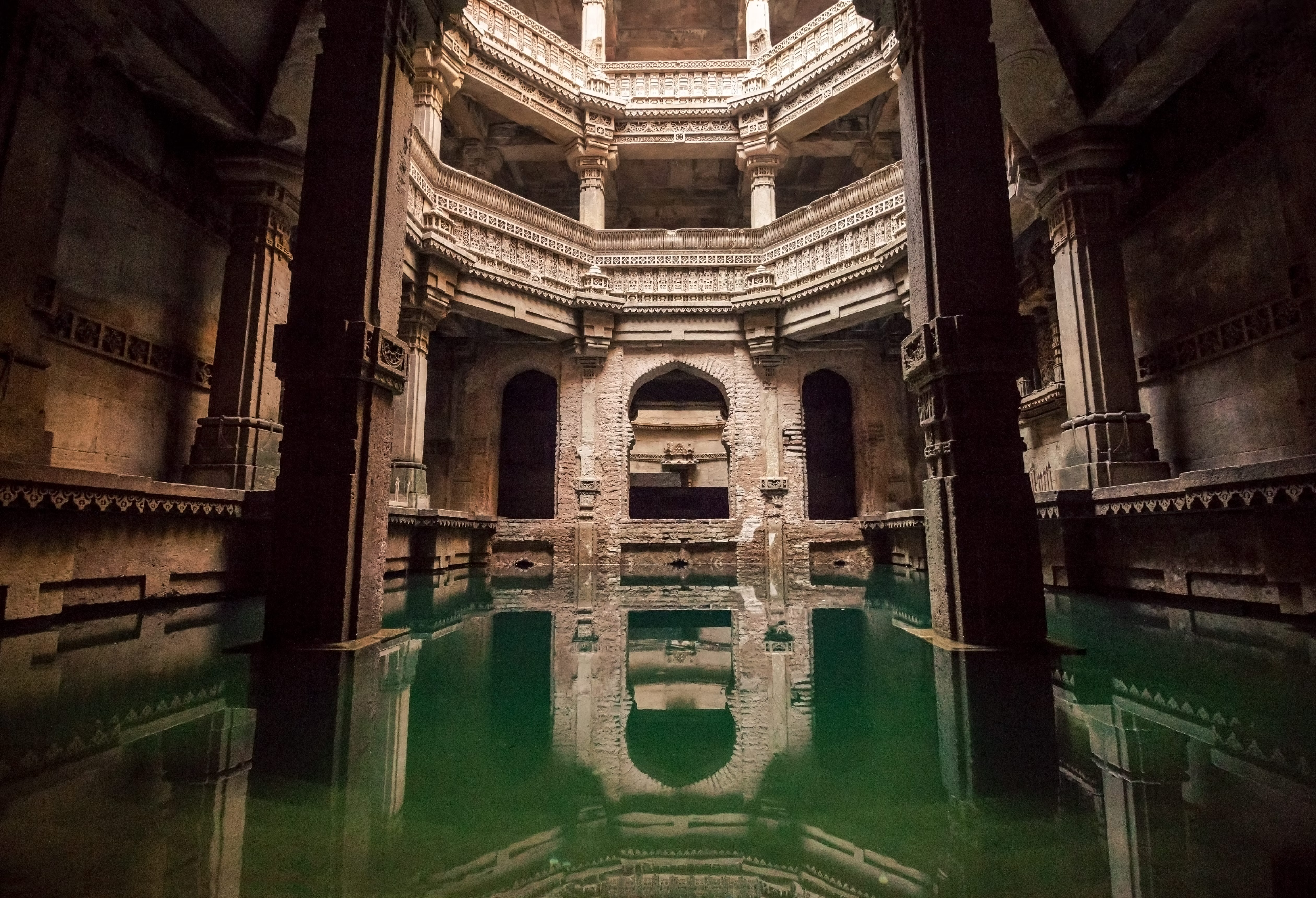
Ancient Precedents
- Machu Picchu, Peru – Terraced slopes and stone channels demonstrate how human settlements can integrate seamlessly with topography and rainfall.
- Stepwells of Gujarat, India – Architecture as water infrastructure: functional, climatic, and social at once.
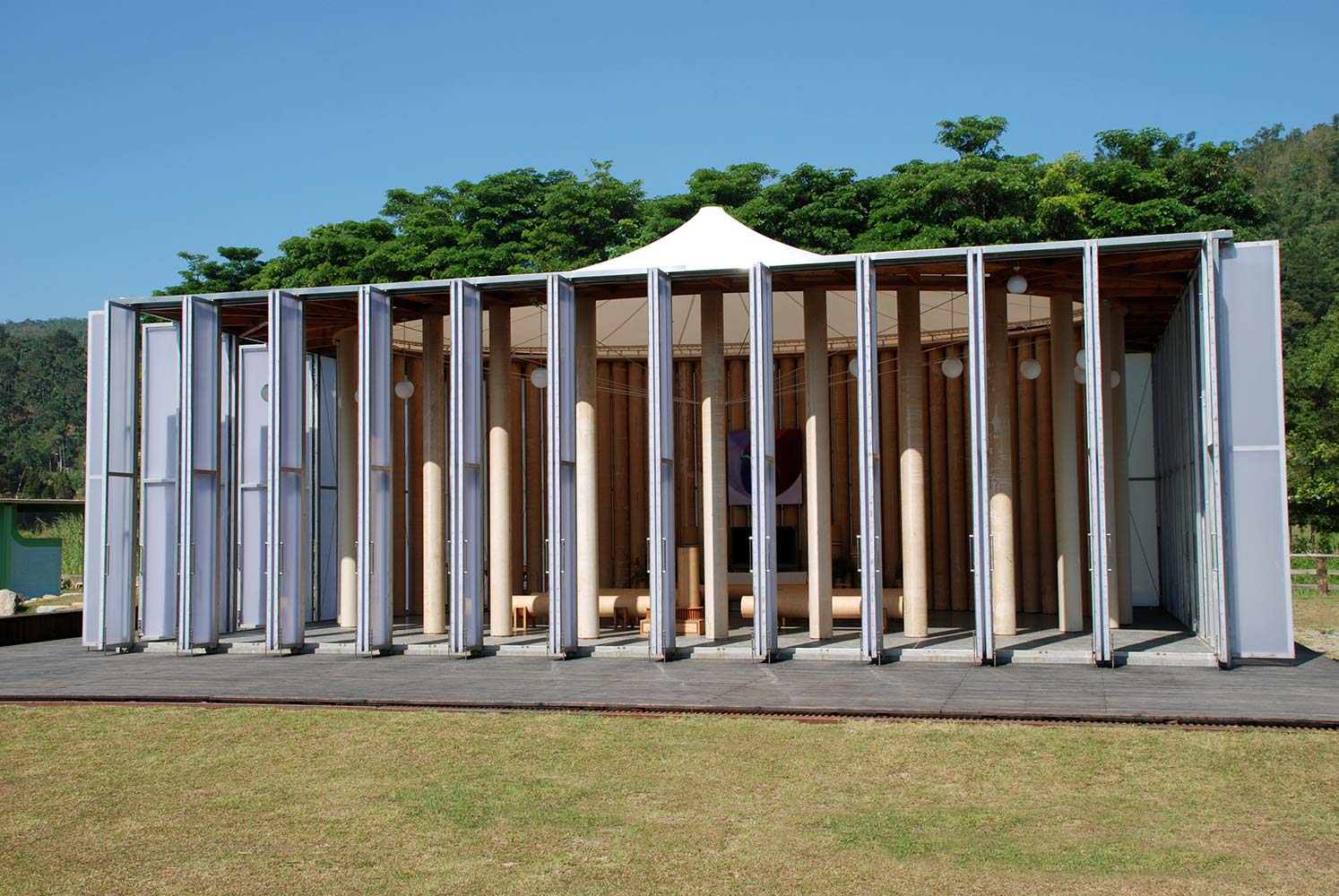
Modern Experiments
- Auroville, India – Conceived as a “universal township,” it integrates renewable energy, rainwater harvesting, afforestation, and community-driven governance.
- Laurie Baker, Kerala – His “architecture of the people” prioritised cost efficiency, natural ventilation, local materials, and ecological sensitivity.
- Shigeru Ban’s Paper Church, Japan – Built after the Kobe earthquake, it embodied impermanence and community service, showing resilience can be light, temporary, and humane.
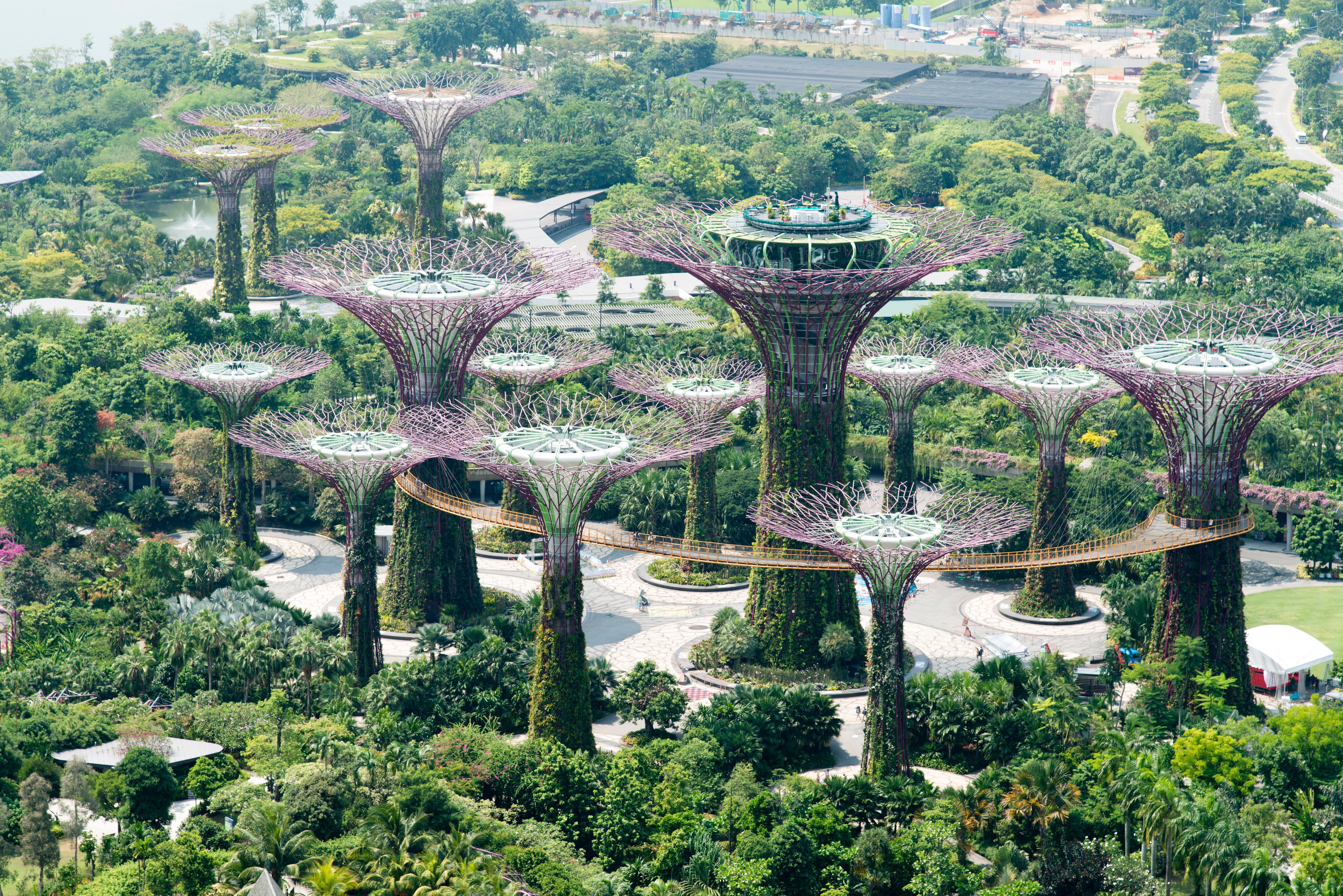
Contemporary Urban Examples
- Singapore’s Gardens by the Bay – More than a spectacle, it acts as an ecological infrastructure with cooled conservatories, vertical gardens, and carbon-conscious urban planning.
- Freiburg, Germany – A city-wide example where renewable energy, cycling infrastructure, and green roofs show that ecological principles can define an entire urban identity.
Your thesis can land you a job—or haunt your portfolio. Which side are you on? No matter what stage you’re at, start early and start smart with our 5-Day Thesis Bootcamp. Learn from a gold medalist and jurors who’ve been on the other side of the table.
Impermanence as a Design Principle
Impermanence is not a weakness—it’s a guide. Accepting that all things change allows us to design with adaptability and resilience:
- Materials – favour those that can be renewed, recycled, or biodegraded.
- Spaces – design for multiple uses, allowing adaptation as societies shift.
- Systems – integrate water, waste, and energy cycles that sustain communities across generations.
Reflective Conclusion: Building for Balance
The story of Dwarika reminds us that no city is eternal, but its lesson is not of despair—it is of responsibility. Architecture that endures is not built for spectacle or speed, but for ecological harmony, human wellbeing, and adaptability to change.
Each design decision—whether as small as the material for a wall or as large as the planning of a square—carries ethical weight.
Are we creating for permanence or for resilience? For accumulation or for balance? For ourselves alone, or for generations yet to come?
If we design with this awareness, our cities may not be immortal, but they can endure meaningfully—thriving in harmony with nature rather than dissolving like Dwarika into the sea.
FAQs
Q1. What does the impermanence of cities teach architects today?
It shows that even the most advanced cities fail if they ignore ecological balance. Designing with resilience, adaptability, and natural systems is essential.
Q2. Which ancient cities demonstrate lessons in sustainable design?
Mohenjo-Daro, Machu Picchu, and stepwells in India all reveal how ancient builders respected water, climate, and topography in lasting ways.
Q3. How does spirituality connect to sustainable architecture?
Spirituality in architecture is not ornament—it’s designing with humility, balance, and responsibility toward nature and communities.
Q4. What are examples of modern architecture inspired by balance and resilience?
Auroville (India), Freiburg (Germany), Laurie Baker’s work in Kerala, and Singapore’s Gardens by the Bay embody ecological urbanism in practice.
Q5. How can architects use impermanence as a design principle?
By choosing renewable materials, designing adaptable spaces, and integrating ecological systems like water harvesting and green infrastructure.




.png)