

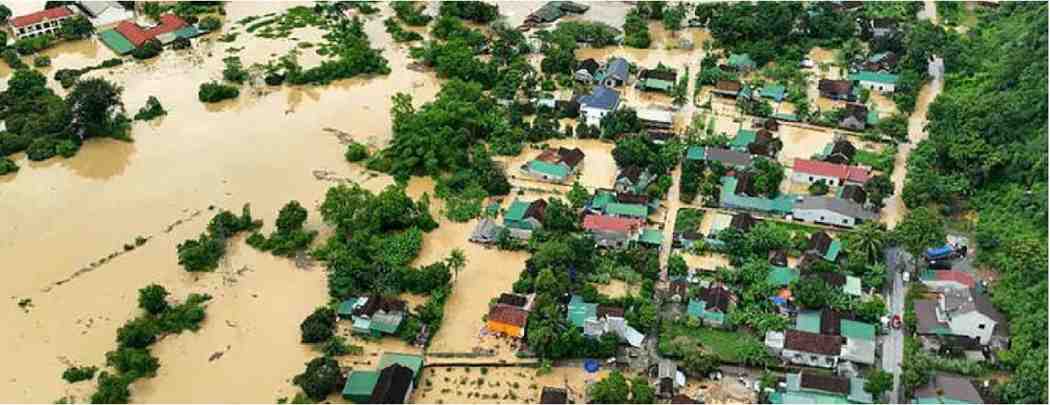
Water remembers what humans forget. It remembers old flood routes, the beds of dried rivers, the ponds we filled with concrete. It remembers the cracks we leave in mountains, and the drains we choke with waste.
When Uttarakhand floods, it is not simply a disaster. It is water returning to its remembered paths. When Kota builds its riverfront as a theatre of light and concrete, it is not progress — it is an erasure of memory.
The question before us, as architects, planners, and citizens, is: why do we build as though water forgets?
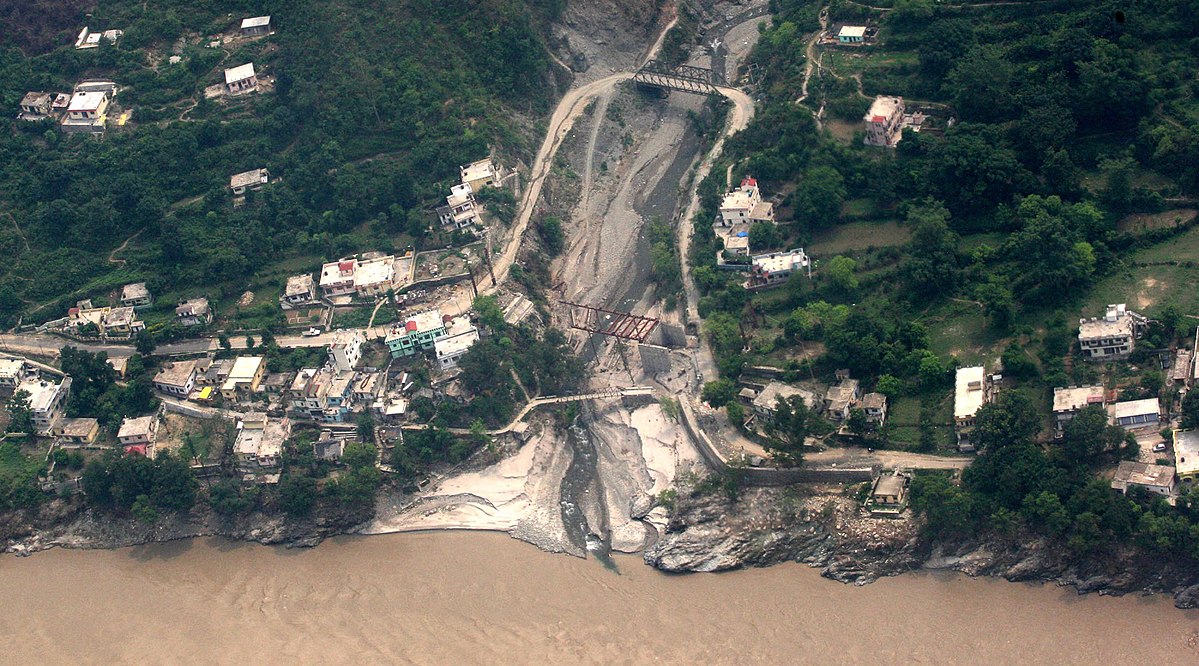
Image Source: Geospatial World
Uttarakhand Floods: How will the Next Monsoon be Alongside Climate Change?
In 2013, Uttarakhand saw one of the most devastating floods in living memory—a glacial lake outburst combined with intense cloudbursts unleashed the Mandakini and Alaknanda rivers. The rivers surged through settlements, hotels, and widened roads—built where water had once claimed the land.
In August 2025, water whispered again through the Himalayas. A violent cloudburst—or perhaps a sudden debris-laden lake burst—overwhelmed the Kheer Ganga valley near Dharali in Uttarkashi. Flash floods ripped through the village, swallowing hotels, shops, and even parts of an army camp.
The lesson is ignored, even as water whispers it again each monsoon.
This, too, was not a freak event. It was water remembering—reviving ancient channels and fragmented topographies we chose to overwrite. And yet, instead of absorbing the lesson deeply, we continue to repeat the cycle: carving into fragile slopes, sealing floodplains with concrete, and denying memory—even as water speaks again each monsoon.
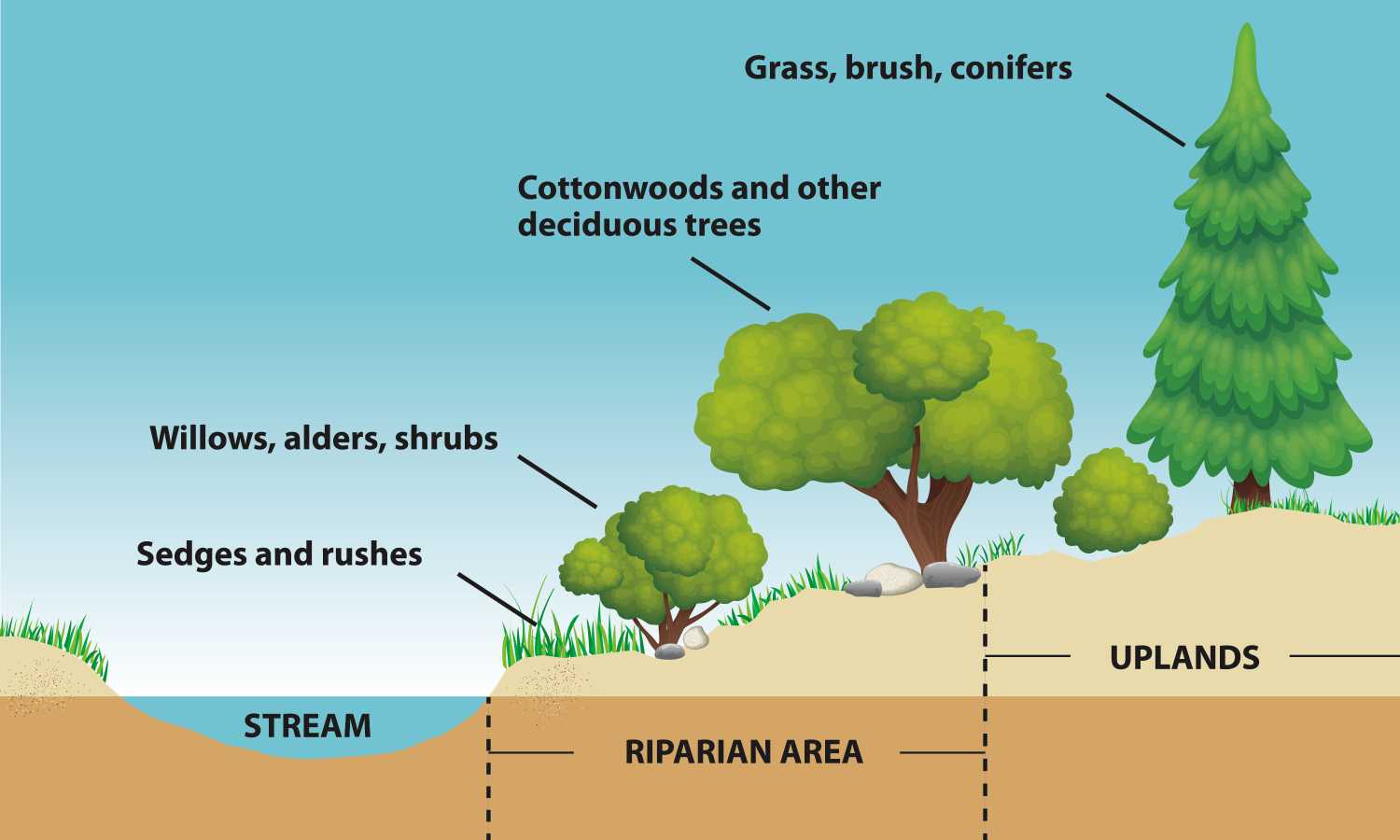
Image Source : Research Gate
All over the world, there are very rare instances of riverfront developments, where we have purely just softly landscaped the river banks. To make it safely accessible and enjoyable to the local public.
Why are we afraid of building riparian zones, wetlands and viewing decks?
Why do we need to bring in some concrete near the streams? Or like ghats of kashi, have we tested the soil and section of land enough to either build it with stone or lime, with self-healing properties, and ensure that there is no harmful implication to river water?
_1755492461606.jpg)
Image Source: Vibrant Academy
Kota Riverfront: When Design Forgets the River
If Uttarakhand is a reminder of nature’s power, Kota’s riverfront is a reminder of human amnesia.
The Chambal Riverfront could have been a chance to heal and reveal the river’s ecology. Imagine:
- Riparian zones are full of birds and aquatic species.
- Viewing decks that invite people to sit with the river.
- Phased development, testing one stretch before expanding.
- Stepwells reinterpreted with lime technology, carrying forward traditional water wisdom.
- Art, craft, and detailing in every step, reminding us that water spaces are sacred and aesthetic.
Instead, what emerged was symmetry and spectacle — lights, stairs, concrete. It looks monumental, but it does not listen. It is a riverfront without a river’s soul.
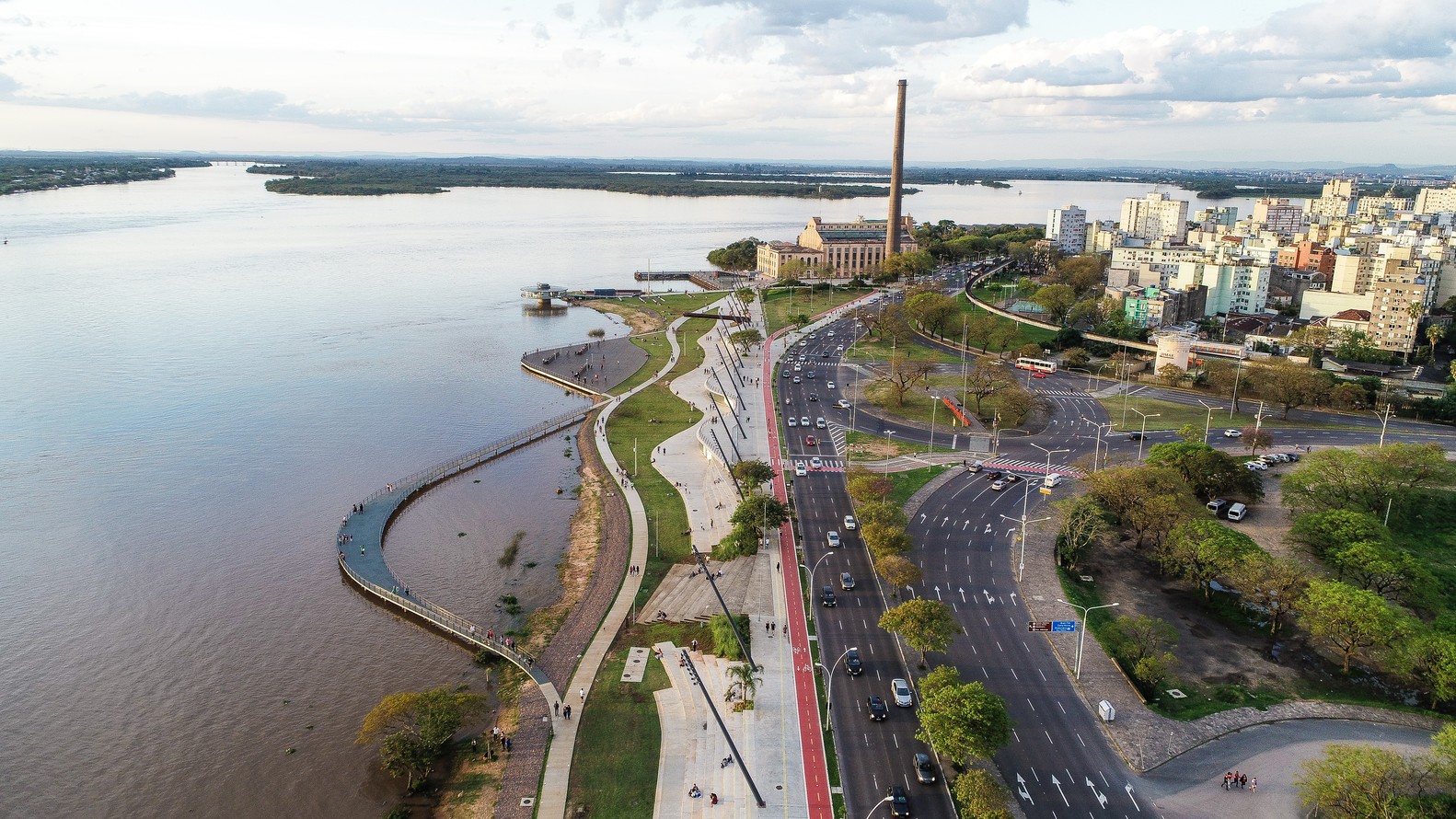
Image Source: Archello, Guaiba Waterfront Urban Park
How can we approach such projects responsibly?
Reimagining Riverfront Development
Instead of entirely building the project on either side of the banks. Although it will take a lot to manage water, we can build a riverfront just on one end, and keep the other bank either completely natural or landscape it using soft scaping. Like planting riparian zones, wooden viewing decks, less man-made intervention, more of just sightseeing, organic softscape, lights for safety, etc. And instead of covering an entire length of the project with certain material, testing it with different samples over the years, like stone-built lime plastered banks. Lime is processed by workers in a painful process. If done manually, it burns the hands and feet of workers meshing it. Some financial aid can be spent on discovering if lime will work well with the water of that particular river. Not just using cement, tiles, etc. Testing and seeing over a shorter length, how the bank can manage the river for a few years.
Also, a question strikes, that if companies, authorities considered the voice of environmental planners, soil experts, landscape architects, water expert teams, etc. And if the companies in charge of the project heard from the right people?
In today's studio culture fresh archtiects feel small in roles as draftpersons, visualisers and under the weight of deadlines, political, powerful, and lust towards profit margins, it's good to wonder, if they get time to breathe and think above their bread and butter as young professionals and have a say on such important topics!
Also, it's a good time to question if environmental planners, landscape architects and other ecology expert's opinions were considered before landuse maps are planned?
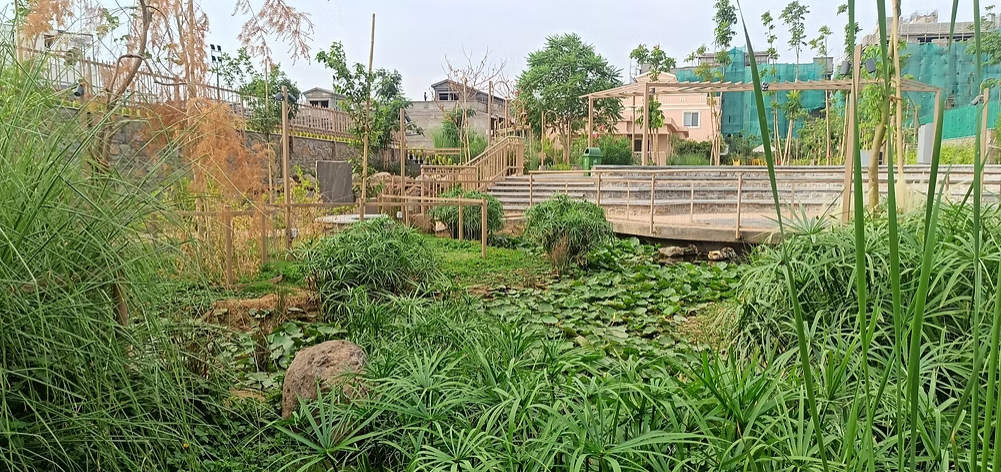
Image Source : Studio HA
Riperian zone in a housing society in Jaipur.
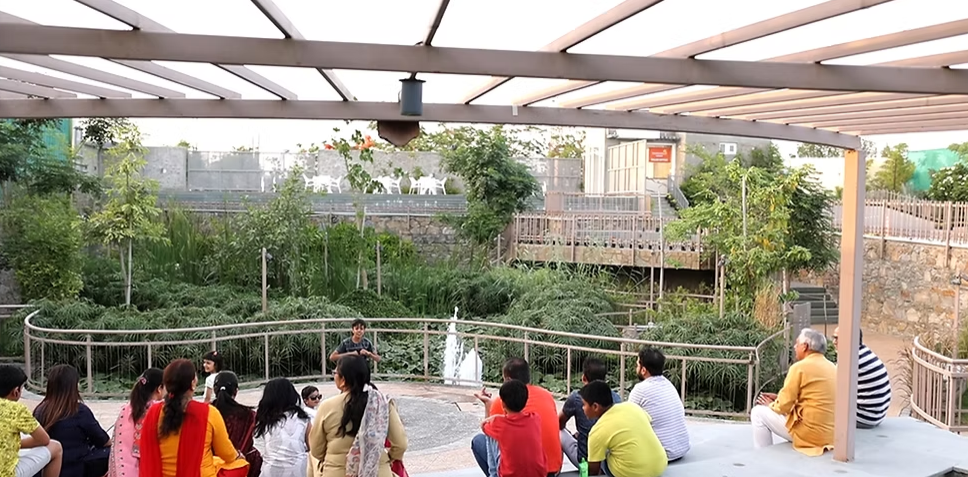
Image Source : Studio HA
If rich fauna and flora can be invited into housing societies then why are we working against the eco-system near rivers?
Why Do We Build Against Memory?
At the core, our planning failures reflect a deeper human tendency:
- We build where water once flowed because the land there is flat, fertile, and economically attractive.
- We neglect ecological pockets because they don’t generate immediate profit.
- We silence voices of caution because projects run on political cycles, not natural cycles.
But more than economics, this comes from a cultural detachment: we no longer see ecology as a luxury.
For us, luxury has become consumption — lights, speed, concrete — not clean rivers, fertile soil, or bird-rich wetlands.
Why? Because we are caught in the pressures of population, urbanisation, and consumption. But also because we’ve forgotten that ecology sustains us. It doesn’t just need us to thrive — we need it to survive.
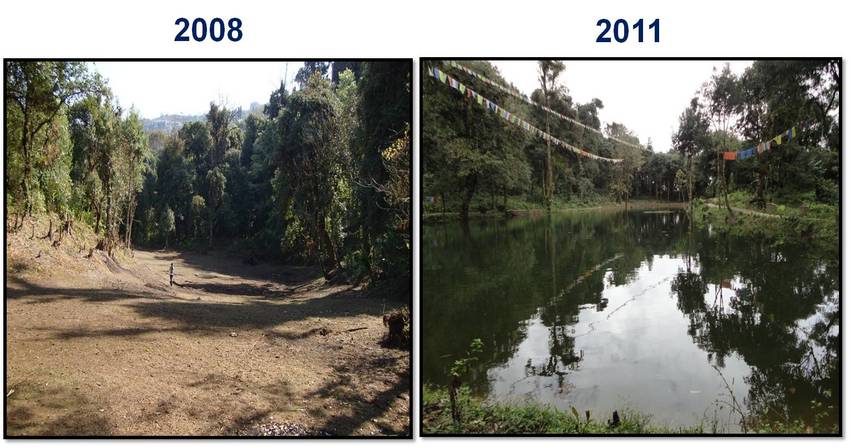
Image Source: Sikkim Himalya Casestudy, Research Gate
The thought that ‘water has strong memory’ was first shared with me during my early professional journey under the guidance of landscape architect Hemanshu Taneja at Studio HA. His words continue to resonate whenever I encounter landscapes shaped by water’s return. This reflection is written in my current capacity with Kaarwan, where I carry forward such lessons into conversations on ecology, resilience, and design.
Intent of the referred insight:
Water's memory stretches back to the age of dinosaurs and even before, to frame it lightly. It remembers where it once flowed, in the form of flood routes, small streams, etc., even when humans forget. We may build over these places, convinced of permanence, but water does not forget. When it returns, our planning and style of construction are often unprepared for its memory.
The Side Effects of Forgetting
- Drying Water Pockets: Lakes filled up for construction dry up faster, but they also remember. In heavy rains, they return as waterlogged neighbourhoods.
- Polluted Land: When soil and wetlands are choked with plastic and toxins, water cannot percolate. Floods intensify, groundwater vanishes.
- Lost Ecological Benefits: Wetlands could have provided microclimate cooling, aquifers for drinking water, and biodiversity corridors. Instead, we lose these gifts in exchange for short-lived development.
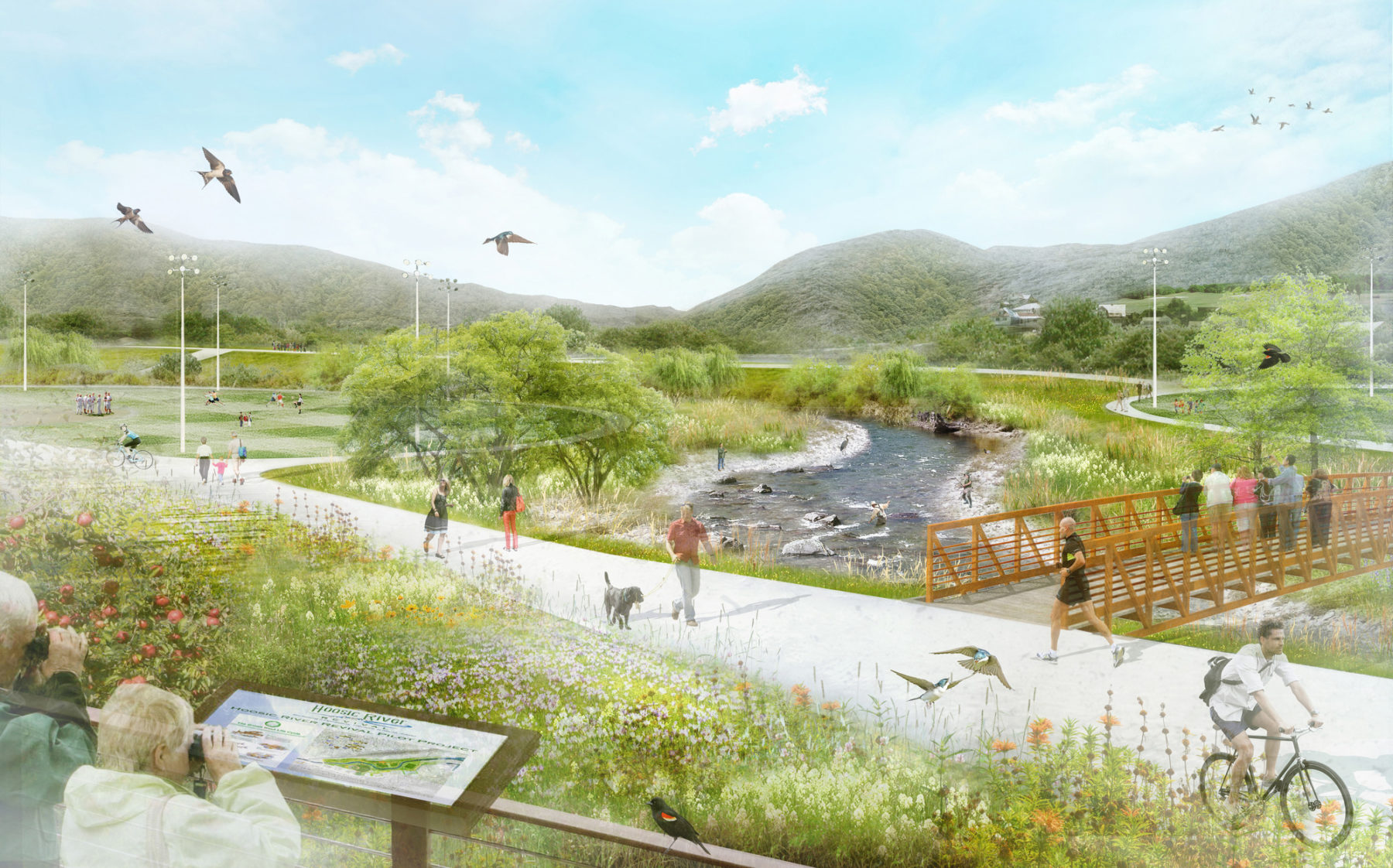
Image Source: UDL, Cincinnati John G. and Phyllis W. Smale Riverfront Park by SASAKI Associates
Rethinking Landscapes: Towards Resilient Futures
What does it mean to design with memory, not against it?
- Listen to Rivers: Map their historical floodplains, respect setbacks, design within their rhythms.
- Value Natural Luxury: Teach societies that shade from a restored grove, or the quiet of a wetland walk, is greater luxury than neon lights.
- Slow Down: Develop in phases. Test, observe, learn. Not every project must be completed in a political term.
- Bring Experts Together: Landscape architects, ecologists, water scientists, geologists — voices that often get sidelined must be central.
- Relearn Traditional Wisdom: From stepwells to rainwater harvesting, heritage technologies carry answers for today.
Final Thought:
Uttarakhand’s floods and Kota’s riverfront, though different, are tied by one truth - our refusal to remember what water already knows.
Water remembers. It remembers valleys, plains, and wetlands. It remembers being sacred, not ornamental.
The challenge for us is not just technical resilience but cultural humility.
Can we pause long enough to see rivers as living, not conquered?
Can we build landscapes that are not only profitable but also poetic, not only fast but also faithful to memory?
When water remembers, will we?
FAQs
Q1. What does “water remembers” mean in the context of floods and riverfronts?
A1. The phrase means that water follows its old natural paths — dried riverbeds, floodplains, wetlands — even if humans have built over them. When we ignore these memories, floods and waterlogging occur as water reclaims its natural routes.
Q2. Why are Uttarakhand floods considered a result of poor planning and not just a natural disaster?
A2. The 2013 Uttarakhand floods were worsened by unchecked construction on riverbeds, widened roads near rivers, and hydropower projects. These human interventions reduced the land’s natural ability to absorb and channel water, making the disaster more severe.
Q3. What went wrong with the Kota riverfront project?
A3. The Chambal Riverfront in Kota prioritised concrete structures, lights, and symmetry over ecological restoration. Instead of reviving riparian zones and integrating traditional water wisdom, it erased the river’s ecological character, creating a spectacle rather than a living landscape.
Q4. How does urban development increase flooding risk in Indian cities?
A4. Urban projects often fill lakes, wetlands, and floodplains with concrete. This blocks natural drainage and groundwater recharge. During heavy rains, water reclaims these forgotten spaces, causing floods and waterlogging in urban areas.
Q5. What lessons should architects and planners learn from these case studies?
A5. Architects and planners must design with ecological memory:
- Respect historical flood routes and river setbacks
- Value natural systems like wetlands and groves
- Develop projects in phases with observation
- Integrate voices of ecologists and water scientists
- Relearn traditional water management practices
Q6. How can traditional water wisdom help in modern urban planning?
A6. Heritage practices like stepwells, rainwater harvesting, and lime-based construction show how to store, recharge, and use water sustainably. Reviving such methods alongside modern science can make urban landscapes more resilient to floods and droughts.
Q7. What is the cultural message behind “water remembers”?
A7. It reminds us that water is not just a resource but a living force with history and rhythm. By treating rivers, wetlands, and lakes as sacred and essential, rather than ornamental, we can create landscapes that sustain both ecology and human life.




.png)