

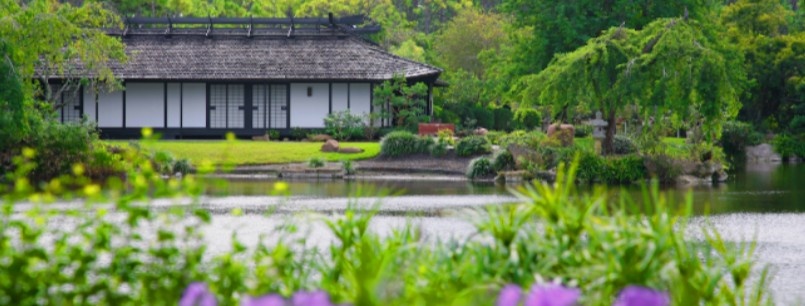
Every Japanese garden tells a story — not through walls or words, but through stone, water, and the pauses between them.
In an era of expressive forms and parametric facades, Japanese gardens remain timeless because they are designed for the invisible — rhythm, silence, and transition. One of the most profound modern interpretations of this philosophy is found in The Morikami Museum and Japanese Gardens (Delray Beach, Florida), designed by Hoichi Kurisu in the late 1990s.
Kurisu once said, “A Japanese garden is not about showing, but about revealing — the place and the person both.”
This case study decodes how Kurisu reimagined traditional Japanese garden elements for a modern, multicultural setting — balancing authenticity with relevance.
1. The Garden as a Timeline: From Heian to Modern Japan
Unlike many singular-style Japanese gardens, Morikami is an anthology of eras — seven interconnected gardens, each representing a period in Japan’s design evolution:
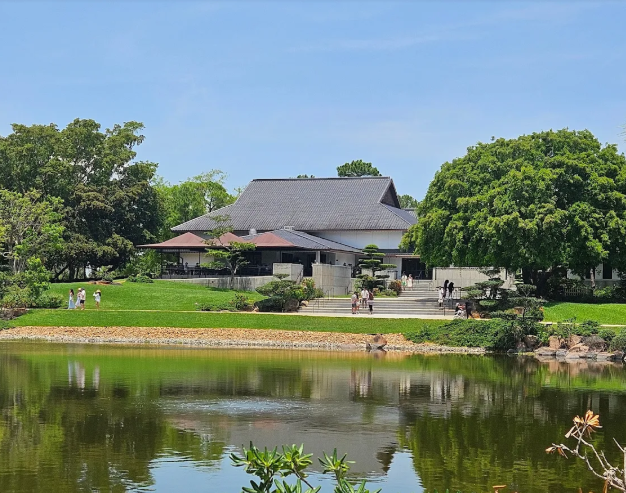
- Early Paradise Gardens (Heian Period): Symbolic lakes and islands representing Buddhist cosmology.
- Karesansui (Zen Dry Gardens): Minimalist gravel patterns replacing water.
- Stroll Gardens (Edo Period): Meandering paths, framed views, borrowed landscapes.
- Contemporary Interpretations: Integration of water features and subtropical plant species suited to Florida’s climate.
Architectural Insight: Kurisu translated time into space — each garden not only represents an era, it transitions the visitor physically and emotionally. At a human level, the gradual shift in planting, ground texture, and soundscape creates a narrative movement — stillness to motion, reflection to awareness.
2. Water and Reflection: Designing the Intangible
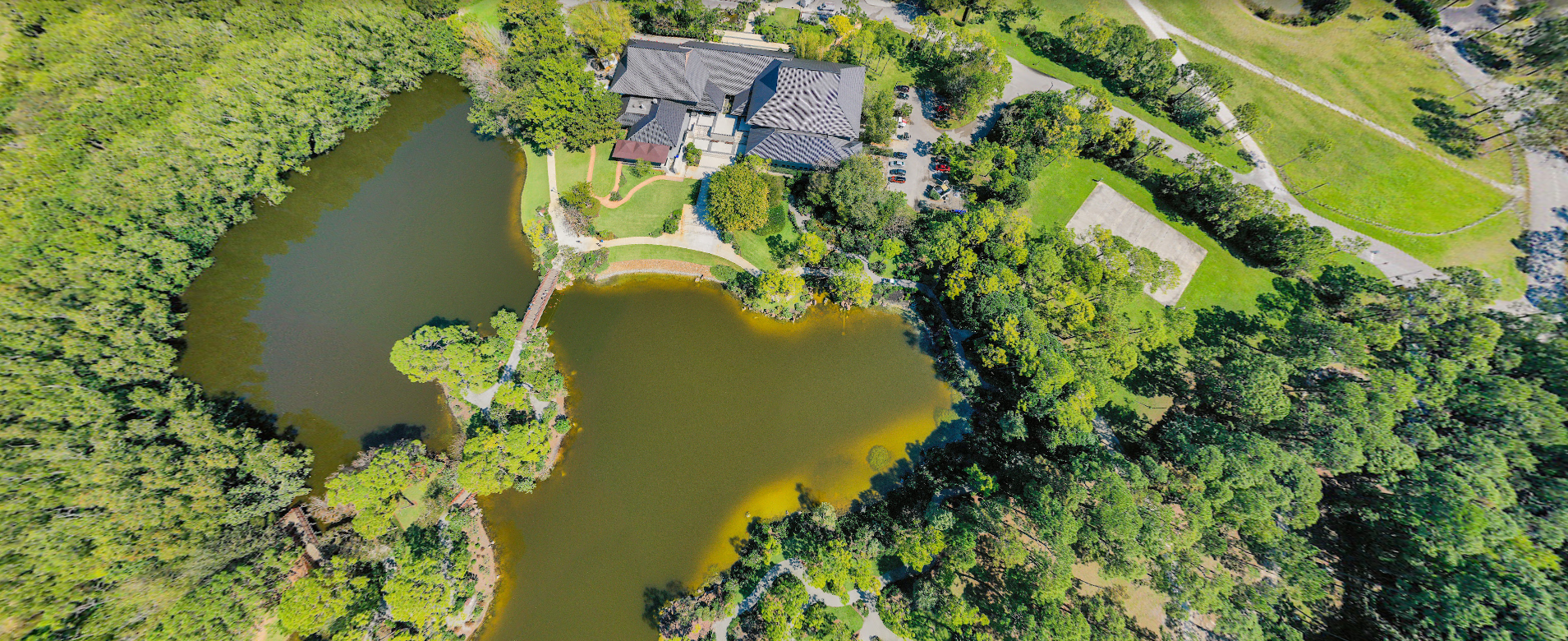
Water is the emotional axis of Morikami. It shifts form — pond, stream, still mirror — each carrying symbolic and sensory intent.
- In the Early Paradise Garden, wide ponds invite reflection — literally and metaphorically.
- In the Karesansui Garden, water disappears, leaving raked gravel ripples that evoke flow through abstraction.
- Finally, in the Modern Garden, subtle cascades reappear — a metaphor of continuity.
Architectural Parallel: This fluid treatment of water mirrors how architects work with light — sometimes direct, sometimes diffused, sometimes withheld — to evoke calm or contrast.
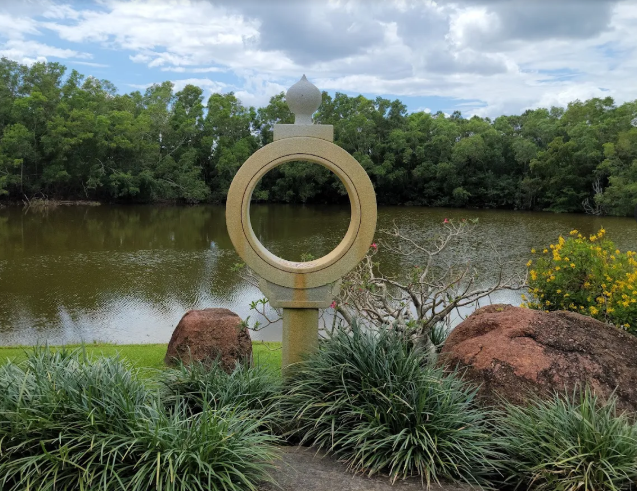
At eye level, a visitor experiences not “a water feature,” but a choreography of sensory cues: the glint of light on ripples, the coolness of shade, the shifting acoustics as the path bends.
_1761909137318.webp)
3. The Role of Planting: Order, Wildness, and Balance
Kurisu’s plant palette honours Japanese species while adapting to Florida’s ecology. He introduces native ferns, pines, and subtropical evergreens to maintain form without foreign importation.
Planting is not ornamental, it’s performative — it frames views, filters light, and defines thresholds. “In Japanese gardens, pruning is not to control nature, but to reveal its true line.” The pruning and layering technique in Morikami’s grove zones recalls the ‘miegakure’ principle — “hide and reveal.” Each turn of the path withholds a view before offering another. From an architectural lens, this is spatial suspense — a rhythm architects create through walls, corridors, or courtyards.
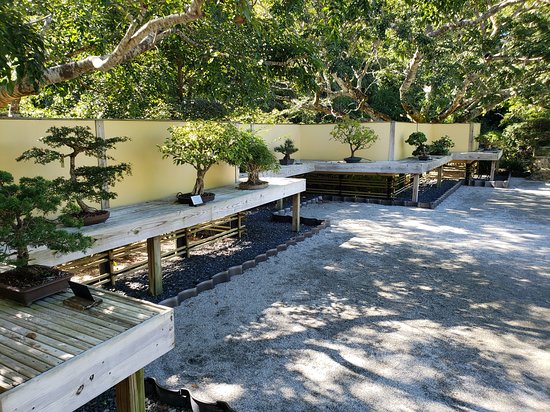
4. Human Comfort and Spatial Experience
At Morikami, scale and proportion are deeply humane. Paths are shoulder-wide, surfaces slightly uneven, compelling slower movement. Benches or stone seats are placed not for rest, but for pause — aligned toward framed views or water reflections.
At eye level, materials (stone, bark, moss, bamboo) form a palette of soft contrasts. The tactile roughness underfoot, filtered light above, and ambient sound together form an immersive comfort zone — psychological, not mechanical. The garden’s microclimate — shade canopy, moisture from ponds, and stone surfaces — cools the air subtly, achieving thermal comfort through ecological intelligence, not equipment.
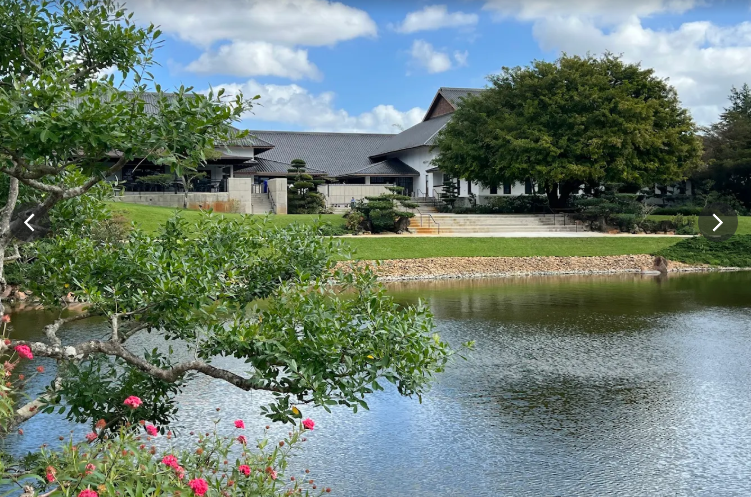
5. Symbolism Translated for a Contemporary Context
Kurisu retained traditional metaphors — islands as longevity, bridges as life’s transition, stone groupings as triads of heaven-earth-man — but contextualised them for a global audience.
Rather than literal religious iconography, he relied on emotional universality — serenity, contemplation, and movement.
This made Morikami a cross-cultural garden — Japanese in philosophy, Floridian in ecology, and universal in experience.
Architectural Reflection: It’s a lesson for designers: cultural translation is not copying form, but reinterpreting intent.
Just as one can reinterpret a temple courtyard into a modern office atrium, Kurisu reinterpreted centuries of landscape thought into a place that feels ancient and current at once.
Lessons for Architects and Designers
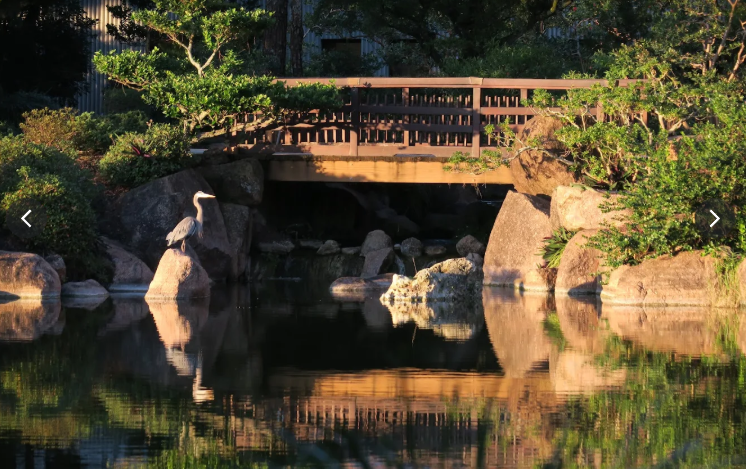
- Design for Pause: Space should invite slowing down — through scale, texture, or acoustic change.
- Use Nature as Medium: Light, shadow, and reflection are materials as valid as concrete or steel.
- Cultural Sensitivity: Adopt principles, not patterns. Authenticity lies in meaning, not mimicry.
- Microclimate as Experience: Design greenery, water, and orientation to create natural comfort.
- Human Eye Level: Always design what the user sees, hears, and feels at 1.5 metres — that’s where architecture meets life.
“A Japanese garden does not impose beauty; it reveals it slowly, like the unfolding of light through leaves.”
Why This Matters for Today’s Designers
For students and professionals, analysing spaces like Morikami is more than studying landscape, it’s understanding spatial empathy.
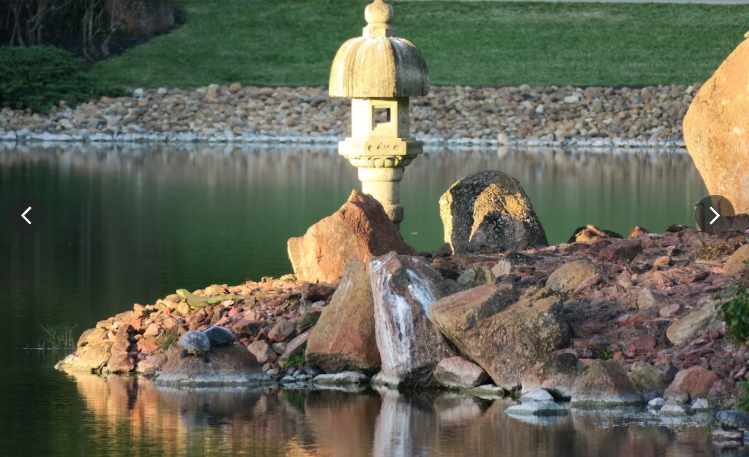
As sustainability shifts from technology to experience, comfort, slowness, and sensory intelligence are becoming design parameters once again.
“A garden like Morikami reminds us that the truest modernism is sensitivity — not spectacle.”
The Japanese garden, when read through an architect’s eyes, is not about landscape composition but spatial consciousness — how we choreograph light, silence, and movement to build places that nurture being.
FAQs
1. What makes Japanese gardens timeless even today?
Japanese gardens focus on rhythm, silence, and transition — design elements that appeal to the human senses, not just the eyes. Their emotional intelligence makes them relevant across cultures and centuries.
2. How does the Morikami Garden reinterpret traditional Japanese design?
Hoichi Kurisu didn’t replicate Japan — he translated it. Each garden represents a different era, yet adapts to Florida’s ecology, creating a global, living dialogue between culture and climate.
3. Why is water so important in Japanese garden design?
Water represents life, reflection, and movement. Whether it’s still, flowing, or abstracted as gravel, it guides emotions — just as light does in architecture.
4. How does the design ensure comfort without mechanical systems?
Through microclimate design — shade from canopies, coolness from ponds, and textured natural materials. Comfort comes not from machines, but from environmental harmony.
5. What can architects learn from Morikami’s design?
That authentic design is about empathy, not imitation. Meaningful spaces come from understanding rhythm, context, and human scale — not from copying styles.




.png)