Introduction:
Landscape design is not just about planting greenery—it’s about creating spaces that people can move through, pause in, and interact with. A well-designed landscape integrates functionality, comfort, and engagement through thoughtful spatial planning. Whether it’s a residential garden, public park, or institutional campus, three core design elements shape how users experience outdoor spaces: Access, Rest, and Activity. These elements ensure that landscapes aren’t just visually appealing, but also purposeful and inclusive. Let’s dive into how each of these contributes to meaningful, user-centric landscape design.
1. Access:
Access is the first point of interaction between a person and the landscape. It refers to the pathways, trails, transitions, and visual cues that direct movement through a space. This includes stone pavers, meandering trails, wooden bridges, gravel paths, ramps, shrub-lined walkways, and gateway arches. The choice of material and form depends on the desired feel—natural stone paths can evoke rusticity, while concrete pavers suggest modernity.
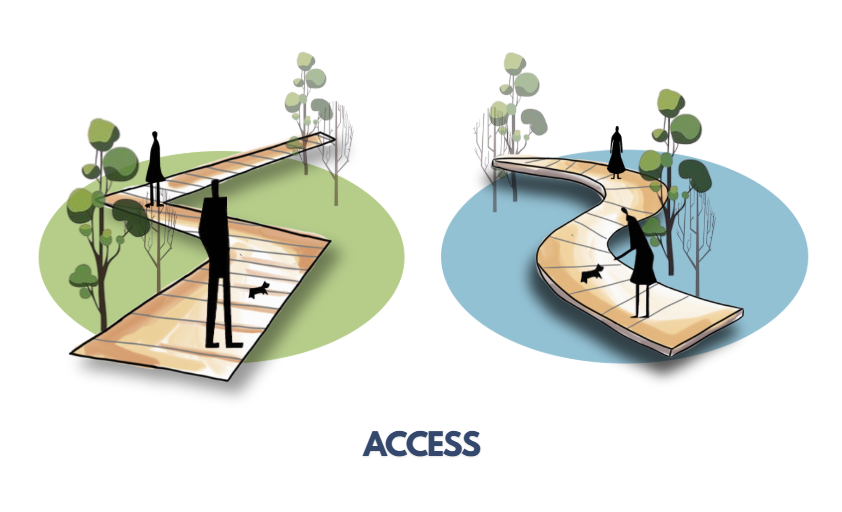
Image Credits: Shivani Chougula @Kaarwan
Good access design establishes clear circulation patterns without disrupting the landscape's natural rhythm. Curved paths invite exploration, while straight lines often guide users quickly from point A to B. Strategically placed transitional vegetation like shrub lines or trellises can create framed views and slow down the pace, encouraging mindfulness. Accessibility is another critical factor—slopes, tactile pavers, and levelled walkways ensure inclusivity for people of all ages and abilities.
In spatial terms, access acts like the skeleton of the landscape, tying together the rest and activity zones while offering seamless flow. Well-integrated access encourages intuitive navigation and reveals different moods and functions of the space gradually.
Before you commit big, explore small. Take a peek into niche skills with our budget-friendly Masterclasses.
2. Rest:
In a world of constant motion, rest zones in landscapes offer essential pockets of stillness and observation. These are places designed for pause, comfort, and contemplation, shaped by elements like seating benches, pergolas, gazebos, shaded platforms, hammocks, low walls, etc.
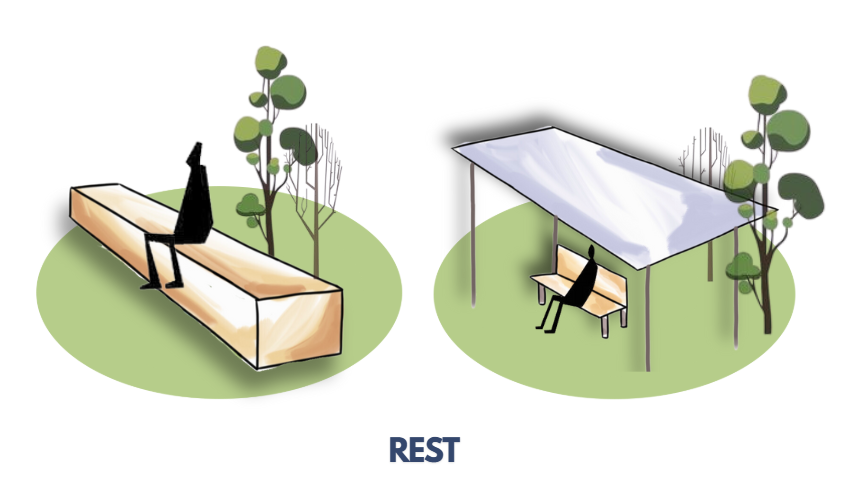
Image Credits: Shivani Chougula @Kaarwan
Designing rest zones is about microclimatic comfort—positioning seating near trees for shade, orienting benches toward scenic views, or placing them beside a water feature to create auditory calm. Elements like canopies, bamboo structures, or tensile shade covers are often used to provide shelter without blocking openness. Furniture can be fixed or modular, but always should be placed in socially intuitive ways—some to encourage group interactions, others for solitude.
Rest zones also define nodes within the larger spatial organisation, anchoring views or acting as focal points in axial layouts. Materials and textures—wood, stone, terracotta—play a big role in evoking warmth and tactility. These areas often become the most emotionally resonant parts of a landscape, serving both as functional necessities and memory-making spots.
3. Activity:
Activity zones inject energy and purpose into landscapes. These areas are designed for movement, exploration, exercise, and interaction, catering to diverse user groups. They can include lawns for running or yoga, climbing mounds, play equipment, outdoor gyms, amphitheatres, water play areas, skate zones, or even organic kitchen gardens.
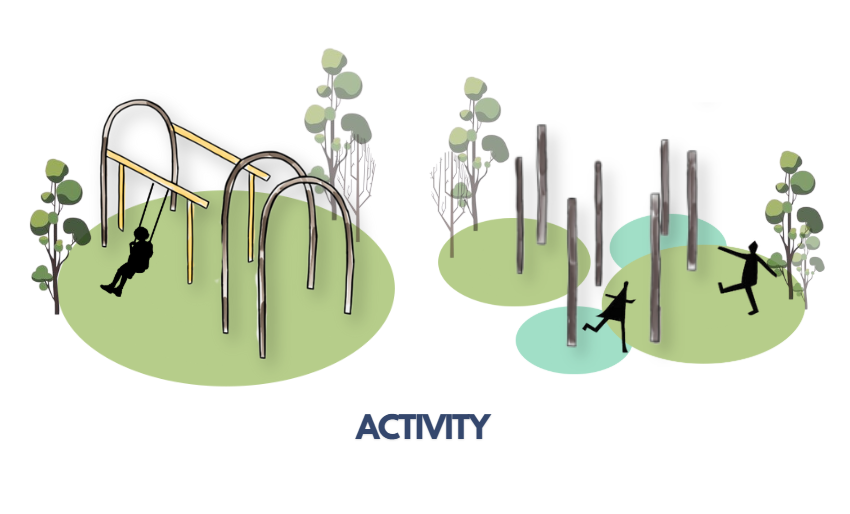
Image Credits: Shivani Chougula @Kaarwan
Designing for activity involves a mix of open-ended and defined spaces. A lawn acts as a multi-functional surface, while designated play areas with slides or balance beams provide focused engagement for children. Grassy mounds or sculpted landforms add vertical play, encouraging climbing, tumbling, or imaginative games.
Spatially, activity zones require buffering from rest areas, often achieved using green hedges, trellised walls, or level differences. Surfaces must be safe, drain well, and feel comfortable underfoot—sand, rubber mulch, grass turf, or natural soil are popular choices. These zones should ideally be visible from rest spaces or access paths, ensuring passive surveillance and safety, especially for children.
Activity zones are crucial for enhancing public health, fostering community engagement, and making the landscape truly interactive rather than merely scenic.
Conclusion:
A well-designed landscape is not just a collection of plants and hardscape—it’s a living, breathing space that responds to the needs of its users. By integrating the three core elements—Access, Rest, and Activity- designers can create outdoor environments that are navigable, comforting, and engaging. These aren’t separate layers, but interwoven experiences that balance movement with pause, and interaction with observation. Whether you’re designing a small backyard or a large public plaza, keeping these foundational elements in mind ensures your landscape remains inclusive, thoughtful, and alive.
Want to take your landscape designs from sketches to smart simulations?
Explore how tools like BIM can simplify terrain modelling, grading, and site phasing, while opening doors to high-demand niches.
👉 Start with a Masterclass and see where it leads.