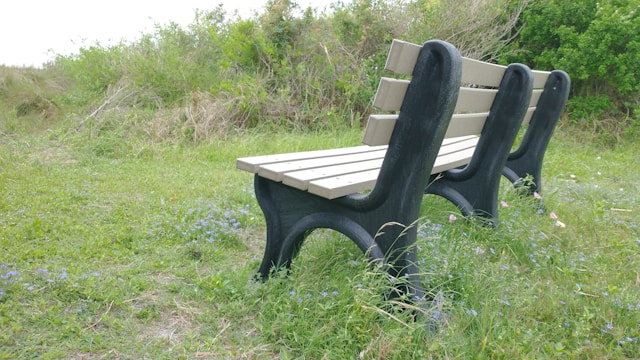
Introcduction to Prospect Refuge Theory
Architecture and urban design are deeply connected to how people perceive and experience spaces. Beyond aesthetics and functionality, successful environments respond to fundamental human instincts related to comfort, safety, and visibility. One influential concept that explains these spatial preferences is the Prospect Refuge Theory, which describes why people are naturally drawn to spaces that provide both a clear view of their surroundings and a sense of protection. In many architectural and urban environments, the most inviting spaces are those where users can observe activity around them while remaining partially sheltered. This balance between openness and enclosure influences how seating areas, plazas, balconies, and waterfront edges are designed.
Understanding the principles behind Prospect Refuge Theory allows architects to create spaces that feel intuitively comfortable and psychologically appealing.
The Prospect Refuge Theory in Urban Design
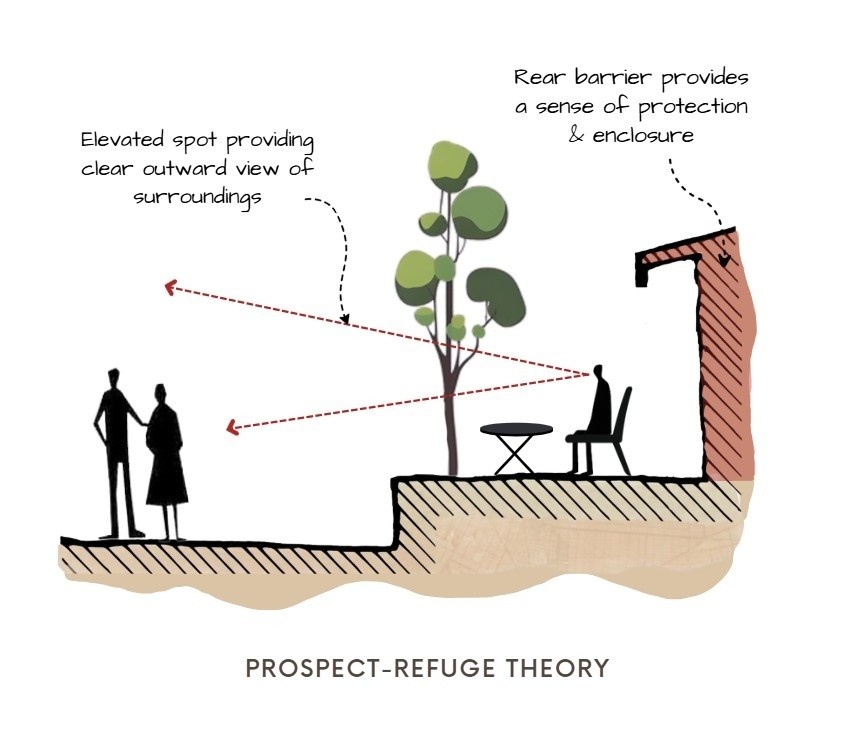
The Prospect Refuge Theory was proposed by environmental psychologist Jay Appleton in 1975 in his book The Experience of Landscape. Appleton suggested that human preferences for certain environments are rooted in evolutionary survival instincts. Early humans benefited from locations where they could observe potential opportunities or threats from a distance (prospect) while remaining protected from danger (refuge). This combination allowed individuals to remain aware of their surroundings without exposing themselves to risk.
In spatial design terms, prospect refers to the ability to see outward across a space, while refuge refers to a sense of enclosure or protection behind or around the user. Environments that successfully combine these two qualities often feel naturally comfortable and secure to occupants. For instance, people frequently choose seating areas where they can look out over a plaza or landscape while having a wall, railing, or elevated edge behind them.
Urban designers and architects often incorporate these principles consciously or subconsciously when shaping public spaces. Elevated seating edges, shaded pavilions overlooking plazas, and cafés positioned along busy streets all demonstrate this balance. Prospect Refuge Theory helps explain why certain areas within parks, streets, or buildings attract more activity than others. When designers provide opportunities for both visibility and shelter, spaces become more inviting and encourage longer user engagement.
Examples of Prospect Refuge in Built Environments
Balconies
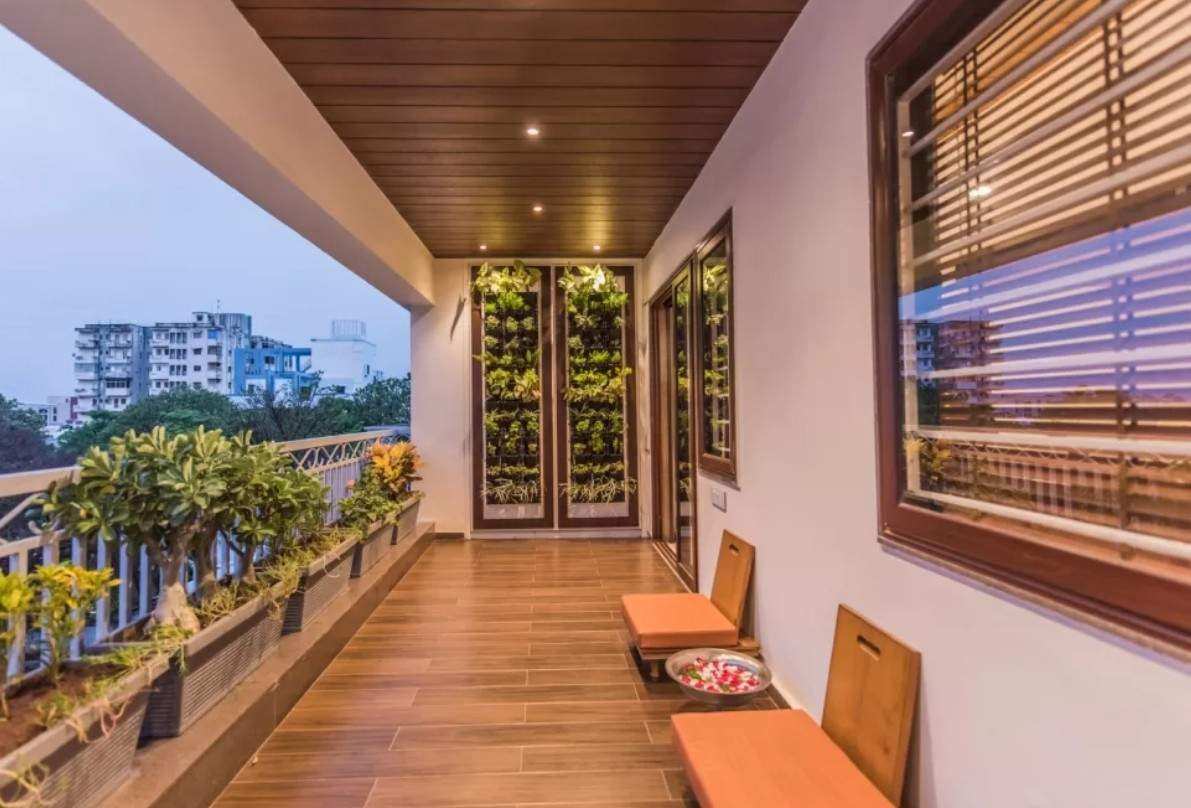
Balconies are one of the clearest architectural examples of Prospect Refuge Theory. Positioned along the façade of buildings, they provide users with a wide outward view of the surrounding landscape or street below, fulfilling the condition of prospect. At the same time, the building wall behind and the railing along the edge create a sense of enclosure and security, providing refuge. This combination allows occupants to observe outdoor activity while remaining within the protected environment of their residence. In urban housing design, balconies often become favored spaces because they balance openness with privacy and protection.
Plazas
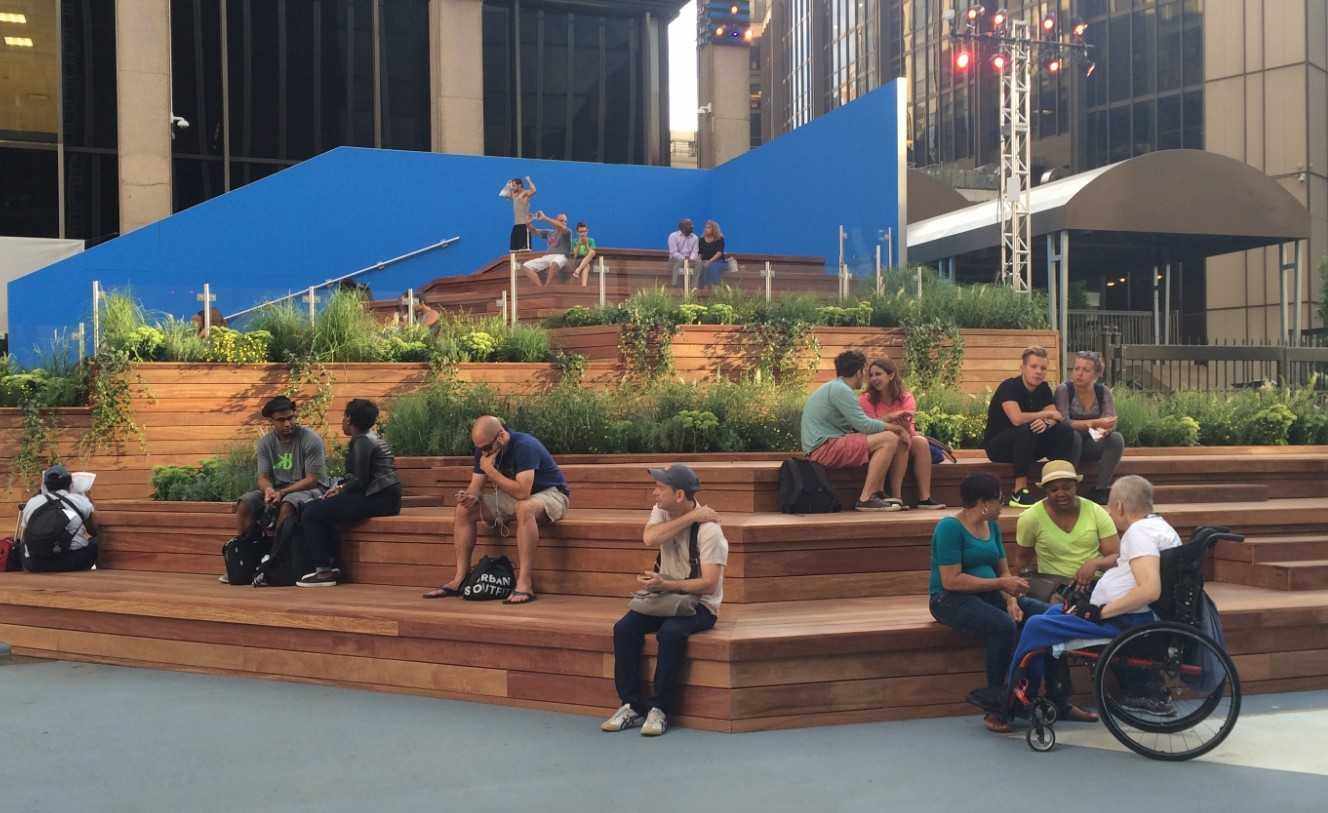
Public plazas also demonstrate Prospect Refuge principles through their spatial organization. Many plazas incorporate peripheral seating areas, steps, or shaded edges where users can sit while observing the central activity of the space. The open plaza acts as the prospect, offering clear visibility across the area, while architectural elements such as arcades, retaining walls, or built seating provide refuge. People tend to gravitate toward these edge conditions rather than the middle of open spaces, as they allow individuals to feel both connected to and slightly removed from the surrounding activity.
Waterfront Seating
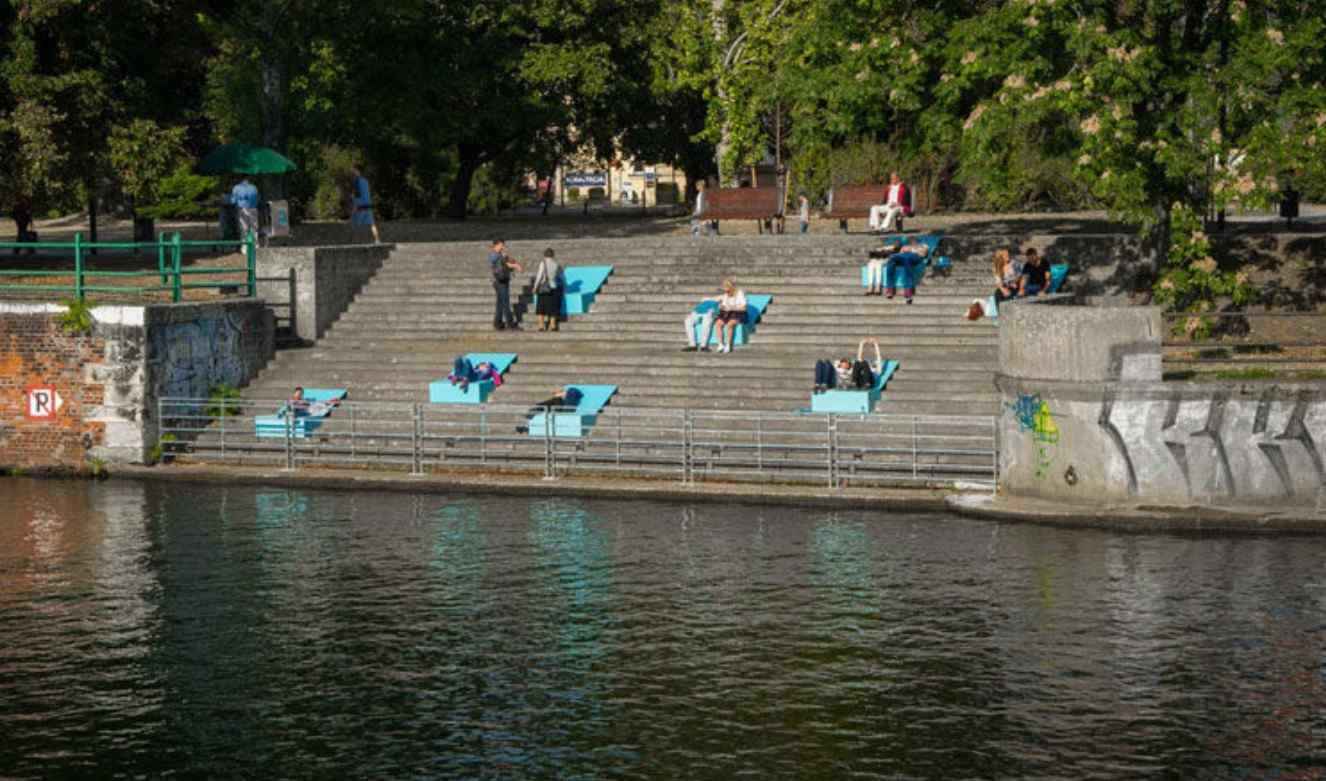
Waterfront edges often create natural prospect refuge environments due to their relationship with landforms and views. Seating placed along promenades or stepped edges allows users to look outward across the water, providing a strong prospect experience with expansive views. At the same time, retaining walls, elevated steps, or landscaped slopes behind the seating areas offer a subtle sense of refuge. This spatial configuration allows visitors to enjoy scenic vistas while feeling comfortably anchored within the landscape. As a result, waterfront promenades frequently become highly popular public spaces.
Prospect Refuge Theory offers valuable insight into why certain spaces feel naturally comfortable and inviting to people.
Conclusion
By balancing visibility and protection, environments can satisfy deep-rooted psychological preferences shaped by human evolution. The theory explains why individuals often choose seats along walls, elevated edges, or sheltered corners where they can observe activity without feeling exposed. From residential balconies to public plazas and waterfront promenades, the principles of prospect and refuge appear repeatedly across architectural and urban design projects. By consciously applying this theory, architects and landscape designers can create spaces that encourage social interaction, enhance user comfort, and foster stronger connections between people and their environments.