

.jpeg)
In a world confronting climate extremes — from rising temperatures to resource scarcity — the question isn’t how to build more, but how to build smarter. Architects and material scientists are now experimenting with adaptive, chainmail-inspired structures, merging ancient armour geometry with cutting-edge computational design.
This approach is transforming how we think about enclosures, facades, and shelters, especially in harsh or remote environments where resilience, flexibility, and sustainability must coexist.
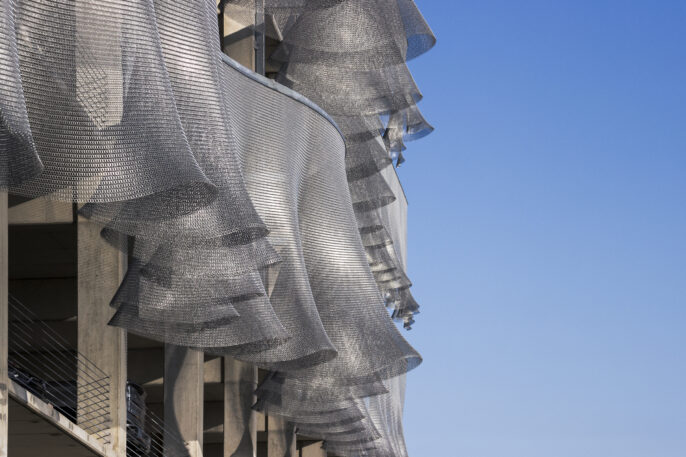
What Is Chainmail Architecture?
Chainmail architecture draws inspiration from the interlinked metal rings of medieval armour — a material system designed to be strong yet flexible. When reimagined in architecture, this structure becomes a modular mesh, capable of deforming, adapting, and absorbing loads dynamically.
Researchers and designers, such as those at ETH Zurich’s Block Research Group, are reinterpreting these principles using computational simulation and robotic fabrication. The result? Adaptive shells that are lightweight, recyclable, and easy to assemble or disassemble — ideal for both temporary and resilient architecture.

Material Innovation: Recycled Plastics and Circular Thinking
The use of recycled plastics as the primary material for chainmail-like panels exemplifies the circular economy approach within the AECO sector.
These units can be:
- 3D printed or moulded from waste polymer composites.
- Fitted with snap-joint or flexible connectors that enable curvature.
- Combined to form scalable architectural systems — from façade panels to entire shells.
This makes them particularly valuable for:
- Emergency shelters in disaster-prone zones.
- Temporary pavilions and installations.
- Mars-habitat prototypes, where lightweight deployability is key.
Computational Design: The Engine Behind Adaptivity
Behind these visually striking systems lies parametric design and structural simulation. Software such as Rhino, Grasshopper, and Kangaroo Physics allows architects to:
- Optimise geometric flexibility.
- Simulate stress distribution under wind or snow loads.
- Integrate material efficiency with structural stability.
The parametric workflow enables designers to respond to environment-specific data — adjusting density, thickness, or curvature based on temperature, pressure, or light exposure.
This shift towards performance-driven design ensures that even experimental concepts have scientific grounding and real-world viability.
A recent prototype, the Chainmail Pavilion, developed by a team of computational designers, demonstrated the potential of recycled PET (polyethene terephthalate) modules to form a self-supporting, doubly curved structure.
The team achieved:
- 90% material efficiency compared to conventional steel meshes.
- Full disassembly and recyclability.
- On-site assembly within 24 hours by minimal labour.
Through finite element analysis (FEA) and form-finding simulations, the structure’s load paths were optimised before fabrication — drastically reducing both weight and material use.
This project exemplifies how computation + circularity can coexist, driving the AECO industry closer to net-zero construction goals.
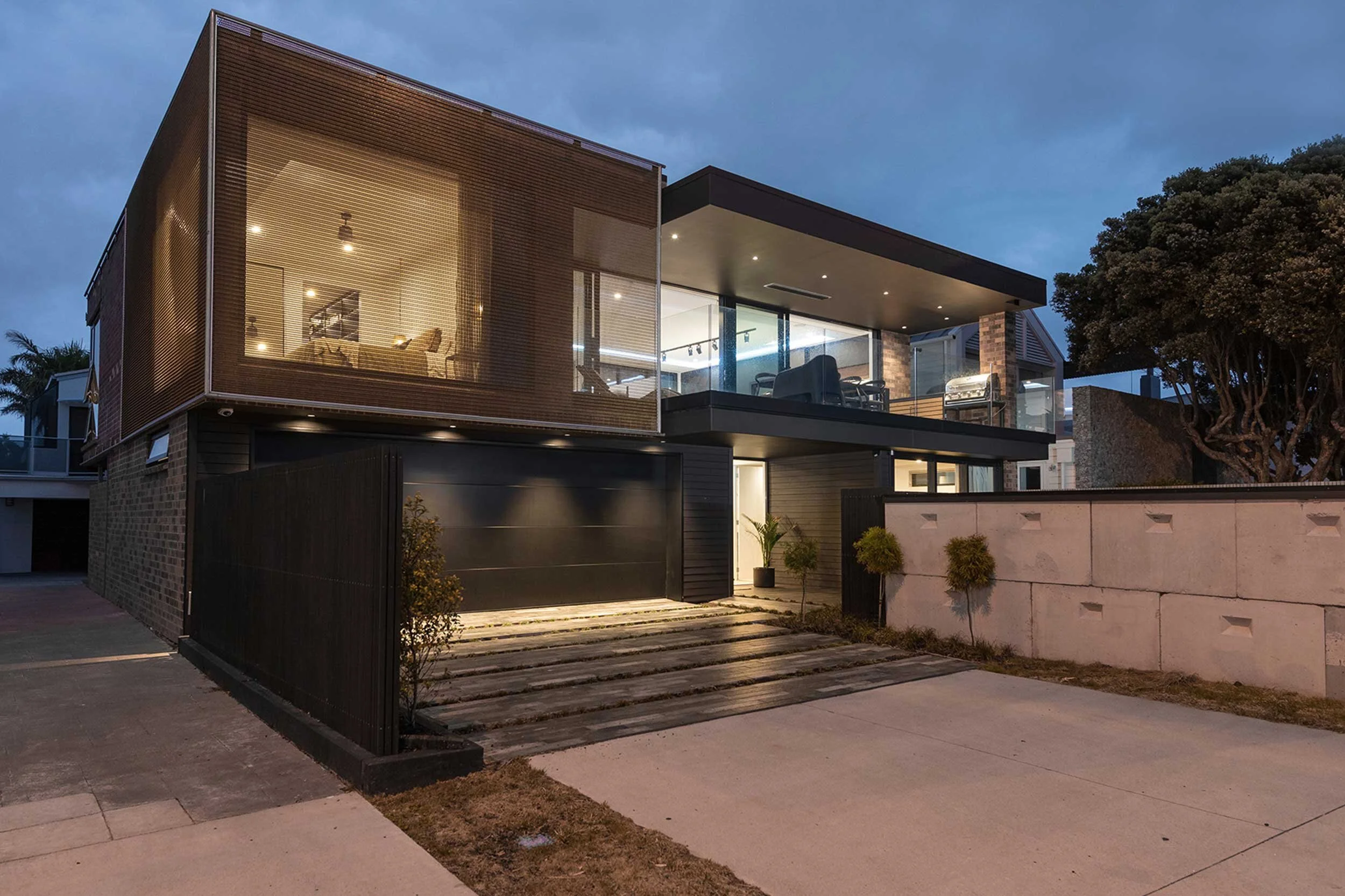
Beyond Pavilions: Real-World Applications
While still in the prototype stage, chainmail-based systems show promise for multiple scales and uses:
- Deployable disaster shelters — flexible shells that fold and transport easily.
- Kinetic facades — responding to wind or sunlight for shading.
- Art installations and exhibitions — where visual dynamism meets sustainable materiality.
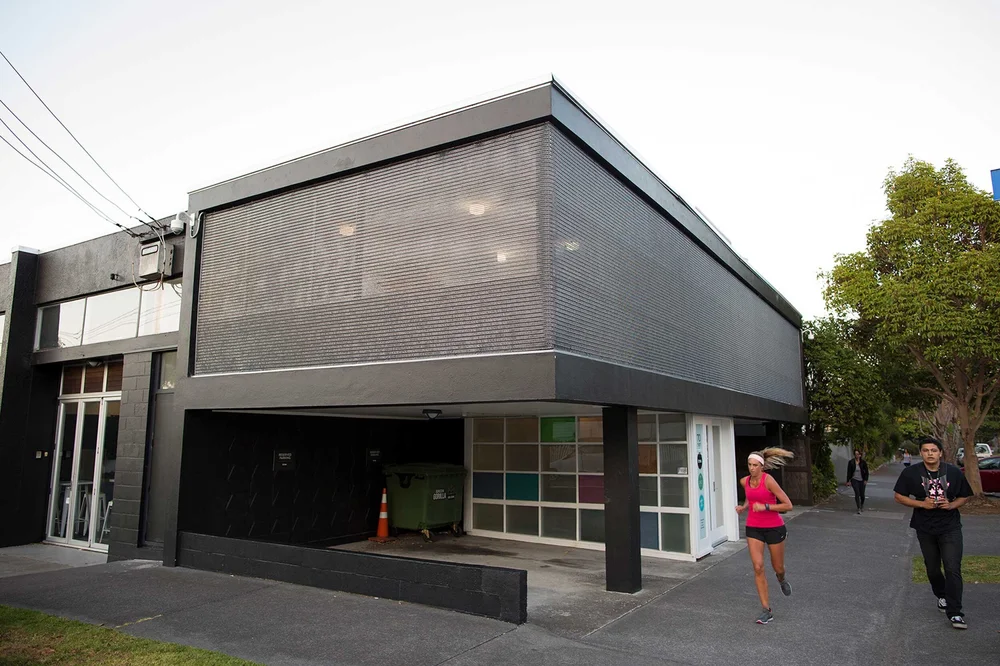
As robotic fabrication becomes more accessible, architects may soon see chainmail logic integrated into large-scale building envelopes, redefining the intersection of form and performance.
Learning from the Workflow: Where Architects Fit In
What makes such innovations relevant to the broader AECO industry is the workflow, not just the material. The same parametric tools — Rhino, Grasshopper, Revit, and BIM-integrated plugins — are what professionals use daily to design smarter and collaborate efficiently.
Learning these tools enables architects to:
- Design adaptive, responsive architecture.
- Prototype faster and more accurately.
- Make informed, sustainable design decisions based on data and simulation.
Design That Bends Without Breaking
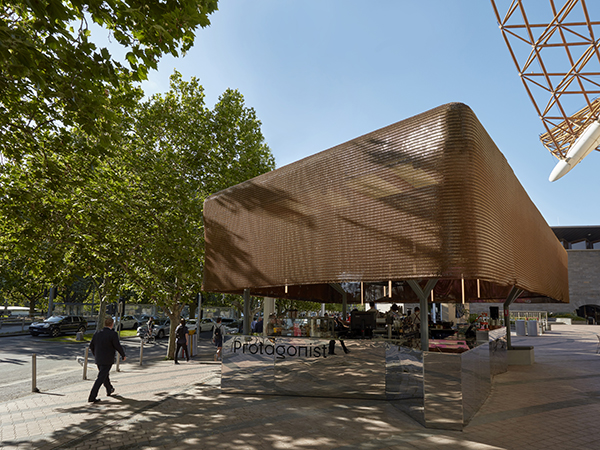
Chainmail architecture reminds us that flexibility isn’t weakness — it’s intelligence. By combining computational design, recycled materials, and structural adaptability, architects are shaping a future where sustainability isn’t just about restraint, but creative resilience.
In an era of climate uncertainty, this design philosophy — to bend, adapt, and endure — may be exactly what architecture needs.
At Kaarwan, we believe that clarity precedes mastery. Our short 1-day and 3-day masterclasses in BIM, Rhino, Grasshopper, and Computational Design help professionals explore niche domains confidently — understanding whether it’s their path before investing in advanced learning.
Join industry experts who teach the logic behind tools used in adaptive systems, environmental simulation, and sustainable workflows — so you can bridge creativity and technology, just like the architects behind the Chainmail Pavilion.
FAQs:
What is chainmail architecture?
It’s a design approach inspired by interlinked rings of armour, used to create flexible, lightweight architectural structures.
Why use recycled plastics in architecture?
They offer circularity — being lightweight, durable, and reusable, ideal for low-impact construction.
What tools enable adaptive shell design?
Parametric and computational tools like Rhino, Grasshopper, and Kangaroo Physics simulate material behaviour and geometry.
Where can chainmail systems be used?
In facades, pavilions, shelters, and installations — wherever flexibility and lightness are needed.
Can students learn computational design easily?
Yes — Kaarwan’s Computational Design Masterclass introduces concepts through real-world architectural case studies and expert mentorship.




.png)