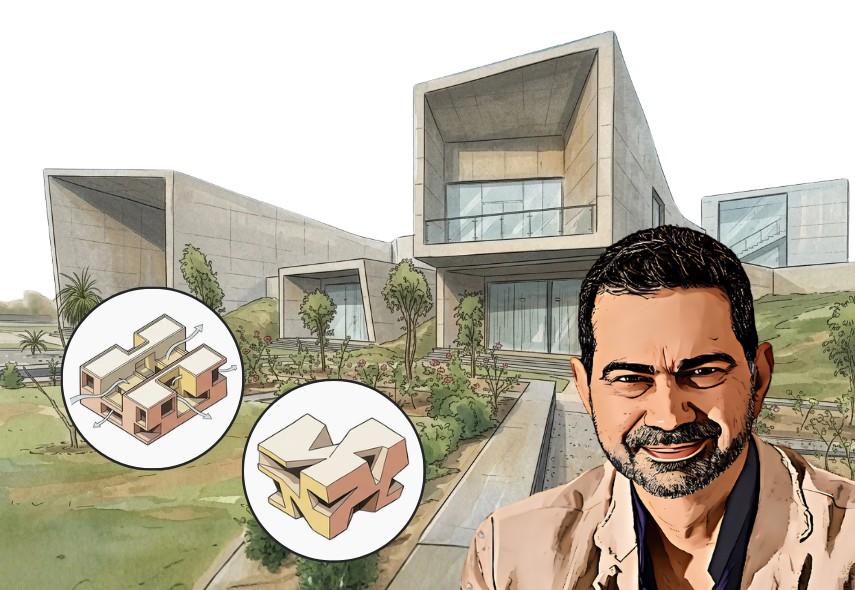
Design Principles by Sanjay Puri
Contemporary Indian architecture has seen a strong shift toward climate-responsive, context-driven design, and few architects embody this approach as distinctly as Sanjay Puri. Known for his sculptural forms, dynamic geometries, and environmentally responsive strategies, his work moves beyond aesthetics to integrate climate, user interaction, and site conditions into a cohesive design language. Rather than relying solely on digital precision, his process often begins with intuitive exploration, resulting in buildings that feel both expressive and deeply rooted in their surroundings. The following principles outline key strategies that define his architectural approach.
1. Sketching Over Software
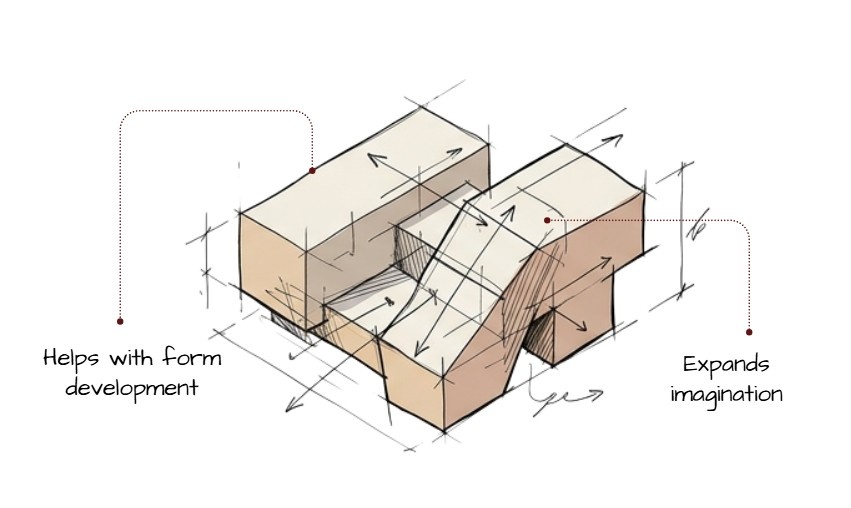
Sanjay Puri’s design process often begins with hand sketches, allowing ideas to evolve freely without the constraints of rigid digital tools. This approach encourages fluid geometries, layered forms, and spatial experimentation in the early stages of design. The spontaneity of sketching enables exploration of multiple possibilities before refining them through software.
In projects like the 72 Screens by Sanjay Puri Architects, this approach is evident in the dynamic façade composition, where repetitive elements are arranged in a seemingly organic yet controlled manner. The result is a built form that retains the essence of its initial conceptual exploration.
2. Site-Specific Evolution
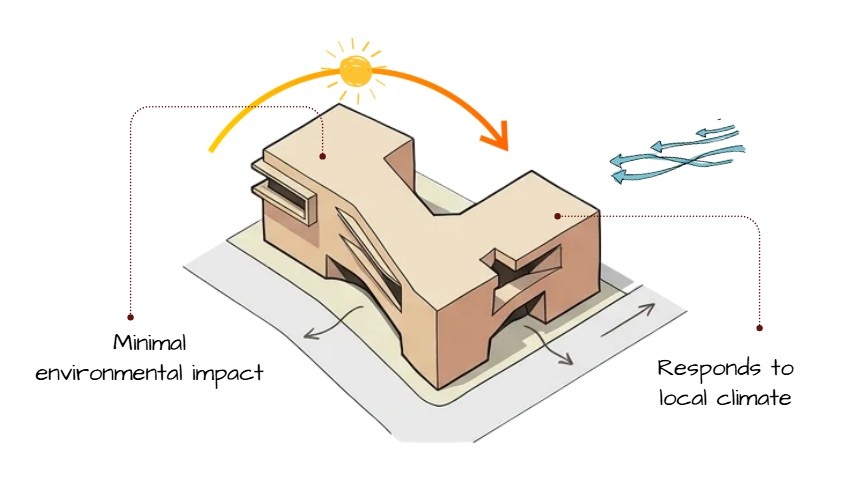
A defining aspect of Puri’s work is the way each project evolves directly from its site conditions. Factors such as climate, orientation, surrounding context, and topography inform the building’s form, rather than applying a predefined design language.
The Courtyard House by Sanjay Puri Architects demonstrates this principle through its inward-looking configuration, responding to harsh climatic conditions while creating shaded, thermally comfortable spaces. The form adapts to environmental constraints, resulting in a design that is both functional and contextually grounded.
3. Natural Ventilation
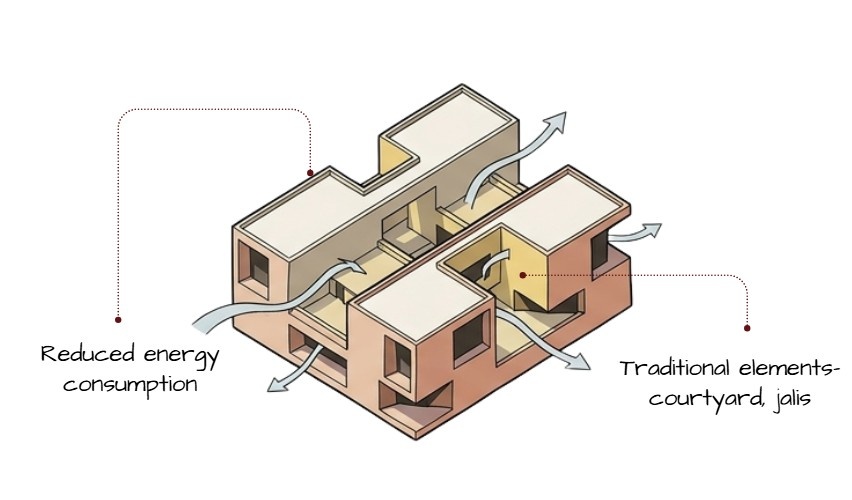
Passive design strategies play a crucial role in Puri’s architecture, particularly in hot climates. His buildings are designed to maximize natural ventilation, reducing reliance on mechanical cooling systems.
In the The Street by Sanjay Puri Architects, staggered built forms, courtyards, and openings facilitate continuous airflow throughout the development. These strategies improve thermal comfort while enhancing energy efficiency, demonstrating how design can work in harmony with natural systems.
4. Abstract Forms
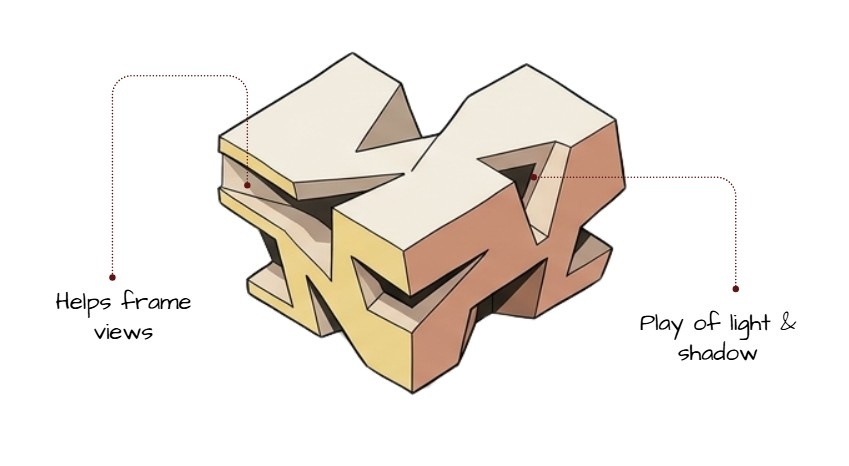
Puri’s architecture is characterized by bold, sculptural forms that move away from conventional orthogonal geometry. His buildings often appear as carved volumes, with voids, projections, and angular planes creating a sense of movement and depth.
This is particularly evident in the Aria Hotel by Sanjay Puri Architects, where the massing is fragmented into dynamic forms that respond to light, shadow, and spatial hierarchy. These abstract compositions not only define the visual identity of the building but also influence its internal spatial experience.
5. Interactive Spaces
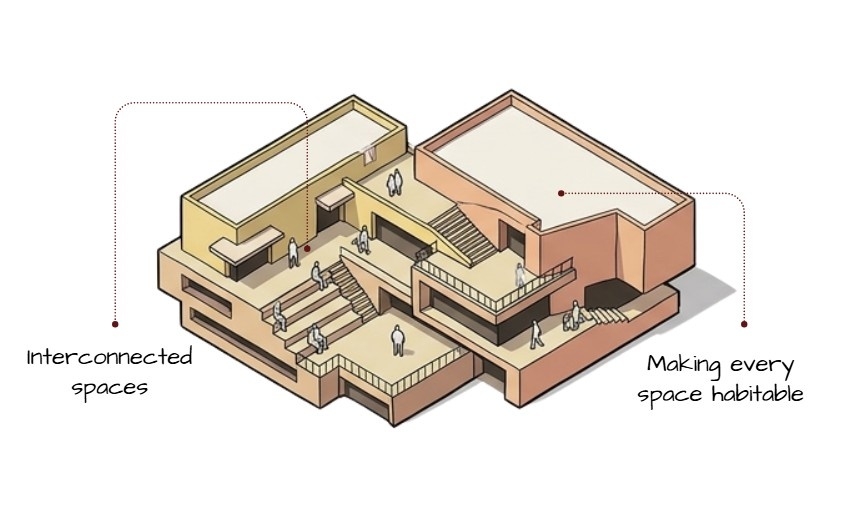
Another key strategy in Puri’s work is the integration of interactive and participatory spaces. Circulation areas are often designed as usable spaces rather than purely transitional zones, encouraging engagement and social interaction.
Projects like the The Street by Sanjay Puri Architects incorporate terraces, stepped pathways, and shared zones that promote community interaction.
This approach transforms movement through the building into an experiential journey rather than a functional necessity.
Conclusion
Sanjay Puri’s architectural approach demonstrates how design can simultaneously address climate, context, and user experience while maintaining a strong visual identity. His principles—ranging from intuitive sketching to site-driven form generation—highlight the importance of integrating environmental and spatial strategies into the design process. As architecture continues to evolve, these strategies offer valuable insights into creating buildings that are not only visually compelling but also responsive, efficient, and deeply connected to their context.
These were some insights on Design Principles by Sanjay Puri. Stay tuned for more information on other significant topics in the AEC industry and follow Kaarwan for such detailed guides!
FAQs
1. What defines Sanjay Puri’s architectural style?
His work is defined by climate-responsive design, sculptural forms, and context-driven planning.
2. Why is natural ventilation important in his projects?
It reduces energy consumption and enhances thermal comfort in hot climates.
3. How does site context influence his designs?
Building form and layout evolve based on orientation, climate, and surroundings.
4. What role do sketches play in his design process?
They allow free exploration of ideas before refinement through digital tools.
5. Are his design principles applicable today?
Yes, they are highly relevant for sustainable and climate-responsive architecture.