In an era where climate change dominates global discourse, universities have a pivotal role to play. They are more than just centers of learning—they are incubators of change.
Universities, with their vast resources and influence, are uniquely positioned to pioneer sustainability. A well-designed sustainable campus becomes a living laboratory, teaching by example and reinforcing the global commitment to reducing carbon footprints. Imagine a university where the energy that powers your classroom comes from the sun overhead or where the water in your bottle was harvested and filtered from yesterday’s rain. That vision is not utopian; it is the blueprint for the future.
Key Features of a Sustainable Campus
- Energy-Efficient Buildings:
A sustainable campus begins with energy-efficient buildings. Passive design strategies, such as positioning buildings to maximize natural light and ventilation, reduce the need for artificial lighting and air conditioning. Shading devices, green roofs, and thermal insulation further enhance energy performance.
Take the Indian Institute of Management, Ahmedabad, for instance. The use of brick cladding, shaded courtyards, and optimal building orientation exemplifies how design can align with local climatic conditions. Integrating renewable energy technologies like solar panels and wind turbines is another transformative step. A striking example is the University of California, Davis, whose net-zero energy student housing demonstrates that renewable solutions are not just feasible but scalable.
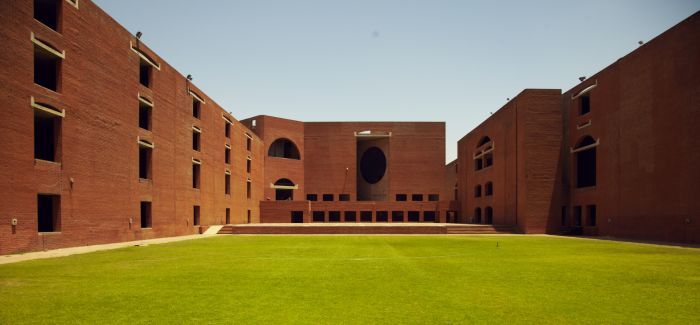
Indian Institute of Management Ahmedabad, Image Source: OfficeChai.com
- Water Management Systems: Reclaim, Reuse, Rejuvenate
Universities must embrace smart water management practices to combat depleting resources. Rainwater harvesting and greywater recycling are vital components of a sustainable campus. Stanford University’s Central Energy Facility is a standout, reclaiming water for cooling systems and irrigation while reducing potable water consumption by an astounding 30%.Imagine walking through a campus where every drop of rainwater nourishes green landscapes, where automated irrigation systems adjust based on weather forecasts. This is not science fiction but the reality of smart, water-efficient campuses. - Green Mobility: Connecting Sustainability and Convenience:
A truly sustainable campus must also consider how people move. Green mobility options like bicycle lanes, pedestrian-friendly pathways, and electric vehicle charging stations reduce dependence on fossil fuels.
The University of Copenhagen, Denmark, is an example, where over half of students commute by bike. As noted by urban planner Jan Gehl, "Cities are for people, and the same must apply to campuses." Enabling sustainable mobility not only reduces emissions but also enhances the well-being of students and staff by promoting active lifestyles. - Zero-Waste Goals: Beyond Recycling
Zero-waste campuses aim to minimize landfill contributions by focusing on waste segregation, composting, and reducing single-use plastics. The University of British Columbia (UBC) has led the way with its zero-waste food service program, where organic waste is composted on-site, closing the loop on sustainability.
Waste bins can be replaced by compost stations, and discarded coffee cups can be turned into fertile soil for campus gardens. That is the power of zero-waste thinking.
Technological Integration: The Smart Campus Revolution
Sustainable campuses leverage technology to optimize resource use. The Internet of Things (IoT) allows real-time monitoring of energy and water consumption, enabling quick adjustments to reduce wastage. MIT’s smart campus technology, for instance, uses sensors to manage lighting, heating, and even student traffic flow, ensuring efficiency and comfort.
AI-driven predictive maintenance prevents system failures before they occur, saving costs and resources. The "smart" campus is not just efficient; it is responsive, evolving with the needs of its inhabitants.
Social and Educational Benefits
Sustainable campuses are healthier campuses. Biophilic design—integrating natural elements like greenery and sunlight—improves air quality, reduces stress, and boosts productivity. Students surrounded by green spaces and well-lit environments report higher satisfaction and better academic performance.
The Living Building at Georgia Tech is a stellar example. This structure teaches sustainability by being sustainable. Students interact with its solar panels, water recycling systems, and composting mechanisms, turning theoretical knowledge into tangible experiences.
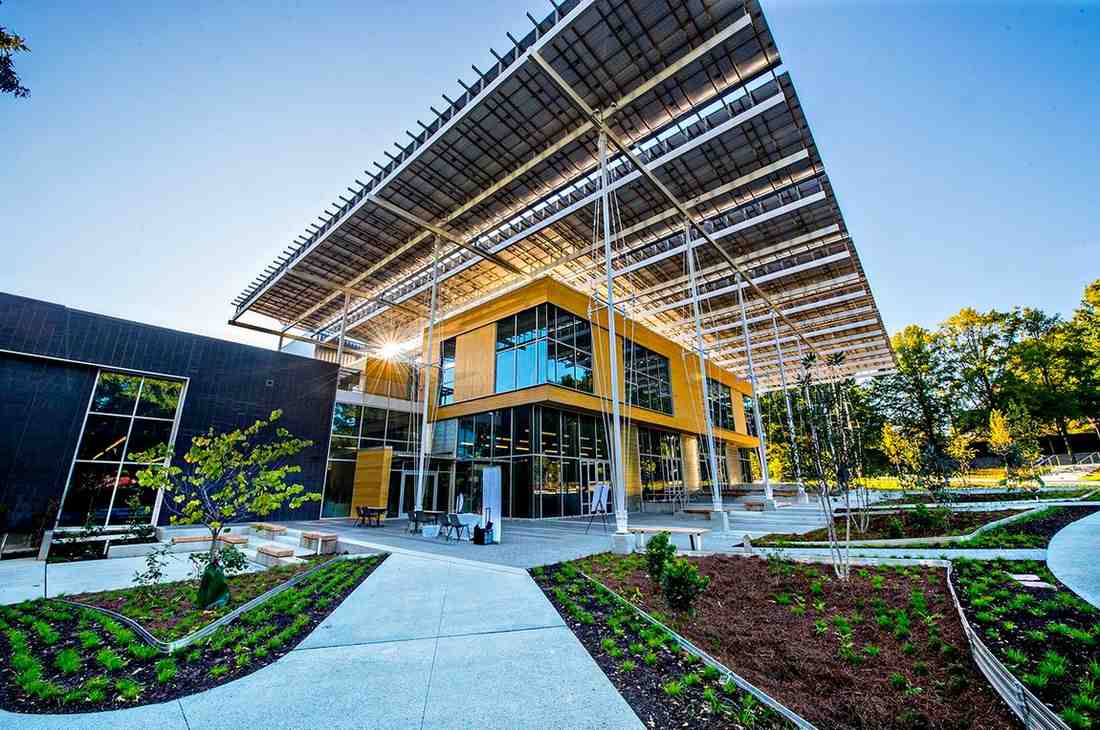
Living Building at Georgia Tech, Image Source: Curbed Atlanta
Challenges and Solutions
Implementing sustainable campus design is not without its hurdles. High initial costs often deter decision-makers. However, long-term savings in energy and operational costs make it a worthwhile investment. Public-private partnerships can ease financial burdens, as demonstrated by the partnership between Arizona State University and Ameresco for renewable energy projects.
Retrofitting older buildings poses additional challenges, but phased renovations and hybrid designs can bridge the gap between heritage and modernity. Cultural resistance is another obstacle. Awareness campaigns and student-led sustainability clubs can foster a culture of eco-consciousness on campus.
Future Trends: The Horizon of Sustainable Design
The future of sustainable campus design lies in net-zero energy campuses, urban-integrated designs, and innovative materials. Carbon-neutral bricks, algae-based bioplastics, and modular green walls are just a few examples of emerging trends.
Campuses like the University of Oxford are already embracing urban integration, where public parks, libraries, and research facilities blend seamlessly with city infrastructure, creating shared value for students and the community.
Conclusion: Inspiring a Greener Tomorrow
Sustainable campus design is not just an architectural challenge; it is a moral imperative. Universities have the power to shape the next generation of leaders, equipping them with the tools and inspiration to build a sustainable future.
As architect Norman Foster aptly put it, "Sustainability is not a trend; it’s the future of our species." It is time for architects, planners, and educators to embrace this responsibility. The sustainable campuses of today are the green cities of tomorrow, proving that education and environmental stewardship are two sides of the same coin.
Will your campus lead the charge?
The future of architecture is bright, but are your skills keeping pace? Kaarwan's architecture-specific courses provide you with the knowledge and tools to confidently navigate the AEC industry. Gain valuable insights, master in-demand software, and stand out with designs that impress!
FAQs
1. What are the key components of a sustainable campus?
A sustainable campus incorporates energy-efficient buildings, water management systems, green mobility options, and zero-waste initiatives to reduce its environmental impact and promote sustainability.
2. How can universities implement green mobility solutions?
Universities can adopt green mobility by creating bicycle lanes, pedestrian pathways, and installing electric vehicle charging stations to reduce dependence on fossil fuels and encourage eco-friendly commuting.
3. What is the significance of zero-waste goals in universities?
Zero-waste goals help minimize landfill contributions by focusing on waste segregation, composting organic waste, and reducing single-use plastics, fostering a circular economy on campus.
4. How does sustainable campus design benefit students?
Sustainable design improves students' well-being by enhancing air quality, reducing stress, and creating green spaces, which collectively boost productivity and satisfaction.
5. What challenges do universities face in adopting sustainable designs?
Universities often face high initial costs, difficulties in retrofitting older buildings, and cultural resistance. However, these challenges can be mitigated through phased implementation and awareness campaigns.