The Three Magnets Theory: What is it?
"The city is not something that needs fixing; it is something that needs to be understood like a living organism." - When discussing the Three Magnets Theory, this enduring comment by Kevin Lynch, an architect and urban planner, hits close to home. This idea provides an interesting prism through which to examine the dynamics of human settlement, which may explain how cities develop and why people are attracted to city life despite its disorder.
We no longer view city planning, architecture, and human habitation through the philosophical lens of the Three Magnets Theory. Get down to brass tacks and find out what it is, why it matters, and how it has an impact on civil engineering and architecture even now.
The Origins of the Three Magnets Theory
In his 1898 work "To-Morrow: A Peaceful Path to Real Reform" (subsequently retitled as "Garden Cities of To-Morrow"), the avant-garde urban designer Sir Ebenezer Howard initially presented the Three Magnets Theory. Howard was very worried about the consequences of the Industrial Revolution's hasty urbanisation, which included pollution, overcrowding, and a sharp separation between city and country life.
In light of this emergency, Howard put forth his theory. He dreamed of a human settlement strategy that was harmonious, combining the best of city and country life. He compared his concept to three magnets to drive home his point:
- Allure of city life embodied by the Town Magnet.
- The Country Magnet—A Representation of the Allure of Life Rural.
- A model that drew from both urban and rural areas, the Town-Country Magnet felt the pull of both.
Howard wanted to build a new kind of community that would solve the problems with both city life and country living, and each magnet had its own pros and cons.
Urban Life's Enchantment: The Town Magnet
People have always felt a strong pull towards urban areas. They provide chances, ease, and a feeling of being part of something bigger. Picture yourself in the middle of a New York City street, a Tokyo street, or a Parisian old town. In terms of new ideas, jobs, and people meeting, cities are hard to beat.
However, there is a shadowy aspect to the Town Magnet as well. There are several disadvantages to city life, including pollution, overcrowding, expensive housing, and a lack of parks and other green areas. You have probably seen these problems in action as architectural and civil engineering students or professionals. As an example, bad urban design directly causes the famed "urban heat island" effect, in which cities get much hotter than their rural environs.
Not that cities are inherently bad, but Howard did point up certain problems with the Town Magnet and offered suggestions for how to fix them.
The Allure of Rural Life: The Country Magnet
The Country Magnet is at the opposite extreme. Peace, beauty, and a more leisurely pace of life are what you'll find in rural locations. They let you to be in harmony with nature, produce your own food, and inhale fresh air.
But there are difficulties to living in the country. For many, it's not a viable option due to a lack of healthcare, schools, and jobs. For instance, in contrast to urban settings, a civil engineer constructing infrastructure in a rural community may have unique logistical challenges.
Although Howard acknowledged that the Country Magnet was an important check on the Town Magnet, he also knew that it was inadequate for a contemporary, industrialised society.
A Town-Country Magnet: The Perfect Blend of Urban and Rural Living
Now we reach the meat and potatoes of Howard's theory: the Town-Country Magnet. A new form of community, he dreamed, would emerge where people could enjoy the peace and beauty of the country alongside the social and economic benefits of urban centres.
The "Garden City" was Howard's name for this concept. The intentional combination of residential, commercial, and agricultural spaces allowed it to achieve its goal of self-sufficiency. A green belt would encircle the Garden City, keeping it from becoming too urbanised and guaranteeing that its inhabitants would never be far from nature.
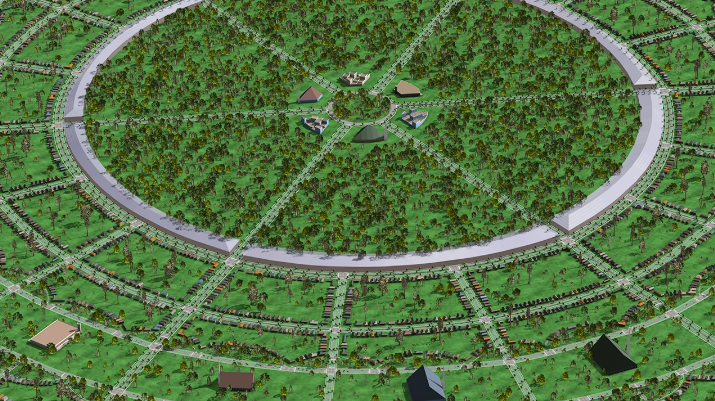
Garden City (Img Src: Houseal Lavigne)
Letchworth Garden City, an English community that Howard envisioned and had built in 1903, is among the most well-known instances of his work. Affordable housing, plenty of green space, and a high quality of life were all goals in the planning of Letchworth. It is proof that Howard's ideas are still relevant today.
The Modern Significance of the Three Magnets Theory
You may be asking, "What's the big deal with a theory that's been around for more than a hundred years?" That it is relevant even after all these years is the key. Overcrowding, pollution, and the gap between urban and rural areas are three of Howard's most critical concerns.
Your work as civil engineers and architects will determine how people live in the world in the years to come. An existing neighbourhood can be revitalised, a new transit network can be planned, or a sustainable housing complex can be designed following the ideas of the Three Magnets Theory.
Think about the growing trend of "smart cities," which are attempting to enhance city life via the use of technology. Although these efforts are thrilling, they frequently fail to consider how important it is to include nature into cityscapes. Howard's dream serves as a reminder that harmony between the natural and man-made environments is essential for long-term sustainability.
Usage in Real Life and Key Takeaways
For the sake of illustration, let's take a look at Singapore. Singapore, sometimes called the "City in a Garden," is a great example of how cities can incorporate green areas. All over the city-state, from the famous Gardens by the Bay to the many parks and streets lined with trees, you can see the ideals of the Town-Country Magnet in action.
The rise to prominence of Singapore, however, was gradual. It was the product of thoughtful preparation, original thinking, and dedication to environmental responsibility. Such examples can serve as sources of inspiration for both students and professionals, who can then incorporate these ideas into their own work.
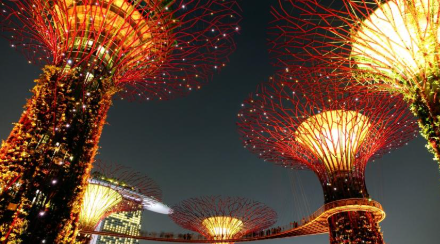
Singapore, sometimes called the "City in a Garden,
Conclusion: A Prospectus for the Years to Come
A rallying cry, the Three Magnets Theory transcends its historical status. It pushes us to reconsider city planning, put an emphasis on sustainability, and make places that improve everyone's quality of life.
"The city of the future must be a city of the people, by the people, and for the people." Keep this in mind when you begin your careers in civil engineering and architecture, Howard wrote. When you are working to create the cities of the future, let this be your guiding concept.
So, think about the Three Magnets Theory the next time you're in a congested city, a peaceful rural area, or delayed in traffic. It could be the spark that ignites an exceptional creative spark within you.
"Building a better world for everyone is the ultimate goal of architecture." - A Alright, let's get this done.
The future of architecture is bright, but are your skills keeping pace? Kaarwan's architecture-specific courses provide you with the knowledge and tools to confidently navigate the AEC industry. Gain valuable insights, master in-demand software, and stand out with designs that impress!
FAQs
1. What is the Three Magnets Theory?
Answer: The Three Magnets Theory, proposed by Ebenezer Howard, compares urban (Town), rural (Country), and hybrid (Town-Country) living, advocating for balanced, sustainable communities.
2. What are the key features of the Town-Country Magnet?
Answer: The Town-Country Magnet combines the benefits of urban convenience and rural nature, creating self-sufficient, green communities like Howard’s Garden Cities.
3. How does the Three Magnets Theory apply to modern urban planning?
Answer: It inspires modern concepts like smart cities and sustainable design, emphasizing the integration of green spaces and balanced urban-rural living.
4. What are the challenges of urban and rural living highlighted by the theory?
Answer: Urban areas face overcrowding and pollution, while rural areas lack infrastructure and opportunities. The theory seeks to balance these drawbacks.
5. Can you give an example of the Three Magnets Theory in practice?
Answer: Singapore’s "City in a Garden" model, with its blend of urban development and green spaces, reflects the principles of the Town-Country Magnet.