Introduction:
Traditional roofing techniques are not merely construction solutions—they are rooted responses to climate, culture, and material availability. In a time when modern materials dominate, traditional roofing systems offer an insight into sustainable practices, local craftsmanship, and architectural ingenuity. Let’s explore four widely used traditional roofing types—country tiles, bamboo culms, thatch, and sheet roofing—to understand their construction, climate response, and spatial quality in architecture.
1. Country Tile Roofing:
Country tiles are typically handmade clay or terracotta tiles that are sun-dried or kiln-fired. These tiles are laid in overlapping courses on a sloped roof surface, traditionally supported by wooden battens or rafters. Commonly found in coastal Karnataka and Goa, they offer a timeless vernacular charm.
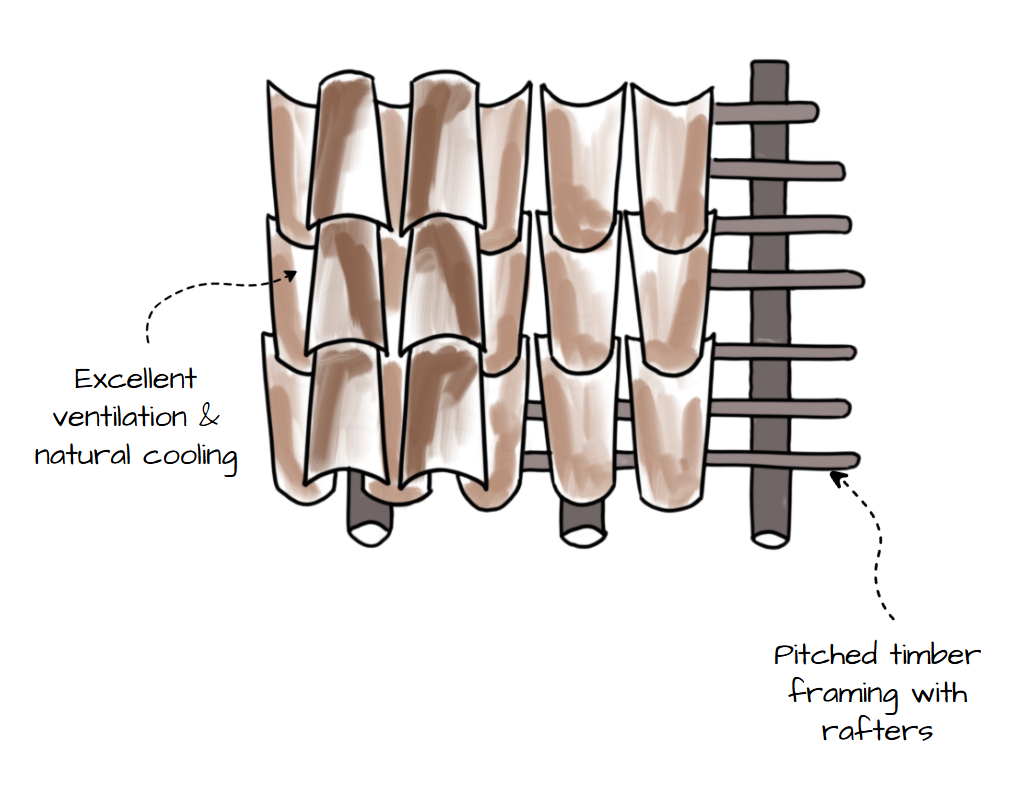
Image Credits: Shivani Chougula ©Kaarwan
These tiles are placed over timber frameworks with intermediate purlins. The sloping roof form ensures efficient drainage, while the tile overlaps prevent water ingress. Depending on the thickness and curve, they may be laid in Mangalore pattern or interlocking formats.
Country tile roofs are excellent for hot and humid climates, as clay offers great thermal insulation. While not the most durable option against extreme weather, periodic maintenance can make them last decades. Their aesthetic character and low-carbon footprint continue to inspire architects working in coastal contexts.
Regionally Popular In: Coastal Houses of Karnataka & Goa
2. Bamboo Roofing:
Used especially in Northeast India, bamboo culms offer a versatile and lightweight roofing solution. Full or half-split bamboo culms are tied or lashed onto supporting rafters using coir, rope, or jute lashings. This technique offers a distinctly rhythmic roofline and visual porosity.
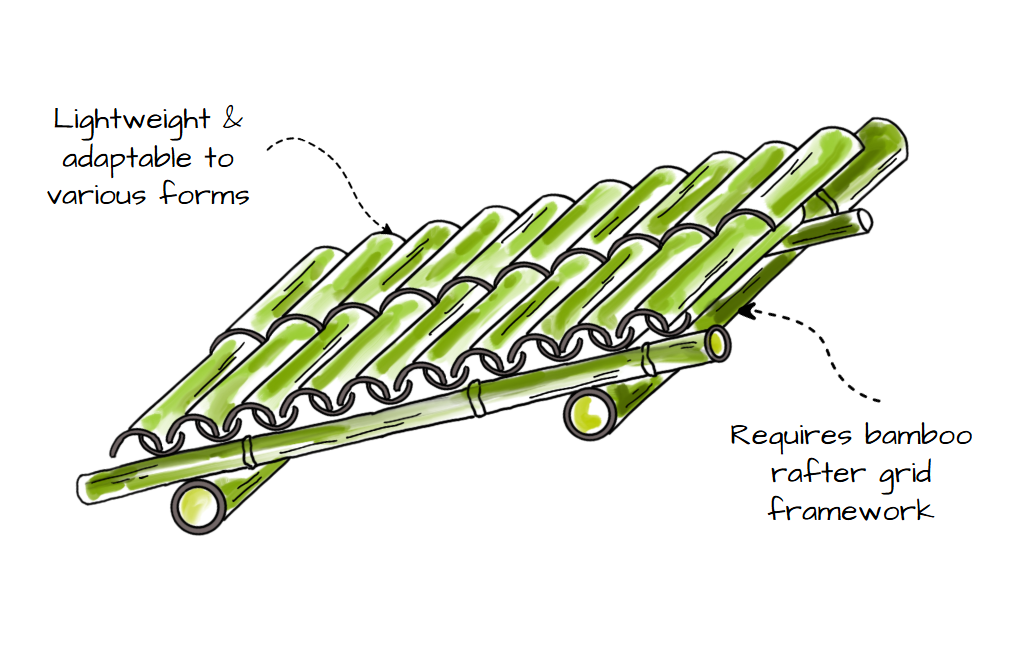
Image Credits: Shivani Chougula ©Kaarwan
Depending on the framing—either bamboo or timber—the roofing pattern can be linear, curved, or even dome-shaped. Half culms are typically placed face-down to channel water effectively. The roof is either left exposed or covered with thatch or additional sheeting for protection.
Bamboo roofs are breathable, low-cost, and adaptable to complex roof geometries. However, durability depends on treatment and maintenance. Proper seasoning, fire retardants, and anti-insect coatings can extend lifespan significantly.
Regionally Popular In: Vernacular houses of Northeast India
Want a gentle introduction to crafting complex geometries using Rhino and Grasshopper? Dip your feet into it with our 1-Day Masterclass
3. Thatch Roofing:
Thatch roofing, found in rural Tamil Nadu and Kerala, uses natural materials like dried grass, coconut fronds, or palm leaves. These materials are layered densely and tied over bamboo or wooden frames, offering a low-cost and biodegradable roofing system.
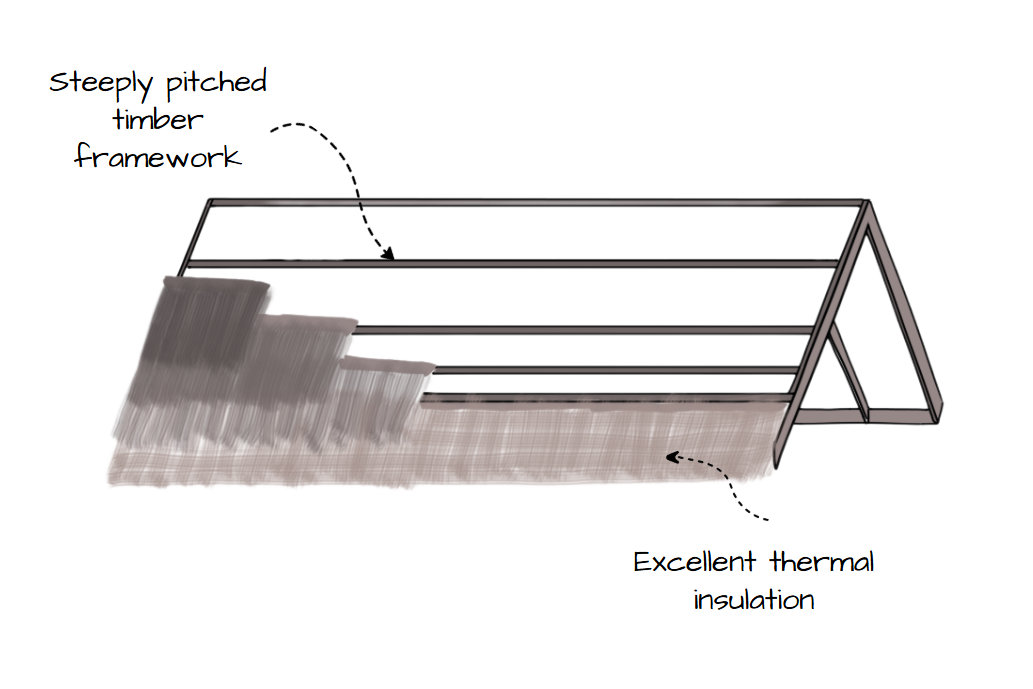
Image Credits: Shivani Chougula ©Kaarwan
Thatching is done in thick bundles laid with steep slopes to allow quick runoff. Wooden or bamboo rafters act as the primary support system. It is one of the oldest roofing techniques and can be assembled quickly with community effort.
Although highly breathable and thermally efficient, thatch requires high maintenance due to susceptibility to pests, fire, and decay. When well-maintained, it adds unmatched character and is ideal for temporary or semi-permanent structures in hot climates.
Regionally Popular In: Rural Houses of Tamil Nadu, Kerala, Odisha
4. Corrugated Sheet Roofing:
Corrugated metal sheet roofs are a common sight in hilly and rainfall-heavy regions like Assam and Sikkim. Lightweight and easy to install, these roofing systems provide quick shelter solutions in both residential and institutional structures.
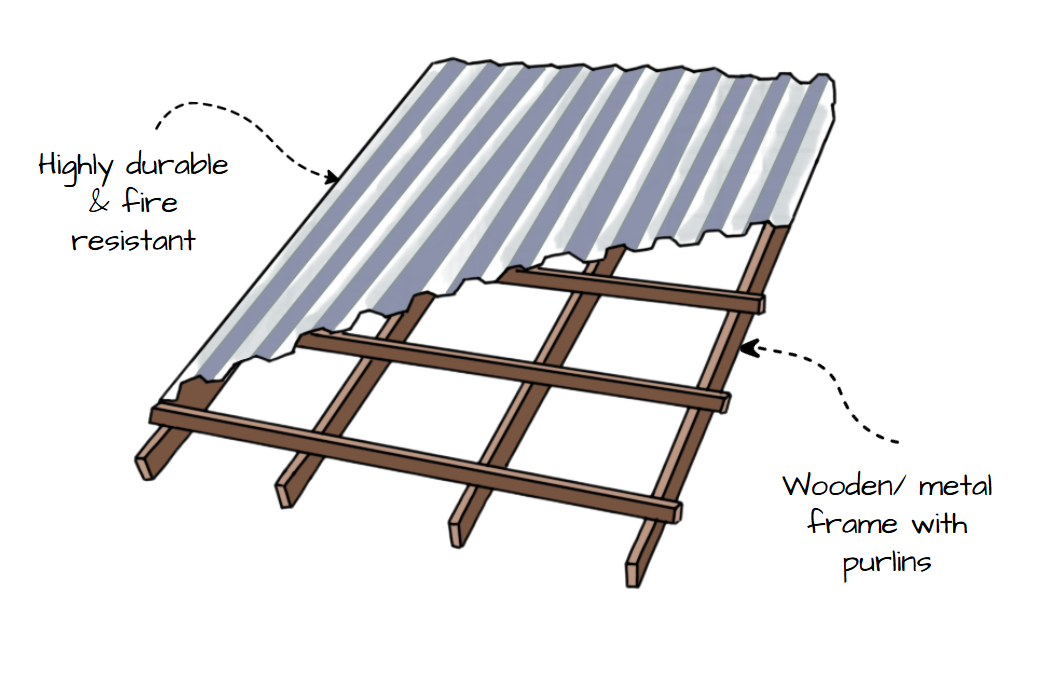
Image Credits: Shivani Chougula ©Kaarwan
Sheets are laid on timber or steel truss frameworks and fixed using bolts or nails with rubber washers. The corrugation offers strength and water-shedding capabilities, while the minimal weight makes it ideal for remote areas with limited resources.
Though lacking insulation unless paired with internal ceilings, sheet roofs are highly durable and resist heavy rainfall. Galvanized or color-coated varieties improve longevity and reduce heat gain when used with insulation boards.
Regionally Popular In: Houses in Hilly Terrains of Assam, Sikkim, Nagaland
Conclusion:
Traditional roofing techniques offer more than nostalgia—they present environmentally conscious and context-specific architectural solutions. Whether it's the terracotta warmth of country tiles, the lightweight ingenuity of bamboo, the natural comfort of thatch, or the pragmatic resilience of sheet roofing, each method carries regional wisdom and architectural depth. Embracing these techniques today is not only an ode to tradition but also a step toward sustainable and climate-responsive design.