Understanding Pagoda Design
What is a Pagoda?
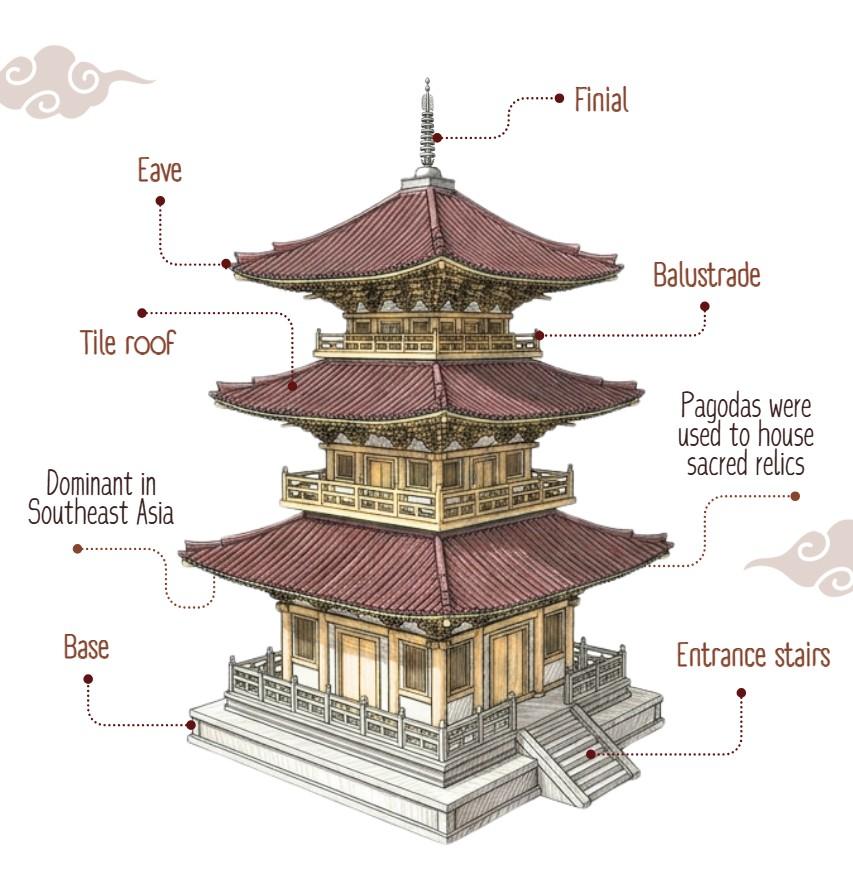
A pagoda is a multi-tiered tower found across Asia, originally built to house sacred Buddhist relics. Over time, it evolved into a symbolic architectural form representing spiritual ascent and cultural identity. Its design is defined by stacked tiers, projecting eaves, and a strong vertical axis that visually pulls the eye upward. In many cases, especially in Japan, a central pillar known as the shinbashira helps stabilize the structure, allowing it to withstand earthquakes through controlled movement rather than rigidity. Beyond its spiritual meaning, the pagoda is also a smart response to climate, using deep eaves for protection from rain and sun.
Japanese Pagoda
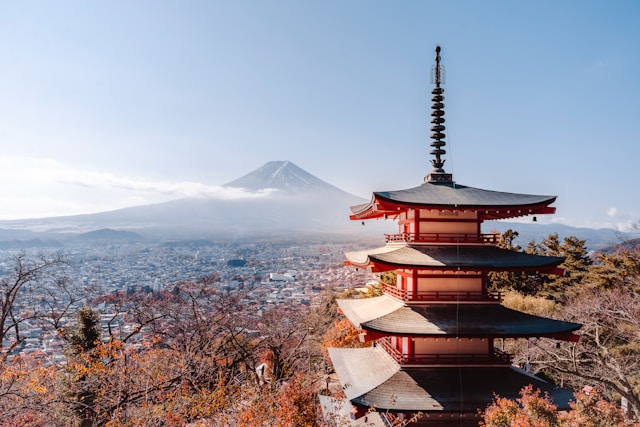
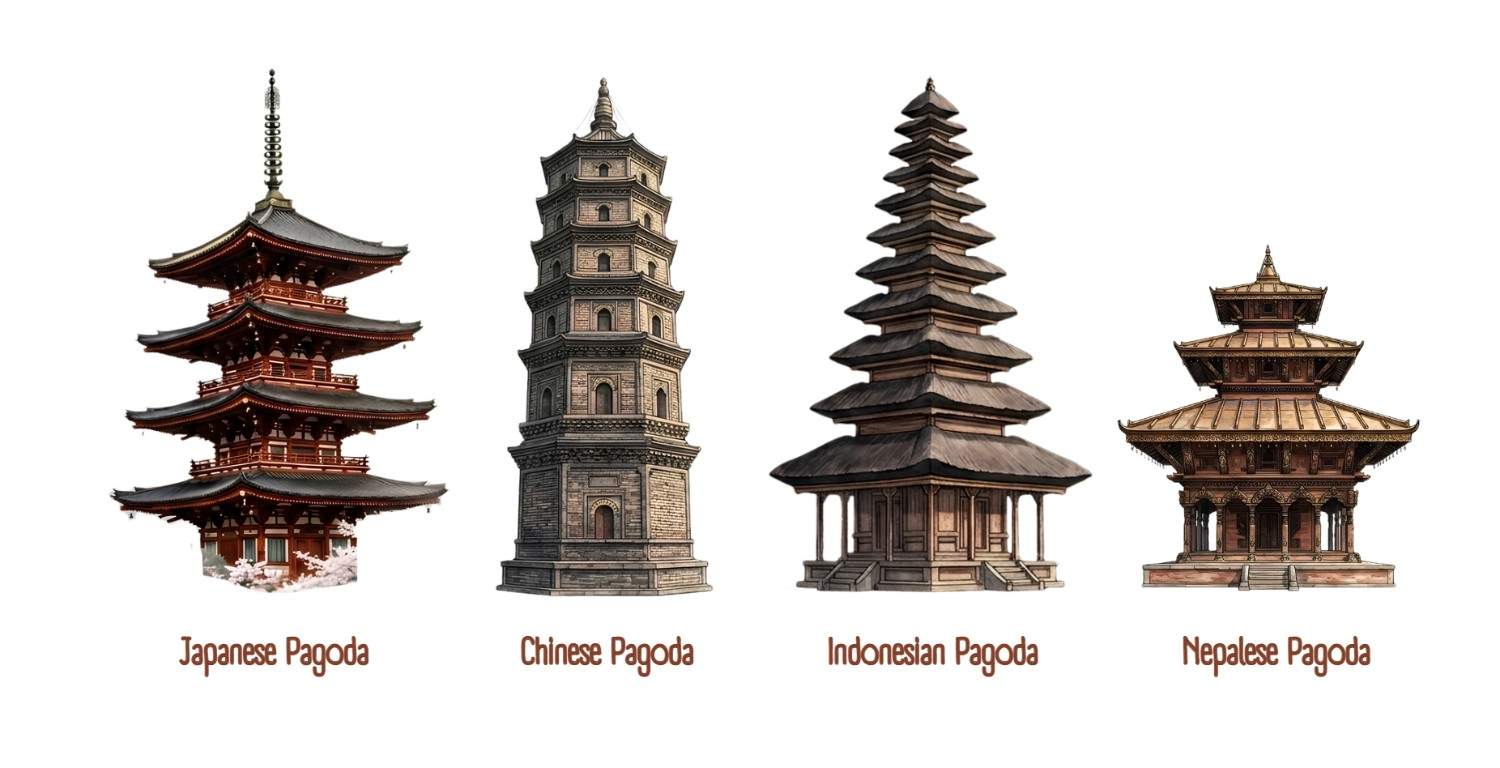
In Japan, pagodas are typically built in wood and showcase a high level of craftsmanship through intricate joinery systems. The structures feel light and balanced, with gracefully curved eaves that extend outward to protect against heavy rainfall while also softening the overall form. Rather than being massive, these pagodas rely on flexibility and proportion, allowing them to respond effectively to seismic activity. Over time, they became more symbolic than functional, acting as visual anchors within temple complexes.
Chinese Pagoda
Chinese pagodas take on a more solid and monumental character, often constructed using brick or stone. Unlike their Japanese counterparts, these structures emphasize permanence and symmetry, frequently rising as tall, tower-like forms with repetitive tiers. Some are designed with internal staircases, allowing people to move through different levels. The overall expression feels grounded and powerful, reflecting both religious importance and advancements in masonry construction.
Indonesian Pagoda
In Indonesia, particularly in Bali, pagoda-like structures appear as Meru towers, which are deeply rooted in local spiritual traditions. These towers are composed of stacked, thatched roofs that rise vertically, creating a strong silhouette. The steep roof forms are highly responsive to the tropical climate, efficiently shedding heavy rainfall while allowing airflow. Unlike East Asian pagodas, the emphasis here is less on extended eaves and more on vertical layering, symbolizing sacred mountains and cosmic hierarchy.
Nepalese Pagoda
Nepalese pagodas are more compact in form but rich in detail, combining brick construction with finely carved wooden elements. The roofs are supported by decorative struts that often feature mythological carvings, turning the structure into a storytelling surface. These pagodas are closely integrated into daily life and urban spaces, particularly in historic areas like Kathmandu Valley. Their design highlights craftsmanship and cultural expression as much as structural logic.
Across Asia, pagodas may share a common origin, but their forms evolve based on local materials, climate, and belief systems.
Conclusion
From the flexible wooden structures of Japan to the solid masonry towers of China, the tropical adaptations in Indonesia, and the intricate craftsmanship of Nepal, each version reflects a unique architectural response. What remains constant is the idea of vertical progression, making the pagoda both a physical structure and a symbolic journey upward.
These were some insights on Pagoda Design & Types. Stay tuned for more information on other significant topics in the AEC industry and follow Kaarwan for such detailed guides!
FAQs
1. What is the primary purpose of a pagoda?
Originally, pagodas were built to house sacred relics and Buddhist scriptures, though they later became symbolic and cultural landmarks.
2. Why do pagodas have multiple tiers?
The tiers represent spiritual hierarchy and cosmological layers, often tied to religious beliefs.
3. What is the central pillar in Japanese pagodas?
It is called the shinbashira, which helps stabilize the structure during earthquakes.
4. How are Chinese pagodas different from Japanese ones?
Chinese pagodas are typically heavier, masonry-based, and monumental, while Japanese ones are lighter, wooden, and flexible.
5. Are pagodas only found in Buddhist architecture?
Primarily yes, but variations exist in Hindu-Balinese and regional temple architectures as well.