Often referred to as the ancient Indian science of architecture, Vastu Shastra is a philosophy that harmonises human habitation with nature, not only a collection of guidelines for building design.
Based on centuries-old customs, it provides spatial planning rules that guarantee well-being, prosperity, and good energy flow inside a construction.
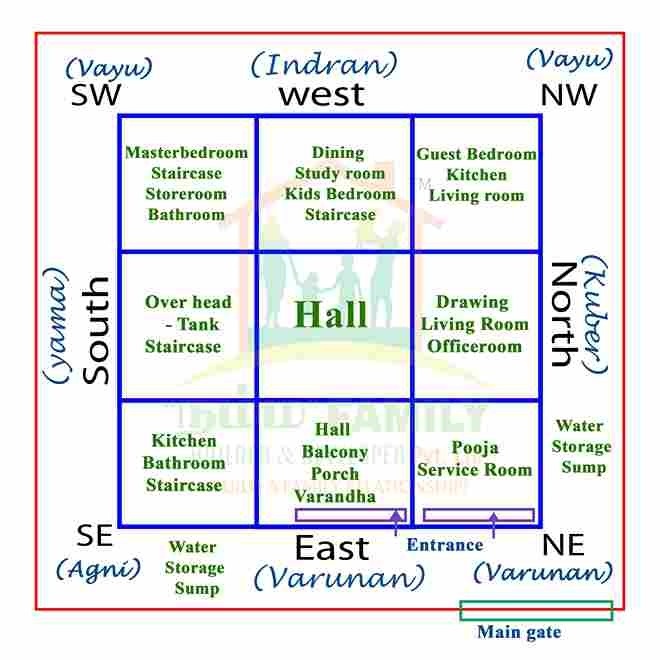
Image Credit: Civil Tutorials
How therefore does it relate to contemporary architecture? Knowing Vastu will help you, whether you study architecture or work as a professional, provide your designs fresh perspective by combining modern demands with legacy.
Read more: A Beginner's Guide to Vastu Shastra for Architects
Vastu Shastra: What is it exactly?
Derived from Sanskrit words:
- Vastu (dwelling)
- Shastra (science)
Vastu Shastra is an old architectural system offering ideas for spatial design grounded on natural factors.
It uses directional alignments to combine the five basic elements—earth, water, fire, air, and space—into harmonic and useful environments.
Historically, these ideas have shaped:
- Royal palaces
- Religious architecture
- Even city planning
Read more: An Architect's Guide to Vastu Compliant Design: Key Tips and Guidelines
Important Points in Vastu Shastra
- Directional Influence – Vastu maps buildings depending on cardinal directions, each linked with particular elements. (Example: The northeast is perfect for places of meditation and connected with water.)
- Panchabhutas (Five Elements) – To guarantee comfort and well-being, buildings should strike a balance between earth, water, fire, air, and space.
- Prana (Energy Flow) – Open spaces, air, and natural light help to create positive energy movement inside buildings.
- Functional Placement – Particular regions of a structure have different purposes. (Example: Kitchens in the southeast (related with fire) and bedrooms in the southwest (for stability).)
Read more: Understanding the Five Elements of Vastu: A Guide for Architecture Enthusiasts
Ancient Vastu Architecture Inspired by Contemporary Design
Though Vastu Shastra is old, its ideas are still applicable now.
Not often for spiritual purposes, many architects incorporate Vastu ideas into contemporary constructions to improve functionality and energy efficiency.
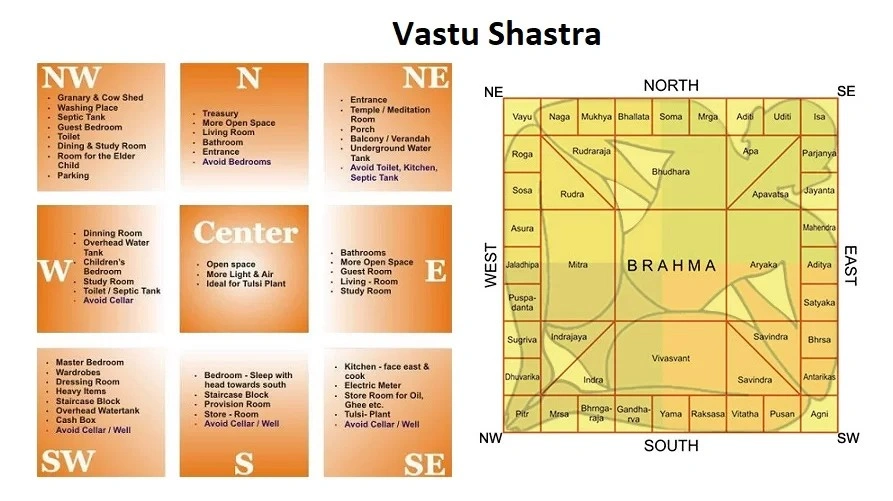
Image Credit: BigProperty
Uses in Modern Architecture
- Sustainability – Vastu promotes natural ventilation, maximum lighting, and deliberate water source placement—practices that fit sustainable architecture.
- Urban Planning – Ancient Indian towns were laid out per traditional Vastu guidelines. These days, similar approaches affect master plans and zoning rules.
- Corporate Design – Many companies seek Vastu consultants to create offices that support financial success, creativity, and efficiency.
Read more: 16 Directions of Vastu Shastra in Architecture
Should You Do a Course in Vastu?
Knowing Vastu will help you greatly enhance your work whether you are an architect or designer.
A disciplined Vastu Shastra training can offer understanding of classic ideas and their contemporary uses.
Usually, these courses cover:
- Theoretical underpinnings of Vastu Shastra.
- Applications for practical design in homes, businesses, and offices.
- Case studies of Vastu-compliant projects gone right.
Kaarwan provides an advanced Vastu training to satisfy individuals who want to delve farther and close the distance between old knowledge and contemporary design.
Read more: Vastu Directions: Essential Facts for Designers and Architects
Common Myths About Vastu Shastra
Like every old custom, Vastu is not without controversy. Let’s dispel a few:
First Myth: Vastu is Devoutly Religious
Vastu is more about spatial science than religious practice, even if Hindu texts form its foundation. Many of its ideas match universal design concepts.
Second Myth: Every House Has to Follow Vastu Exactly
Actually, small adjustments might enable a room to be in line with Vastu ideas without involving significant structural alterations.
Read more: Secrets of Vastu Shastra: Modern Uses for Traditional Wisdom
Third Myth: Non-Vastu Homes Bring Bad Luck
There is no scientific data that non-Vastu-compliant homes generate bad luck. Rather, Vastu is a means to improve spatial quality.
Conclusion
Combining design psychology with sustainability and history, Vastu Shastra presents an interesting view on architecture.
Understanding Vastu will help you to improve your approach to architectural design, whether you decide to:
- Carefully follow its ideas
- Modify them to fit modern needs
If you would like further knowledge, consider signing up for a Professional Vastu Shastra course to thoroughly investigate its ideas.
Visit our website Kaarwan for more!
Commonly Asked Questions (FAQs)
1. Is Vastu Shastra amply supported scientifically?
Though not precisely scientific, Vastu ideas fit human psychology in spatial design and sustainable architecture.
2. Are commercial buildings able to benefit from Vastu?
Indeed! Many companies apply Vastu ideas to maximise:
- Client experience
- Productivity
- Office energy
3. Does Vastu have bearing on interior design?
Yes! Lighting, colour palettes, and furniture arrangement can all match Vastu to improve the energy flow of a space.
4. In what respects does Vastu differ from Feng Shui?
Although they have different origins and approaches, both systems seek to generate harmonic environments.
- Vastu concentrates on directional alignment
- Feng Shui stresses energy balance
5. Where might I pick up Vastu Shastra?
Structured learning is provided on several sites, including: Kaarwan’s advanced Vastu course, which links modern architectural practice with historical ideas.