

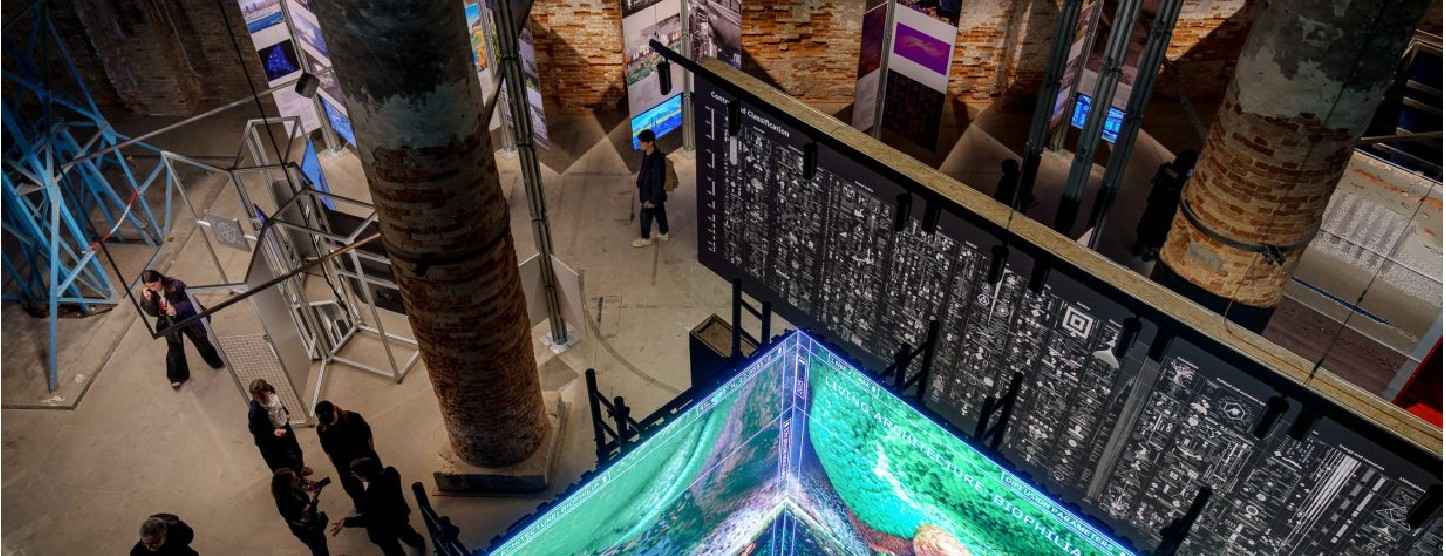
Every architect, engineer, and designer has asked at some point: Are we building in harmony with nature, or against it? The Venice Architecture Biennale 2025 does not give us neat answers. Instead, it invites us to pause, listen, and rediscover what intelligence means in the built environment.
Curated by Carlo Ratti — an architect, engineer, and researcher known for blending technology with human experience — this edition carries the theme “Intelligens. Natural. Artificial. Collective.” It is less an exhibition of objects, more a conversation: between trees and sensors, old crafts and new machines, communities and their cities. For anyone in the AEC field, from seasoned professionals to students sketching their first designs, the Biennale is both grounding and eye-opening.
Venice Architecture Biennale 2025
1. Intelligence Needs Reframing: Natural, Artificial, Collective
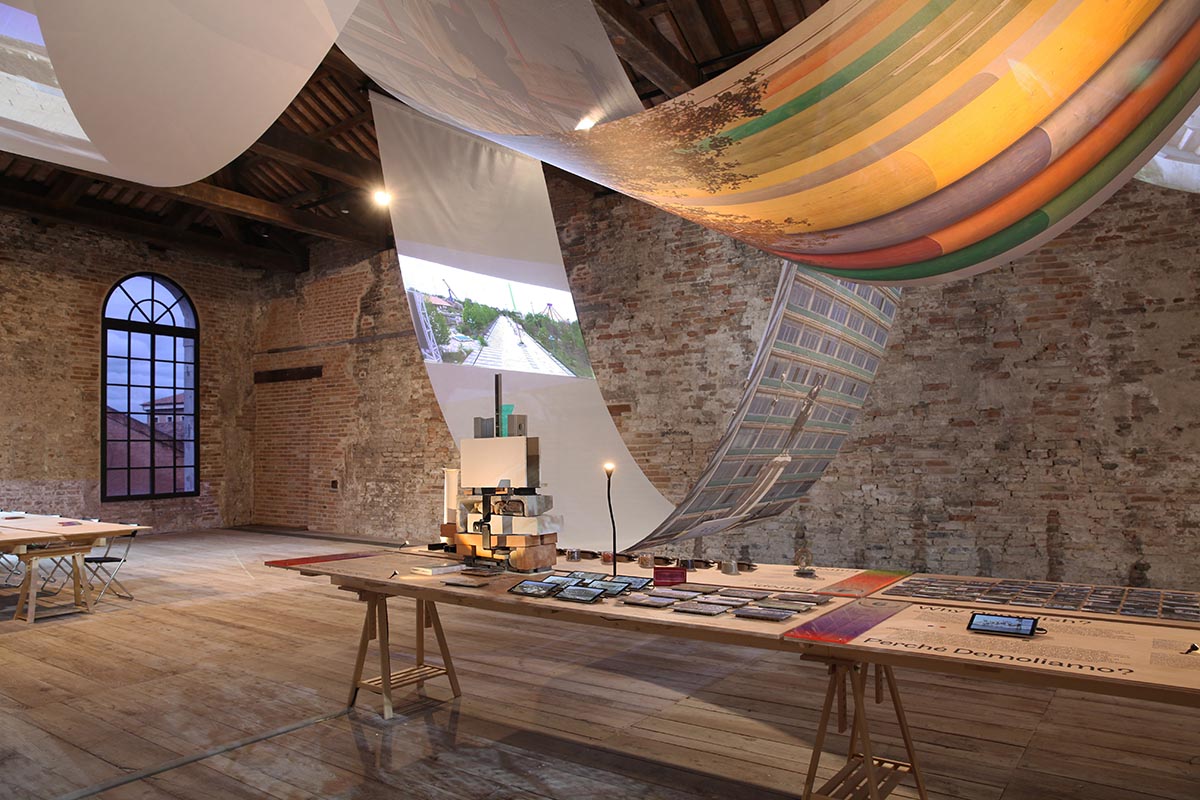
Rather than seeing intelligence as only tied to digital tools or AI, Venice Biennale 2025 asks: What if intelligence is also in plants, in vernacular craft, and in how communities act together? The show was partitioned into Natural Intelligence (plants, ecosystems), Artificial Intelligence (robots, sensors, algorithms), and Collective Intelligence (community knowledge, craft, local tradition).
What this means for AEC professionals:
- Think beyond software and machines. How does the site, environment, local culture, or craft tradition inform design?
- Use tools (AI, sensors, data) but in service of a richer intelligence that includes ecological systems and people.
- Build teams and workflows that bring diverse knowledge (botanists, ecologists, community experts) into early stages of design.
2. Material Innovation & Circularity Are Not Optional
Multiple projects at the Biennale engaged with waste, upcycled materials, biodegradable systems, and reuse. For example, FRICKS from IAAC turned construction demolition residues into lightweight, thermally efficient foamed geopolymers.
Buildings, pavilions, and installations were often designed for disassembly; material reuse was built into the exhibit’s very structure.
Takeaways:
- Material selection should not only meet performance (structural, thermal, aesthetic) but also lifecycle: reuse, repurposing, low embodied carbon.
- Prototype or pilot locally with upcycled or reclaimed materials: learn what works.
- Think about how buildings/components can be disassembled, reused, or regenerated over time.
3. Resilience, Adaptation & Climate Urgency
A strong undercurrent of the Biennale was climate change, not as future potential but as now. Architecture must adapt to heat, water, and ecological shifts. The Urban Heat Chronicles by MIT Future Heritage Lab used shading, passive cooling, adaptive textiles, and community workshops to respond to heat in urban fabric.
Projects also addressed flooding, seasonal change, rising sea levels, and water management. Venice itself—its canals, rising tides, fragile ecology—served as both context and warning.
In practice:
- Incorporate climate modelling, heat studies, flood risk from very early design phases.
- Use passive design strategies: shading, ventilation, site orientation, green infrastructure.
- Use adaptive materials or systems (e.g. adjustable shading, water management) that can respond over time.
4. Craft, Vernacular & Local Knowledge Matter
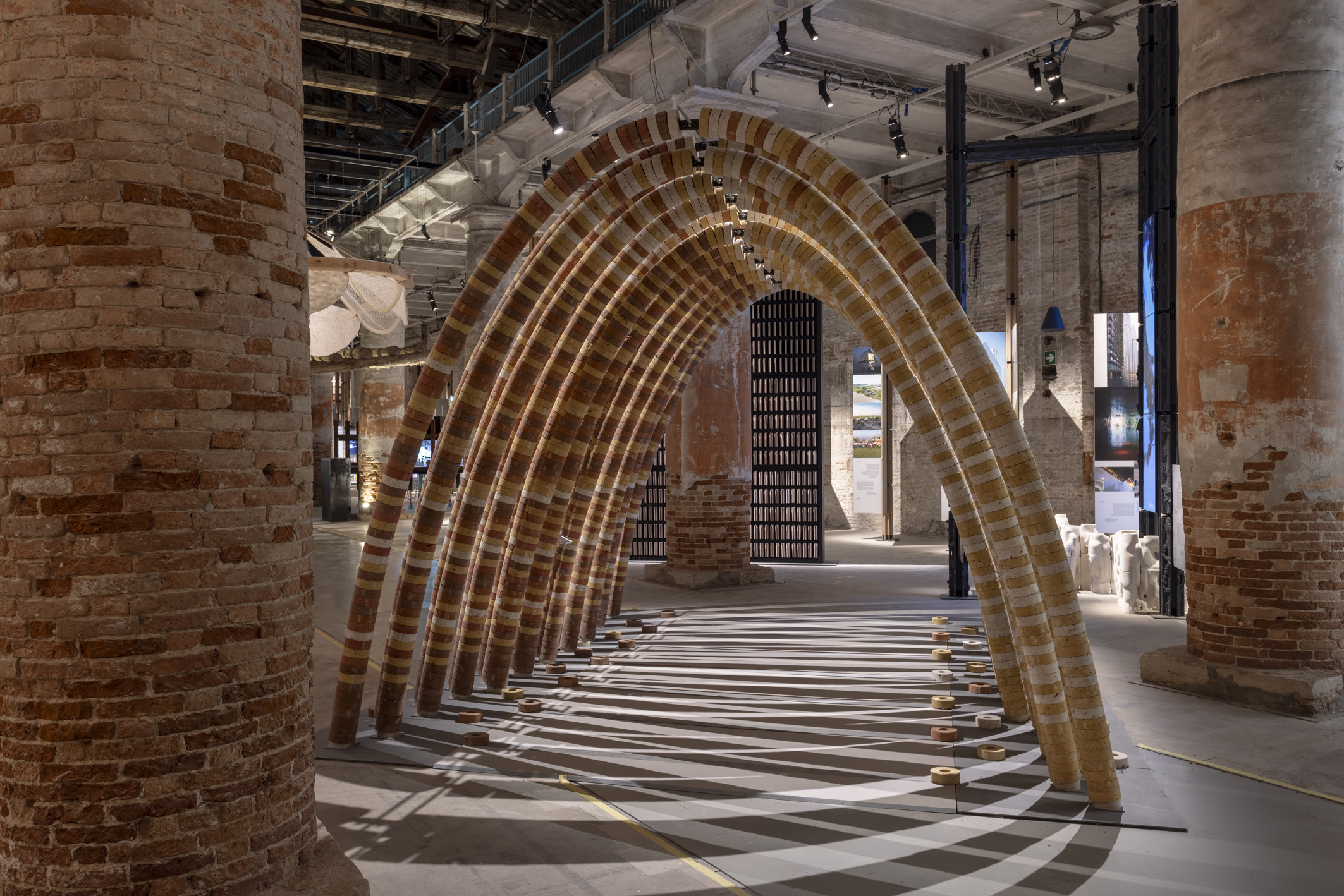
“Alternative Skies,” a project at the Biennale, was a reminder that roof vaults, vernacular carpentry, basketry, tile techniques, and local crafts hold intelligence. These are not decorative add-ons but deeply embedded systems of form, structure, and climate response.
Instead of replacing these with totally new systems, many installations wove together traditional knowledge with new computation, sensors, and fabrication.
For AEC firms:
- Document local materials, craft techniques, and vernacular climate responses of your region.
- Use parametric tools or digital fabrication not to obliterate but to elevate, translate and hybridise vernacular techniques.
- Engage local craftsmen in design and implementation—not merely for finishing, but as collaborators in structure and performance.
Turn Thesis work from endless justification into meaningful exploration. Join Kaarwan's 5-Day Thesis Bootcamp, step in early to step up on time.
5. Curate for Clarity, Story & Impact
One critique often heard of large exhibitions is that quantity overwhelms quality. Venice Biennale 2025 attempted to balance scale with curatorial clarity. Projects were grouped under sub-themes; narratives were crafted (e.g., showing how artificial intelligence can assist but not displace natural intelligence). The theme Intelligence itself is both provocative and integrative.
What to apply in your workflow / content / designs:
- When presenting design proposals (internally or to clients), structure storylines: what problem, what intelligence, what tools, what impact.
- Use visuals and models to illustrate before-and-after scenarios, contrasts, and trade-offs.
- Don’t try to show everything at once. Prioritise clarity of your proposition.
Explore Kaarwan's 5-Day Thesis Bootcamp:Turn Thesis work from endless justification into meaningful exploration. Instead of spending energy defending your project's existence, learn how to choose and pick topics, understand thesis brief, how to research & design with clarity, present with confidence & engage in richer learnable discussions.
Wherever you are in your thesis journey, step in — and step up.
6. Interdisciplinary Collaboration Is Essential
Projects ranged across disciplines: architects, ecologists, material scientists, technologists, data scientists, and community groups. The Biennale emphasised that complex challenges (climate, social equity, water, waste) demand multiple disciplines.
For instance, the Building Biospheres pavilion integrates plant neurobiology, sensors, AI for monitoring plant conditions.
Take‐home for firms / teams:
- Build networks beyond architecture/engineering—invite experts in biology, ecology, material science, and social sciences.
- In project briefs, allocate time/budget for interdisciplinary research & prototyping.
- Use digital collaboration tools to bridge gaps in discipline, location, and data sharing.
Conclusion
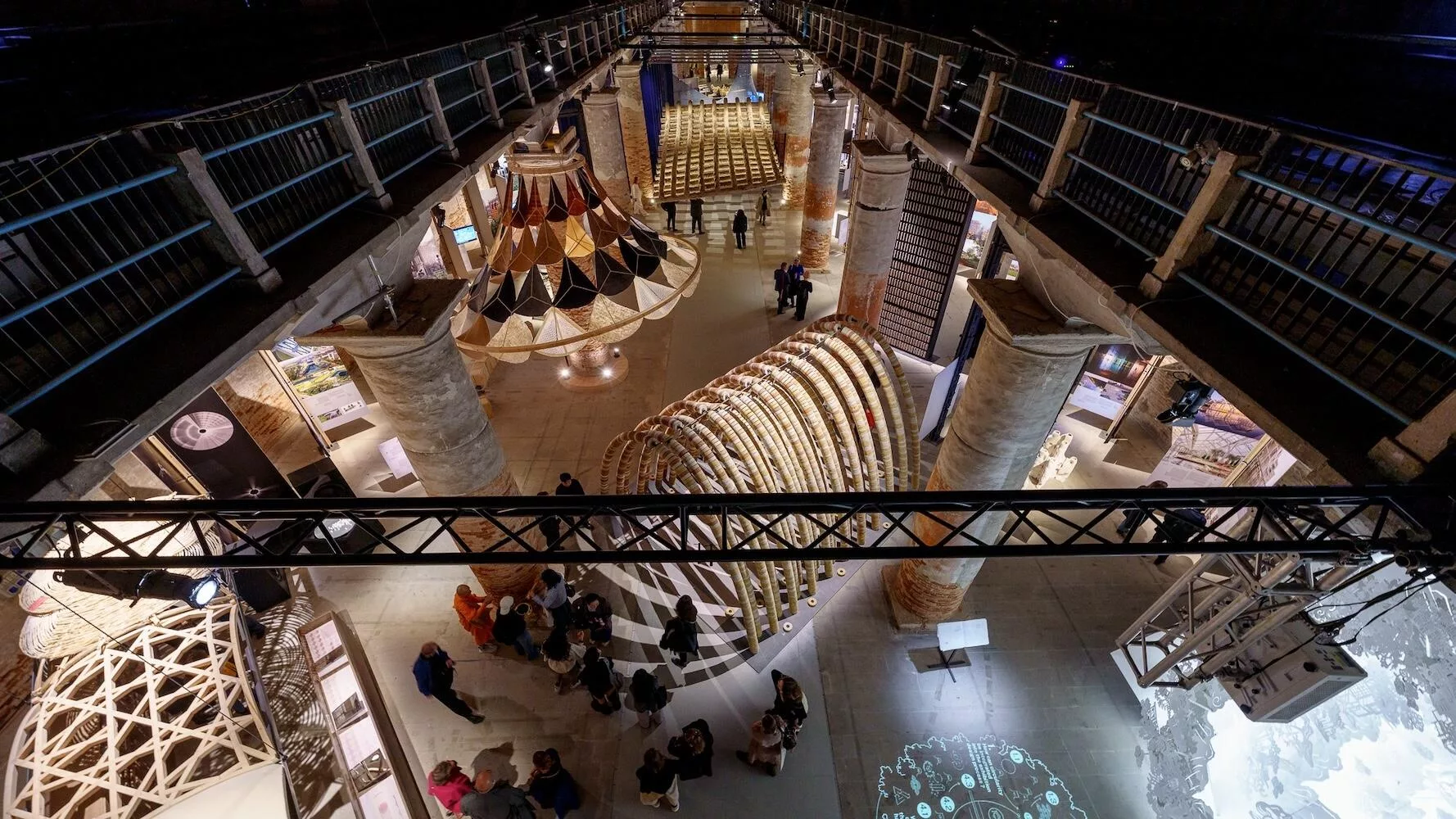
The Venice Biennale 2025 reminds AEC professionals that architecture’s future isn’t about shiny icons or purely digital wizardry. It’s about intelligence in its widest sense—natural, artificial, collective—and how to craft built environments that respond, adapt, heal. For a firm like Kaarwan Ed-tech, that stands at the intersection of design theory, software tools, and skilled practice, the Biennale offers a roadmap: ecological materials, craft, collaborative intelligence, climate resilience, and storytelling clarity.
Those are lessons not just to admire, but to embed—in your office workflows, your tools, your choice of collaborations, even in how you teach or share knowledge.
FAQs
Q1. What does the theme “Intelligence. Natural. Artificial. Collective.” mean in architecture?
It is a framing device that prompts architects to view intelligence not only as digital computation or artificial intelligence, but also as natural systems (plants, ecosystems, vernacular climatic adaptation) and collective intelligence (community knowledge, craft, shared work). It asks the question: how can all these intelligences work together in design?
Q2. How can I practically use lessons from the Venice Biennale in everyday projects?
Some ways to consider include adopting material reuse or upcycling, integrating passive design for heat or water management, incorporating local craft or vernacular building techniques, including interdisciplinarity in design teams, and utilising storytelling and clear themes in proposals.
Q3. What material innovations stood out?
Projects like FRICKS (IAAC) that upcycled demolition waste into thermally efficient foamed geopolymers. Additionally, experiments involving biodegradable and reusable building materials, as well as structures designed for disassembly.
Q4. Isn’t all this too theoretical? What about cost, timelines, constraints?
Valid concern. But many Biennale projects aim to show scalable solutions. Using local materials, existing crafts, and passive climatic strategies often reduces long-term costs. Prototypes can help test feasibility. Some tools (data, sensors) may have upfront costs, but benefits accrue in performance, maintenance, and resilience. Good design integrates constraints rather than ignoring them.
Q5. How does technology (AI, sensors, tools) fit with traditional craft and vernacular design?
As a complement, technology can help simulate, monitor, and optimise, but traditional knowledge gives insight into climatic response, material behaviour, and cultural meaning. The best designs integrate both: e.g. sensors feeding back information about plant health or environmental changes; digital fabrication used to refine vernacular forms; AI assisting but not replacing human judgement.




.png)