Wall Plaster Texture Types
Wall plaster textures go far beyond surface decoration—they are integral to how a space is perceived, experienced, and maintained over time. In architecture, textured plaster finishes are used to manipulate light, conceal imperfections, enhance durability, and introduce character to both interior and exterior surfaces. The choice of texture directly influences not just aesthetics, but also labour skill requirements, maintenance cycles, and suitability for different environmental conditions. From subtle finishes that create calm backdrops to bold textures that define a façade, understanding plaster texture types allows architects and designers to make informed, performance-driven decisions. This guide explores commonly used plaster textures and their architectural relevance across internal and external applications.
Comb Texture Finish
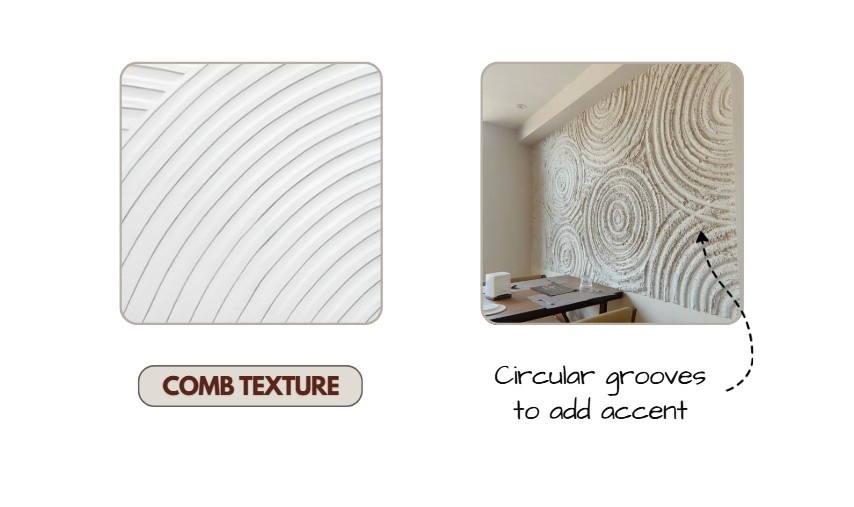
The comb texture is created by dragging a toothed tool across freshly applied plaster to form linear grooves, resulting in a highly directional surface pattern. Architecturally, this finish introduces a strong sense of movement, guiding the eye horizontally or vertically depending on the orientation of the grooves. It is often used to subtly emphasize proportions or elongate surfaces. In terms of application, it requires moderate skill to maintain consistency in spacing and alignment, especially on large surfaces. The texture works well on both interior feature walls and exterior façade bands where controlled patterning is desired. Maintenance is relatively manageable, though dust can accumulate within grooves over time. From a performance perspective, its linear profile can help channel rainwater on façades, making it a functional as well as visual choice.
Popcorn Texture Finish
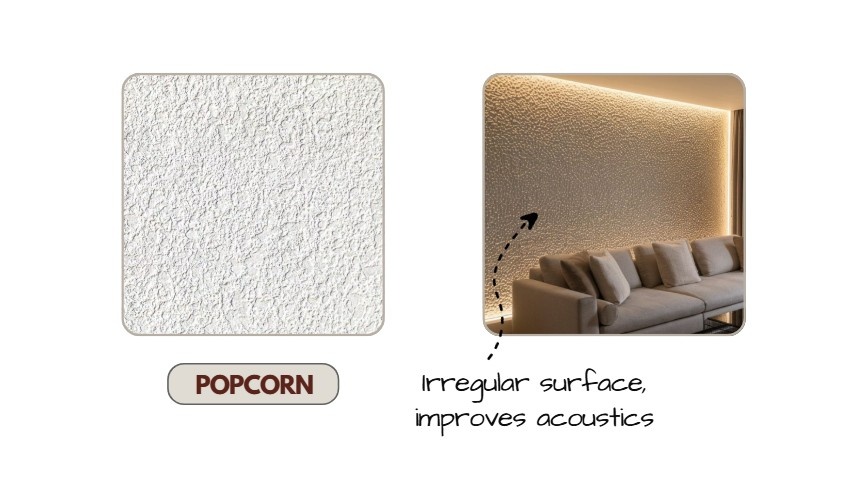
Popcorn texture is characterized by a highly irregular, bumpy surface achieved by spraying or stippling plaster mixed with aggregates. It is predominantly used on ceilings due to its ability to diffuse sound and reduce echo, making it suitable for spaces requiring basic acoustic control. Visually, it creates a soft, non-reflective surface that minimizes glare and hides surface inconsistencies effectively. The labour skill required is relatively low compared to other textures, as precision is less critical. However, maintenance can be challenging—dust accumulation and difficulty in cleaning make it less ideal for walls or high-contact areas. It is generally not suitable for exterior applications due to its vulnerability to weathering. Architecturally, popcorn finishes are functional rather than expressive, best used where performance outweighs aesthetics.
Orange Peel Finish
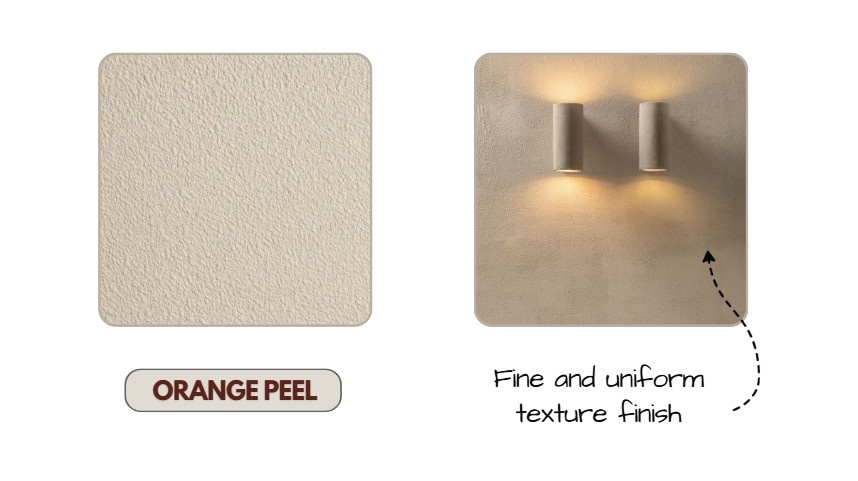
Orange peel texture is a fine, subtle finish resembling the skin of an orange, achieved through controlled spray application. It strikes a balance between smooth plaster and heavier textures, making it one of the most commonly used finishes for interior walls. The texture is understated, creating a visually calm surface that works well as a backdrop for furniture, artwork, and lighting. It requires relatively low to moderate skill to apply uniformly, making it cost-effective for large-scale projects. Maintenance is easy compared to heavier textures, as the surface does not trap excessive dust. While primarily used indoors, it can also be adapted for exterior surfaces with proper materials. Architecturally, orange peel finishes are ideal when a clean, refined look is desired without the strict perfection required for smooth plaster.
Slap Brush Finish
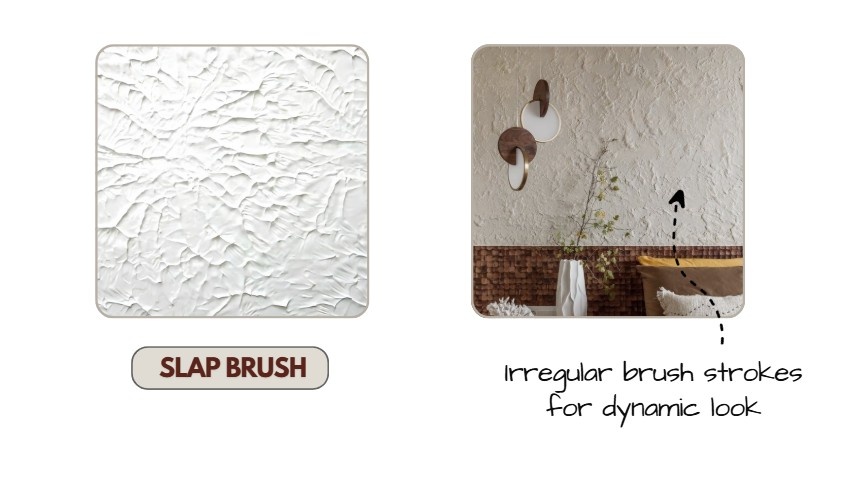
Slap brush texture is created by applying plaster and then using a brush to “slap” the surface, forming random, fan-like patterns. This results in a dynamic, organic texture that breaks uniformity and introduces visual softness. The finish is particularly effective on large wall expanses, where it prevents surfaces from appearing flat or monotonous. It requires moderate skill, as the randomness must still feel balanced and intentional. In terms of use, it is suitable for both interiors and certain exterior applications, depending on the material used. Maintenance is moderate, as the texture can collect dust but is less dense than heavier finishes. Architecturally, slap brush textures are used to add character without imposing a rigid pattern, making them versatile for residential and semi-formal spaces.
Tree Bark Finish
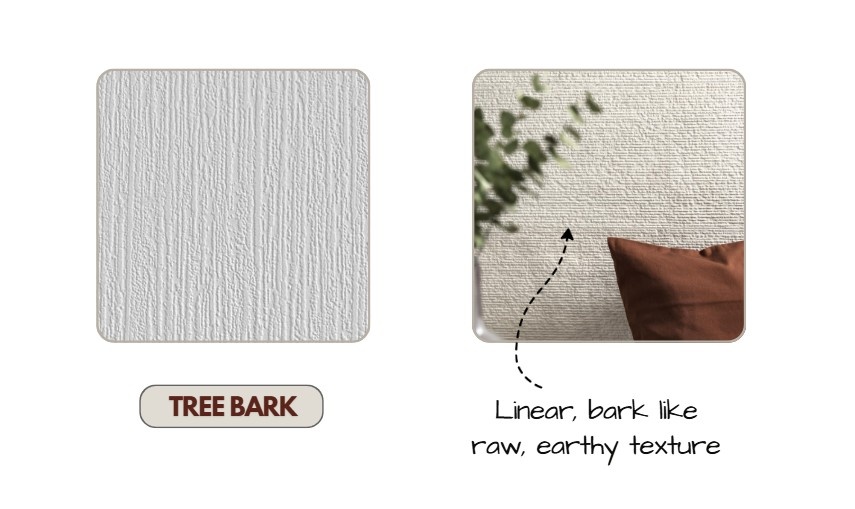
Tree bark texture is a deeply grooved, organic finish that mimics the rugged surface of natural bark. It is typically created using specialized tools or trowel techniques to achieve vertical, irregular ridges. This texture is highly expressive and is often used in exterior façades or feature walls to create a strong tactile and visual impact. It requires a higher level of craftsmanship to achieve a natural yet controlled appearance. In terms of performance, its depth provides better resistance to weathering and helps mask wear and tear over time, making it suitable for outdoor applications. Maintenance is relatively low in terms of visible aging, though cleaning can be more involved. Architecturally, tree bark finishes are ideal for designs that aim to establish a raw, earthy connection with materials.
Knockdown Texture Finish
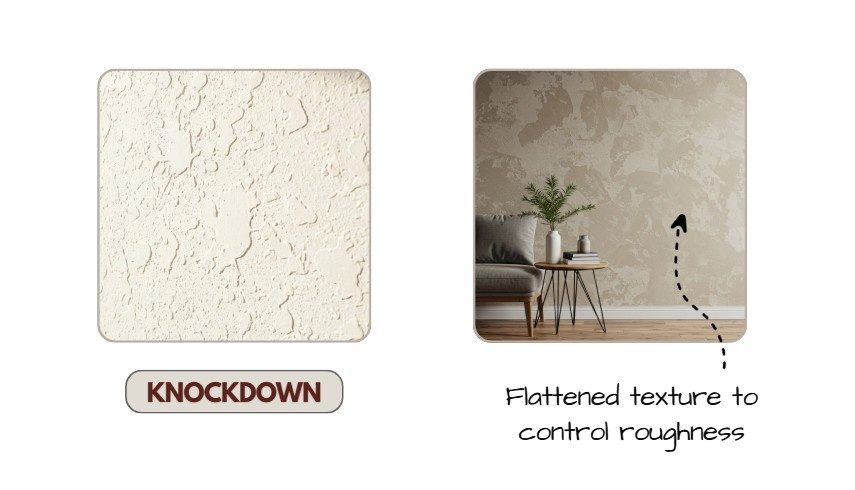
Knockdown texture is achieved by first applying a splattered or sprayed texture and then flattening the peaks using a trowel, resulting in a surface that combines smooth and textured qualities. This creates a balanced finish that offers visual interest without being overly rough. It is widely used in interiors due to its ability to add depth while remaining relatively easy to maintain compared to heavier textures. The technique requires moderate skill to ensure the right level of flattening and consistency across the surface. It can also be adapted for exterior use with appropriate materials. From an architectural standpoint, knockdown finishes are versatile—they provide a refined yet tactile surface that works well in both contemporary and transitional design settings.
Wall plaster textures play a crucial role in shaping the visual and functional qualities of architectural spaces.
Conclusion
Each texture type offers a distinct combination of aesthetics, labour requirements, maintenance considerations, and environmental suitability. While lighter textures like orange peel provide subtlety and ease of maintenance, more pronounced finishes like tree bark or slap brush introduce depth and character. The key lies in aligning the texture choice with the design intent, surface condition, and long-term usability of the space. When used thoughtfully, plaster textures can elevate a surface from a simple wall to an active design element.
These were some insights on Types of Jaali Patterns. Stay tuned for more information on other significant topics in the AEC industry and follow Kaarwan for such detailed guides!
FAQs
1. Which plaster texture is easiest to maintain?
Orange peel and knockdown textures are generally easier to clean and maintain compared to heavier textures.
2. Are plaster textures suitable for exterior walls?
Yes, textures like comb and tree bark are commonly used for façades due to their durability and weather resistance.
3. Which texture is best for hiding surface imperfections?
Popcorn, slap brush, and tree bark textures are effective in concealing surface irregularities.
4. Do textured walls require more labour?
Yes, most textured finishes require skilled labour to achieve consistent and aesthetically pleasing results.
5. Can textured plaster be painted?
Yes, all plaster textures can be painted, but deeper textures may require more paint and effort for uniform coverage.