

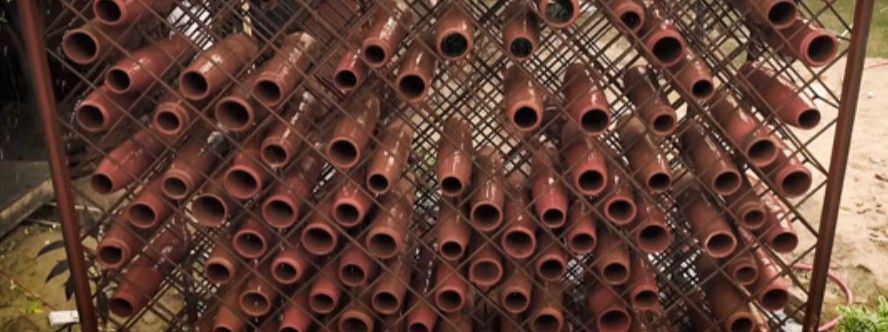
In an era where energy-guzzling air conditioners dominate our built spaces, a quiet revolution is taking shape, one that draws not from the future, but from the past. Imagine a wall that breathes, hums with air, and cools your surroundings without consuming a watt of electricity.
That’s not science fiction; it’s the CoolAnt system by Ant Studio, an innovation that transforms humble clay into a natural coolant.
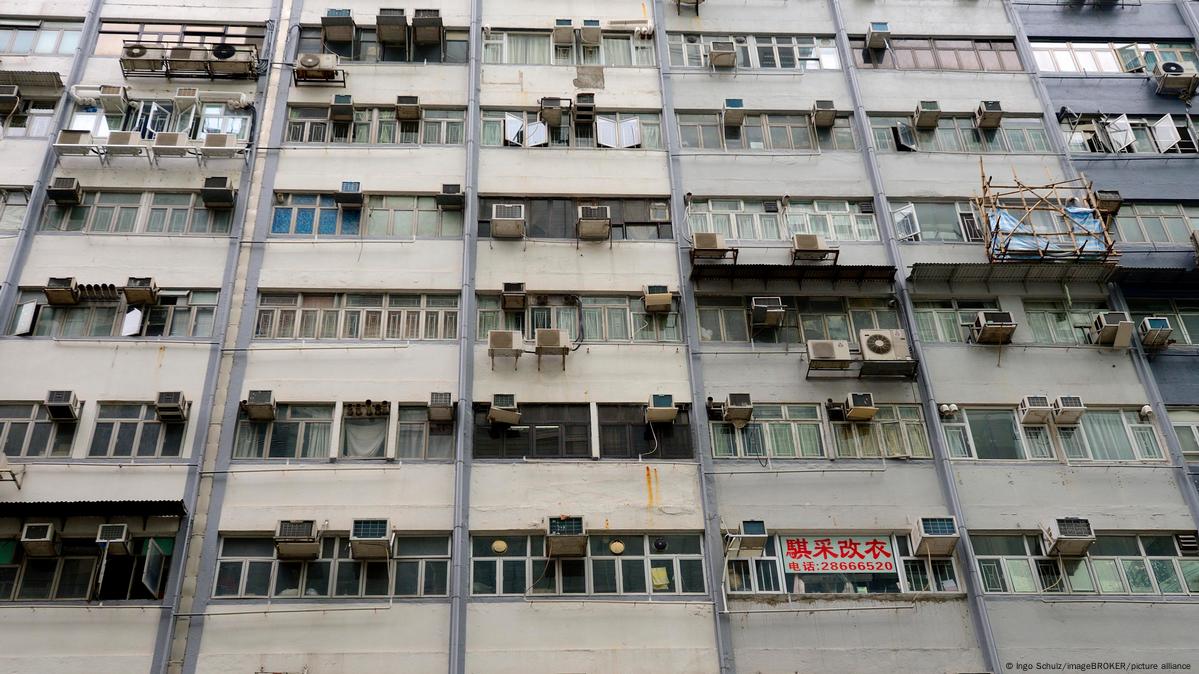
Image Source: DW, Showcasing multiple AC Units outside a built complex. (Though excess use of central systems also are a con in infective pandemics).
The intent isn’t to replace our dependence on mechanical cooling altogether, but to reduce it. For example, before reaching a point where temperatures go up to 60 degrees or above, even air conditioners struggle to work.
What Are Architectural Coolants?
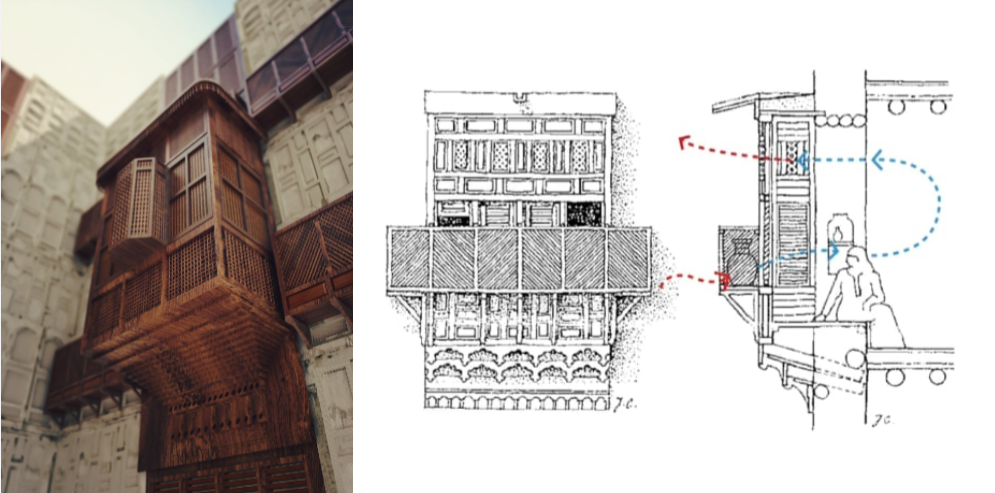
When we think of “coolants”, our minds often leap to chemical refrigerants or mechanical systems. But in architecture, the idea of a coolant is evolving. It’s no longer about machines; it’s about materials and forms that enable passive cooling. From lime plasters to earthen walls and terracotta jaalis, natural materials have long been used to regulate indoor comfort, long before the invention of HVAC systems.
Ant Studio, led by architect Monish Siripurapu, has reinterpreted this wisdom for the modern world through CoolAnt. This system uses terracotta, air, and water to create a low-energy alternative to traditional cooling.
The Science Behind CoolAnt
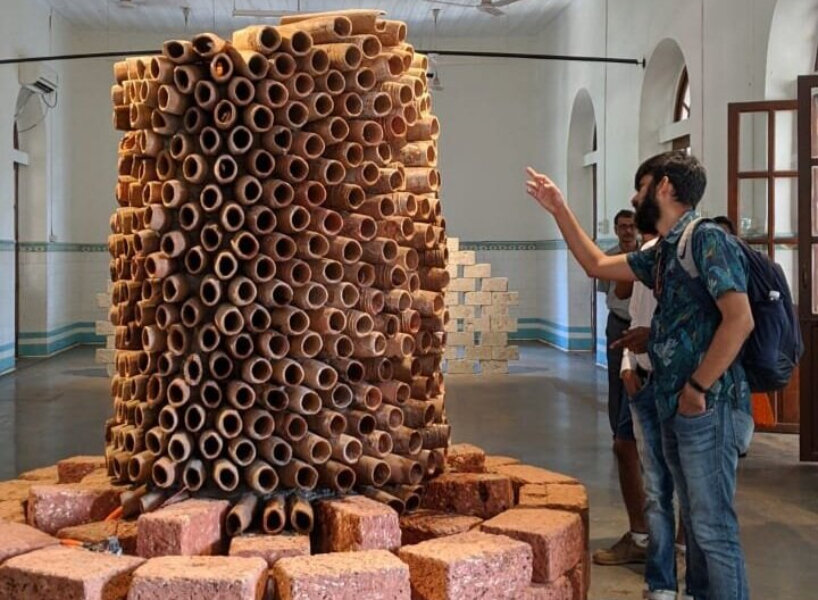
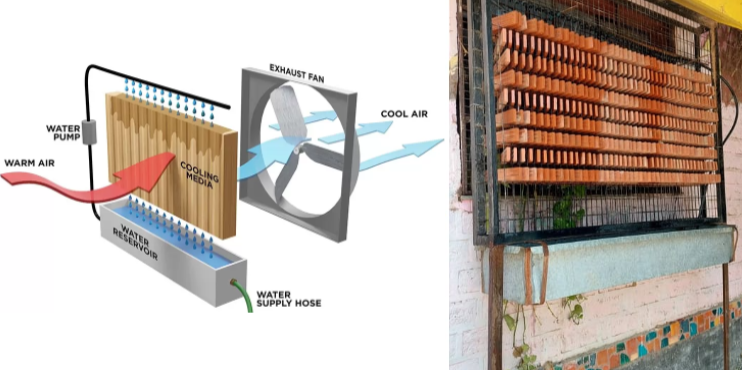
At its core, the CoolAnt installation is deceptively simple. It consists of hundreds of terracotta cones, stacked in a circular, beehive-like form. When water trickles down these porous clay surfaces, it evaporates, absorbing heat from the surrounding air. As air passes through the network of cones, it cools naturally before being released into the space.
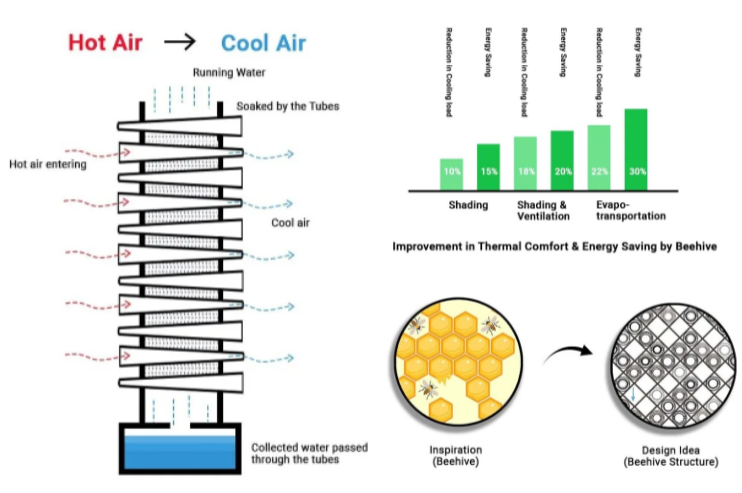
This evaporative cooling process mimics how sweat cools the human body or how earthen pots (matkas) keep water cold in Indian homes. The geometry of the structure, inspired by the hexagonal efficiency of beehives, increases the surface area for evaporation while maintaining structural stability.
Students interested in understanding such bio-inspired systems can explore Kaarwan’s Advanced Rhino & Grasshopper Certification with Job Support Program, where you don’t just learn software, but learn to think computationally from professional Architects/Designers. (Now at a 10% discounted price this Diwali Festive Season)
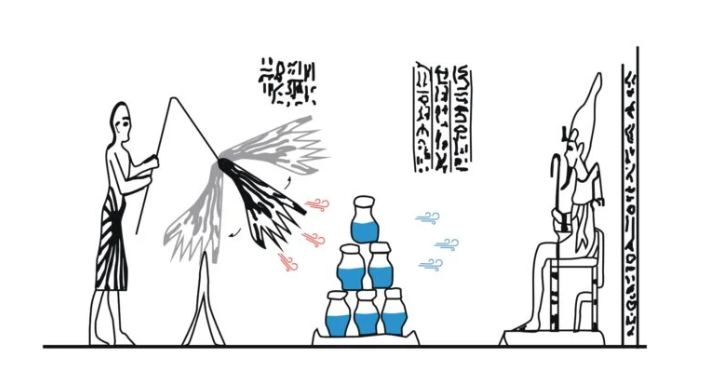
Lessons from History: Cooling Before Air Conditioners
The innovation doesn’t exist in isolation; it’s part of a lineage of climate-responsive design. Ancient Egyptians used porous jars filled with water at their windows to cool the air.
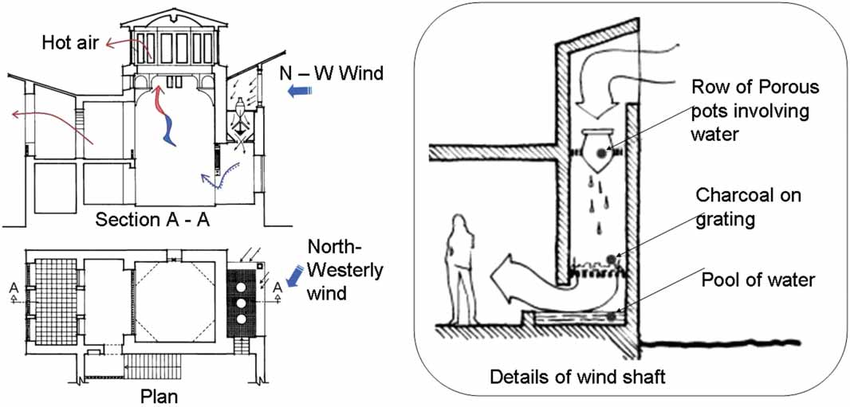
Persian architecture perfected the use of Badgirs — towering wind catchers that funnelled breezes through courtyards and subterranean channels. And across India, terracotta screens and jaalis filtered sunlight while allowing ventilation, maintaining comfort in arid climates.
CoolAnt is a contemporary translation of this ancient intelligence — a marriage between craft and computation, tradition and technology.
Where Has It Been Used?
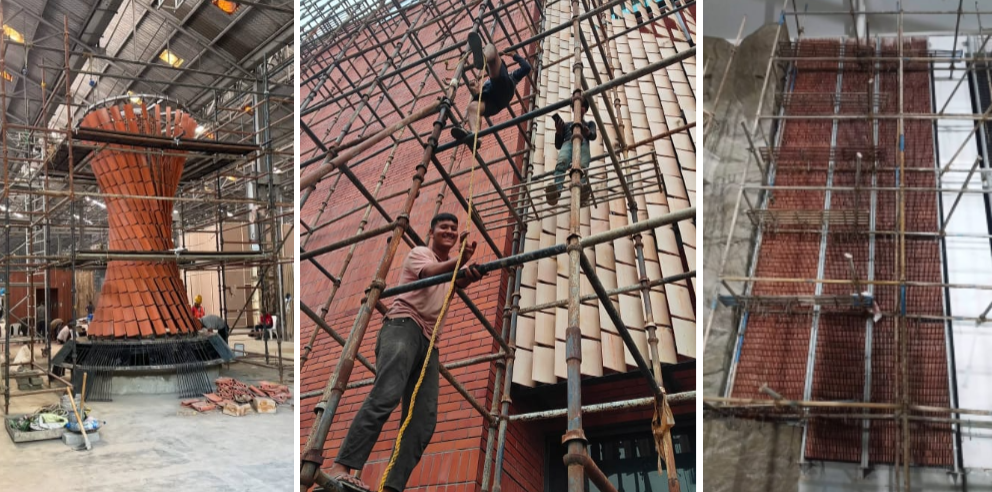
Image Source: coolant instagram, Centre: Mud Panels used over Facade as Sunshading Devices, Left: Coolant Air Cooling Installation for Public Space, Right: Fancy Interior Wall
Since its development, CoolAnt has moved beyond into a variety of architectural applications, demonstrating its adaptability:
- Office Atriums – Installed as feature walls that double as air-cooling systems, they create visually striking yet comfortable spaces.
- Residential Facades – Outdoor cooling for balconies and patios, maintaining privacy while reducing heat gain.
- Airport Porch Areas – Large-scale installations that cool open waiting zones where mechanical systems are inefficient.
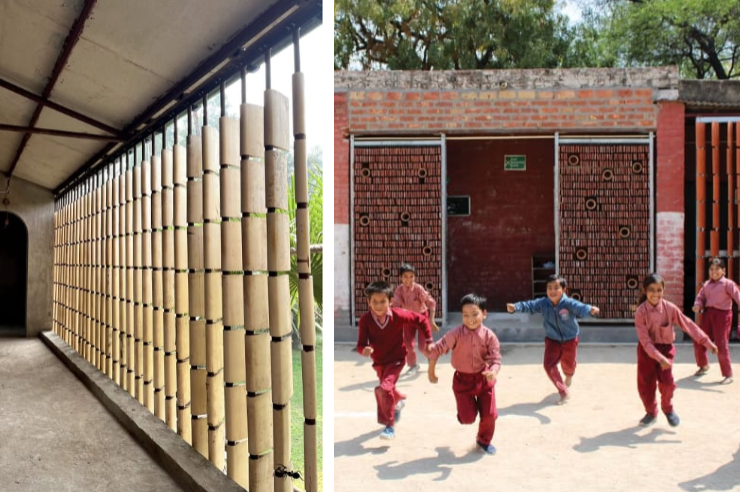
Image Source: coolant instagram, Left: Coolant Mud Panels used over the Facade of a Residential Building’s Corridor as a sunshading device, Right: NGO School Corridors making use of coolant panels in tropical heat.
- NGO School Corridors – Providing low-cost thermal comfort for children in non-air-conditioned environments.
- Public Facades & Institutional Buildings – Acting as both an architectural skin and a microclimate moderator.
- Command Officers’ Mess and Army Headquarters, Jaipur – Integrating sustainability into high-profile government projects while preserving an earthy, dignified aesthetic.
Each installation adapts to the site’s climate, airflow, and social context — a reminder that sustainable design is always local in spirit.
For architects aiming to simulate such interventions, Kaarwan’s Advanced Rhino & Grasshopper Certification offer insights into integrating performance data with design expression.
Why Terracotta?
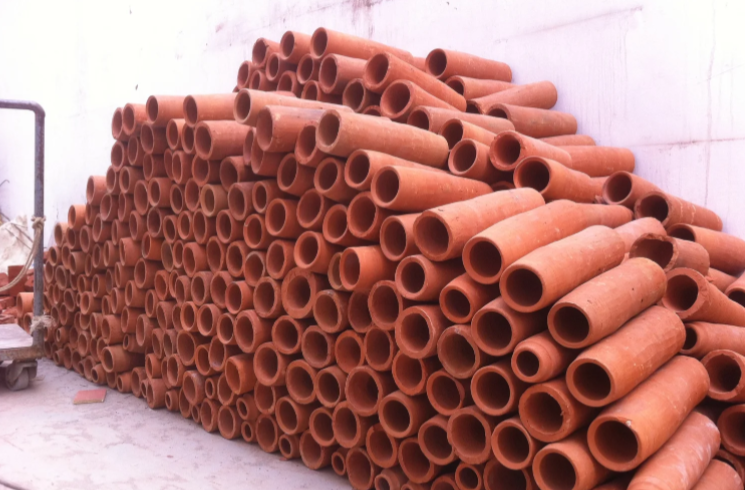
Terracotta’s relevance goes beyond nostalgia. The material is porous, recyclable, affordable, and easy to produce locally. Its microscopic pores enable water retention and gradual evaporation — the same principle that makes a clay pot cool to the touch.
When shaped into modular cones, as in CoolAnt, it becomes a scalable system that’s both aesthetic and functional. Such scalability can be explored digitally: computational design workflows make it possible to vary cone sizes, stacking patterns, or porosity based on real-time environmental data. The tactile surface of clay also evokes a sensory connection to nature, something sterile glass and metal façades rarely achieve.
The Future of Cooling
As cities grow denser and temperatures soar, rethinking how we cool our spaces is no longer optional. Passive cooling systems like CoolAnt invite architects to see climate control not as a technological add-on but as an inherent design philosophy.
By integrating tools like Rhino and Grasshopper, designers can simulate airflow, thermal comfort, and material behaviour — creating a feedback loop between nature’s wisdom and algorithmic precision.
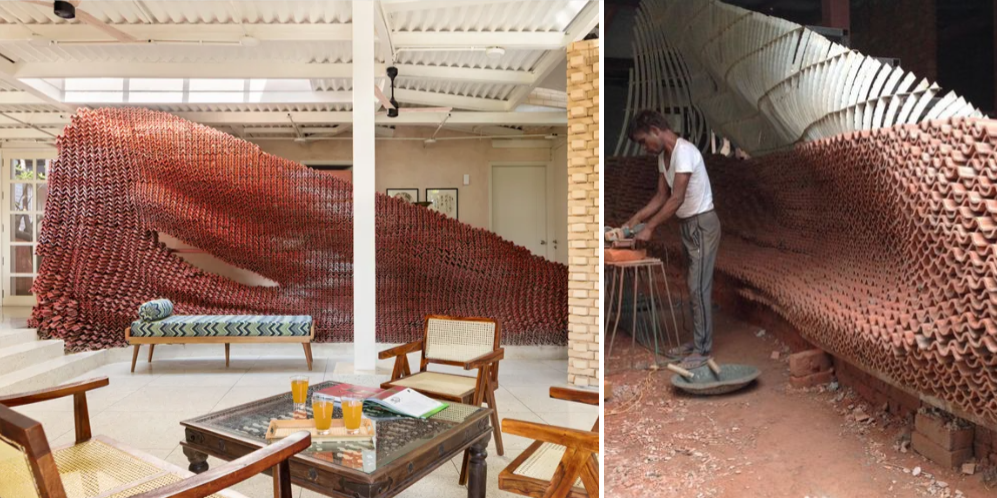
From vernacular courtyards to contemporary biomimetic façades, the story of cooling has always been about listening to wind, water, and material behaviour. Ant Studio’s work exemplifies how tradition can guide innovation, offering lessons not only in sustainability but in humility.
Final Thoughts
Coolants, both in technical systems and innovative passive materials, are more than just components; they are enablers of design that respect climate, comfort, and sustainability. For architects, they represent tools to reduce reliance on energy-intensive cooling, embed beauty through materials, and restore harmony between building and environment.
Kaarwan views the revival of traditional cooling, the rise of smart materials, and renewed interest in architectural form and surface geometry with optimism, all pointing to a future where buildings do more than shelter; they respond thoughtfully to climate and context.
To be part of such innovative projects/firms, upskill with the Advanced Rhino & Grasshopper Certification with Job Support Program, where you don’t just learn software, but learn to think computationally from professional Architects/Designers. Bridging nature’s principles with digital precision.
FAQs
1. Who designed the CoolAnt system everyone’s talking about?
CoolAnt was developed by architect Monish Siripurapu and his team at Ant Studio, blending traditional cooling wisdom with modern computational design.
2. What tools do architects use to design climate-responsive systems like CoolAnt?
Mostly Rhino and Grasshopper — they help simulate airflow, geometry, and materials before construction even begins.
3. What kind of skills do firms like Ant Studio look for?
They value architects who can think parametrically, understand material behaviour, and experiment with digital tools for sustainable design.
4. Is computational design only for big firms or tech experts?
Not at all — it’s becoming an essential design mindset. Even small studios now use parametric and visual scripting to test ideas efficiently.
5. How can I start building skills to work on such projects?
Begin with learning Rhino, Grasshopper, and visualisation workflows — they form the toolkit for architects exploring innovation through sustainability.




.png)