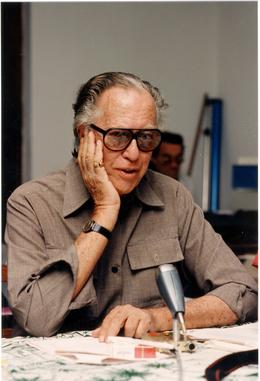
Geoffrey Manning Bawa (23 July 1919 - 27 May 2003) was the most renowned architect from Sri Lanka and was among the most influential Asian architects of his generation. He is the principal force behind what is today known globally as "Tropical Modernism".
Bawa came to architecture late, only qualifying at the age of 38 in 1957, but he soon established himself as Sri Lanka’s most prolific and inventive architect, establishing a design style for buildings in a post-independence context. His work includes hotels, houses, schools and universities, factories, offices, numerous public buildings as well as the new Sri Lankan Parliament.
Bawa’s work is characterized by sensitivity to site and context.
Bawa's Design Style
Bawa's design style comes down to one idea, modern shapes with tropical common sense. Here's how it plays out.
Vernacular Touch: Use of traditional building materials and architectural elements adaptive to the local climate & context.
Passive Design: Including courtyards, open spaces, jali walls, multiple openings & water bodies to create a peaceful built environment.
Tropical Language: He incorporated the tropical touch with modernity by adding tropical building elements with minimal design language.
Landscaping: Highly influenced by Japanese & other Asian gardens, Bawa gave importance to the site & the existing trees.
Bawa's Design Philosophy
You won't find Bawa's philosophy in a neat list. It lives in the buildings, and in that one line of his about architecture being something you experience, not something you explain.
Still, a few ideas keep turning up. The site comes first. Existing trees, slopes and views shaped his plans, not the other way around. Then there's movement. You rarely take in a Bawa building in one glance. You walk through it, from courtyard to verandah to a framed glimpse of water, and each turn gives you something new. And there's no hard line between inside and outside. Light, breeze and rain all get invited in.
That's pretty much it. Build with the place, not on top of it.
Projects
Lunuganga (Bentota, Sri Lanka)
Year - 1998
Typology - Residential
Concept - Inspired by Asian & Colonial country homes.
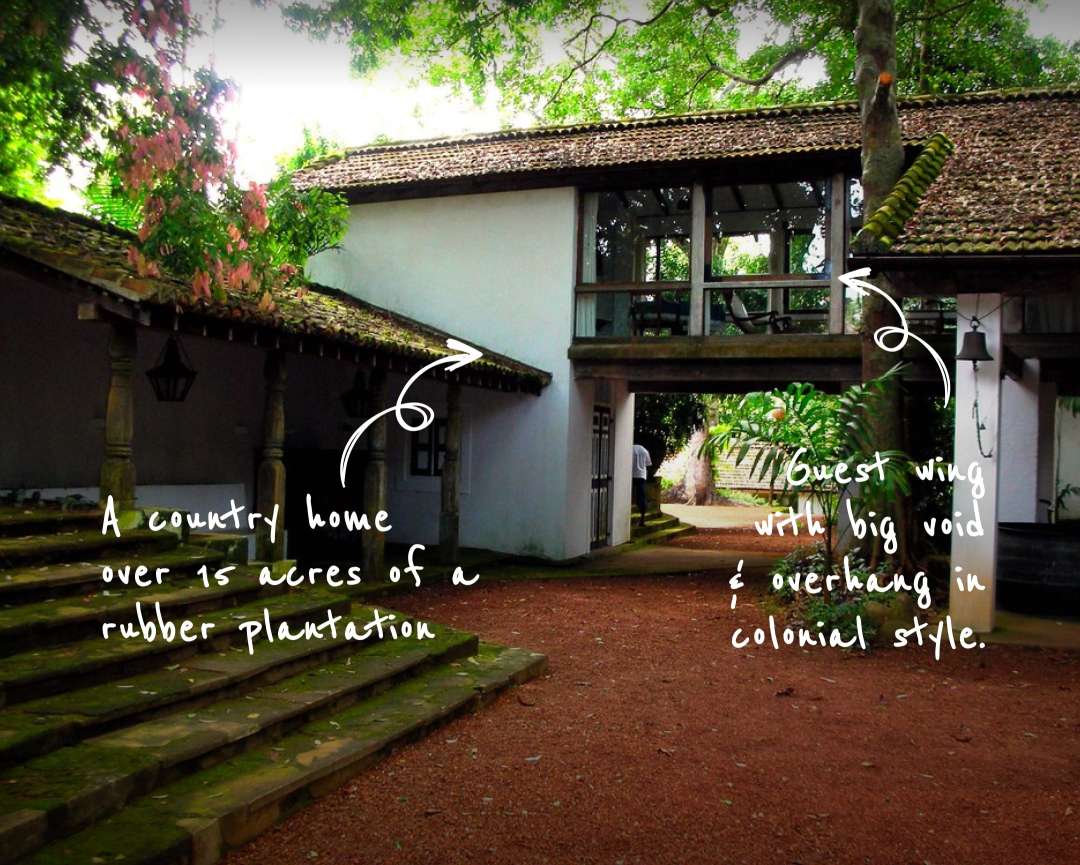
Image Source - David & Bonnie
Parliament Building (Sri Jayawardenepura Kotte, Sri Lanka)
Year - 1982
Typology - Government Building
Concept - Island capital.
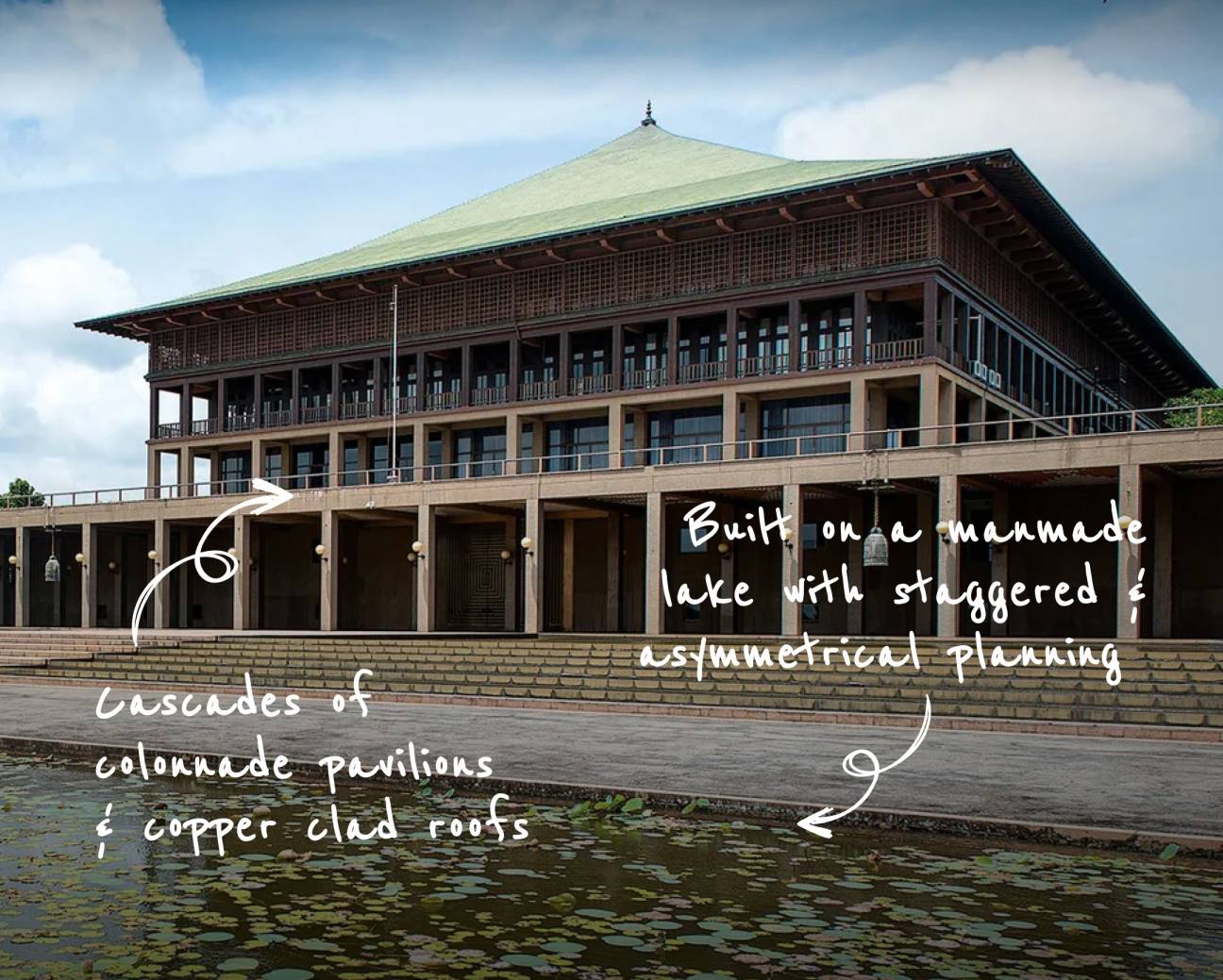
Image Source - The Bawa100 Foundation
Kandalama Hotel (Dambulla, Sri Lanka)
Year - 1994
Typology - Hotel
Concept - Perched in a rock formation.
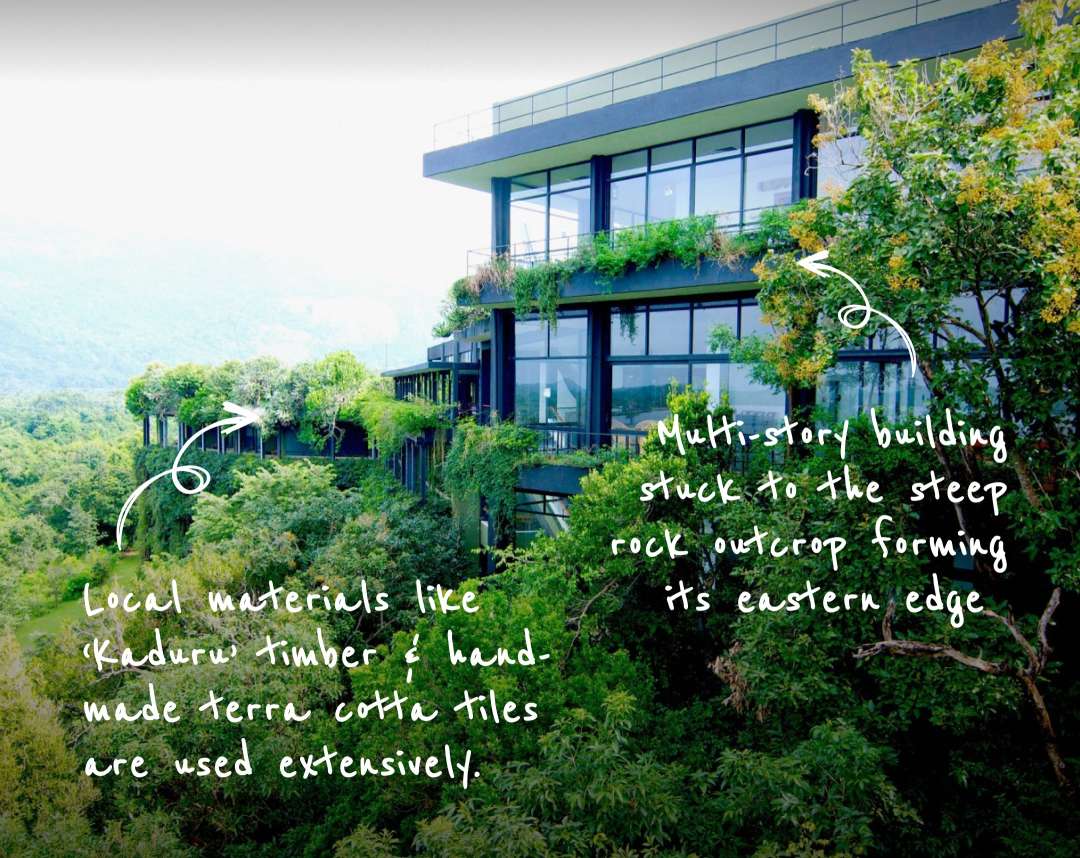
Image Source - Reef & Rainforest
Seema Malaka (Colombo, Sri Lanka)
Year - 1976
Typology - Temple
Concept - Inspired by the monasteries of Anuradhapura.
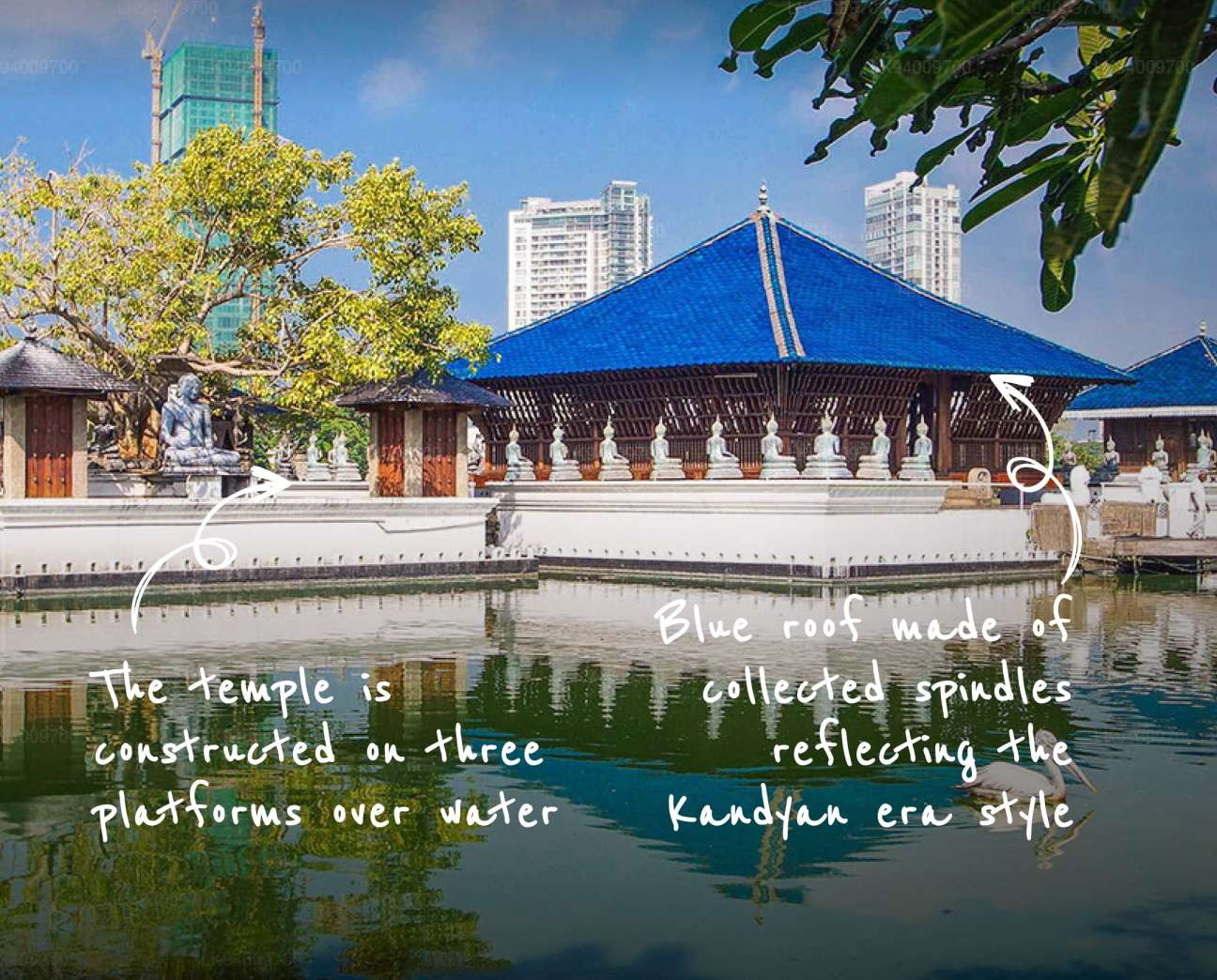
Image Source - The Bawa100 Foundation
Steel Corporation Office (Oruwala, Sri Lanka)
Year - 1969
Typology - Office
Concept - Inspired by a riverboat moored to the shore.
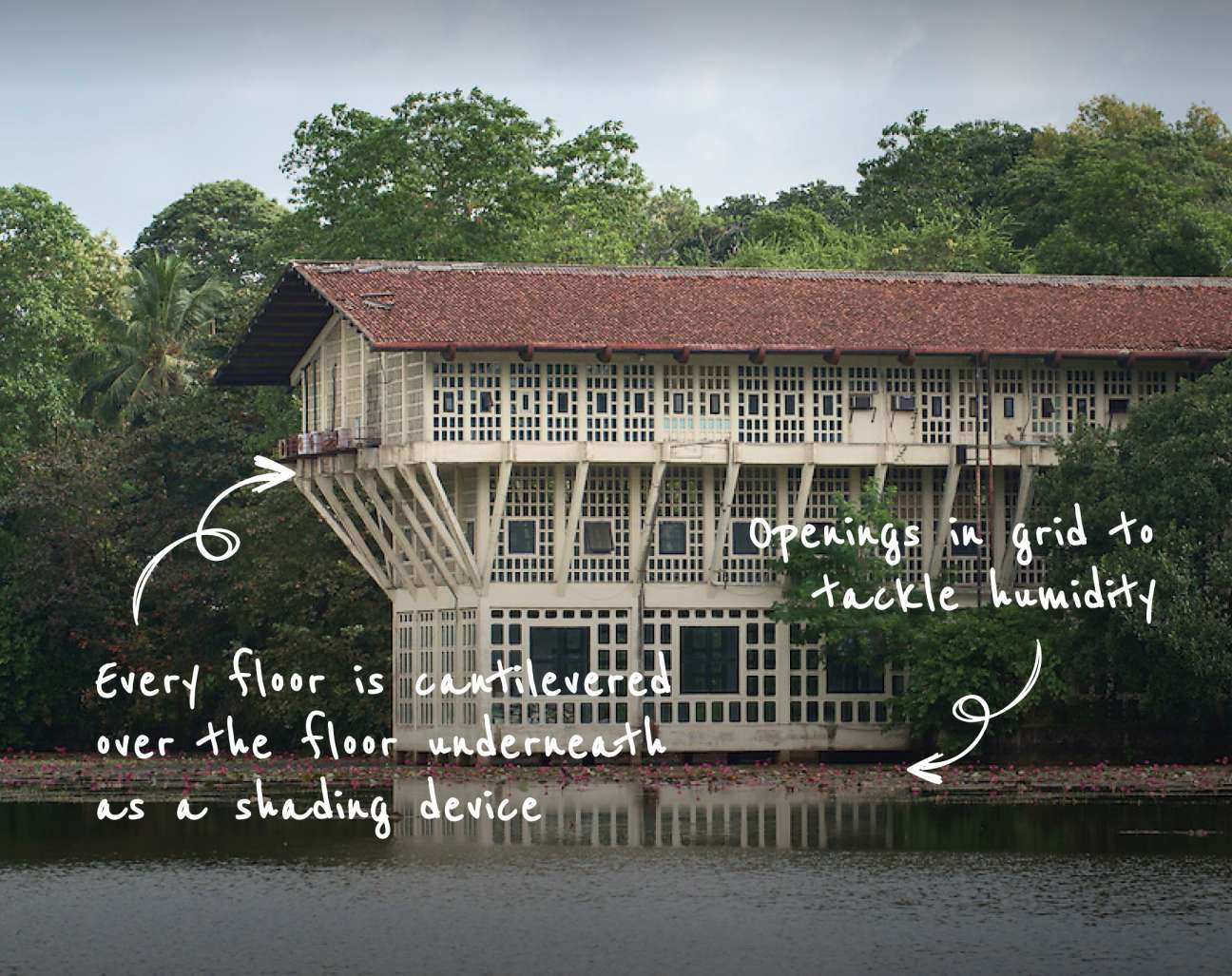
Image Source - The Bawa100 Foundation
Heritage Madurai (Madurai, India)
Year - 1998
Typology - Resort
Concept - Blend with 100 old banyan trees on site.
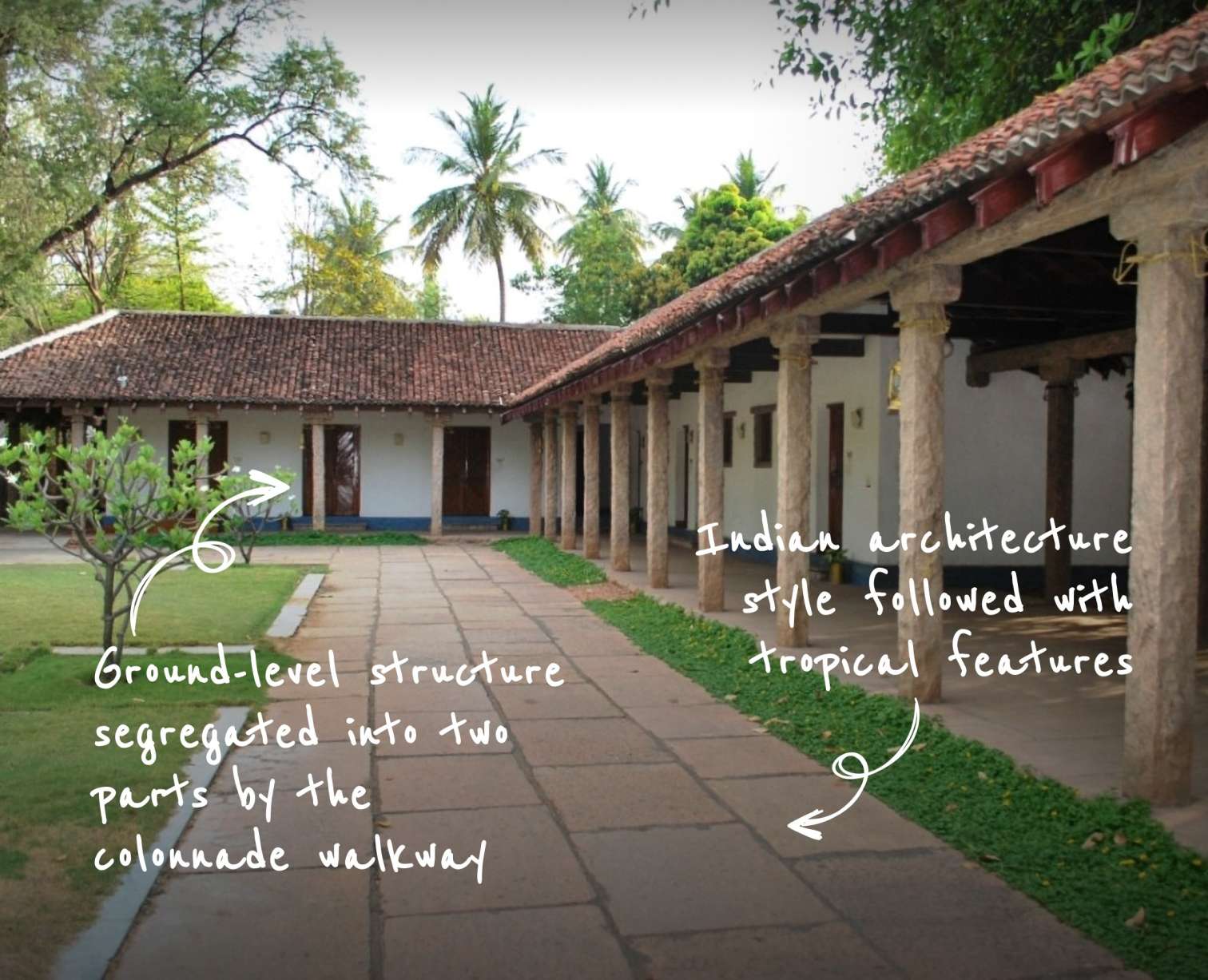
Image Source - Sarbjit Bahga
“Architecture cannot be totally explained but must be experienced.” by Ar. Geoffrey Bawa
Inspired enough? Join our Facade Design Masterclass and learn how screening elements like jali walls shape climate-responsive architecture.
FAQ
Who was Geoffrey Bawa?
Geoffrey Bawa (1919 to 2003) was a Sri Lankan architect and one of the most influential Asian architects of his generation. He came to architecture late, qualifying at 38 in 1957, and went on to design hotels, houses, schools, offices and the Sri Lankan Parliament.
What is Tropical Modernism?
It's modern architecture that actually listens to the climate. You get clean, minimal forms, but with courtyards, deep shade, cross-ventilation and local materials doing a lot of the cooling work.
What is Geoffrey Bawa's most famous building?
There's no single agreed answer. Lunuganga, his own estate in Bentota, is probably the one people link with him most. Kandalama Hotel and the Parliament Building are the other names that come up again and again.
Did Geoffrey Bawa design anything in India?
Yes. Heritage Madurai, a resort in Madurai completed in 1998, was planned around the 100 old banyan trees already on the site.