

Here’s some food for thought: AI is coming for civil engineering jobs. While it’s a headline that can provoke panic and might be true for a certain group of engineers, it’s not entirely wrong. In 2026, AI in BIM civil engineering workflows has transitioned decisively. In fact, automated clash detection, machine learning model validation, and generative scheduling tools are no longer prototypes; they are now in real time on real infrastructure contracts across India and globally.
But here’s the truth: the engineers who don’t know BIM are vulnerable right now and might feel under a constant threat of being left behind. Not only that, but with AI taking over processes and low-skill BIM tasks, the ultimatum is hovering like a menacing cloud.
On the other hand, the professionals who are skilled in BIM and AI are the best career path to tread in the next decade. And this blog is going to do exactly that. We’ll help you break down how the landscape of BIM is going to evolve in 2026, what skills are being automated or going to be rewarded, and what BIM automation for civil engineers in India will look like on this side of this shift.
What's Actually Different in 2026: From BIM Tool to BIM Intelligence
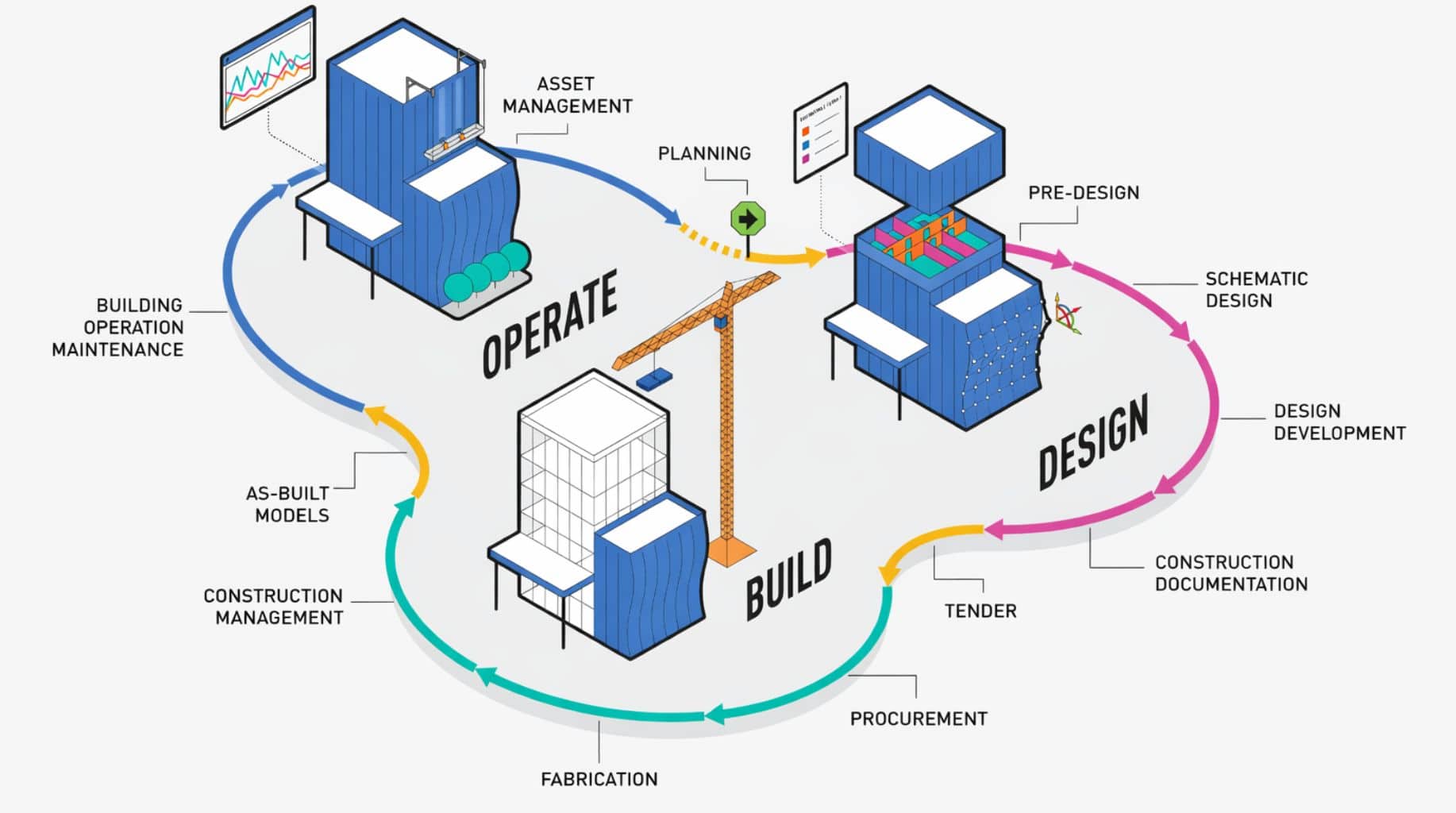
BIM has always been a modelling-first discipline. Engineers develop information-rich 3D models—structural, civil, MEP and utilise them for documentation and coordination. What AI has facilitated in 2026 is transforming that static model into a dynamic decision-making system.
According to ALLPLAN’s 2026 research on AI in the AEC industry, the most prevalent trend is the switch from reactive to predictive modelling. This is where AI agents embedded within the software can manifest design problems, suggest fixes, and even work on certain functionalities automatically.
As for civil engineers, particularly, three automation capacities have reached the operational stage from the experimental stage in 2026:
- Automated clash detection on priority: AI doesn’t look for clashes, it goes from construction impact, to filtering noise and then group clashes at the ground level.
- Model validation and QA automation: Instead of making any manual checks, AI-driven systems validate LOD compliance, verify parameters and name standards in seconds.
- Predictive scheduling and cost analysis: 4D and 5D BIM models now cater to AI engines that predict overruns before they happen via historical project data and live supply chain inputs
This is, however, not incremental progress. It represented a structural development in what BIM professionals invest their time doing and what skills they are willing to pay for.
The Real Threat: What AI Is Actually Replacing
“AI is threatening civil BIM jobs, but only for professionals who don’t know BIM”
This statement deserves a lot of unpacking to understand the meaning of “not knowing BIM” in the context of a working engineer.
Many civil engineers in India use BIM tools at a surface level by creating models via tutorials, running clash detection as a method, and producing drawings without getting the gist of the data discipline underneath. These engineers treat BIM as a modelling software, and AI directly challenges that system.
Here’s what is now automated or accelerating toward automation:
- Quantity take-off from models (with accurate LOD inputs)
- Standard drawing sheet setup and view generation
- Routine clash detection runs or simple report generation
- Scan-to-BIM conversion for as-built documentation on renovation projects
- Parameter checks and auditing model health
Research suggests that AI in coordination isn’t just about finding clashes instantly; it’s about reducing false positives, suggesting fixes, and learning from project history. An engineer whose only BIM value was running clash detection reports is up against a technology that just reinvented an entire system.
This is unfortunately an uncomfortable reality for BIM automation civil engineers in India, if your job is limited to tasks that software can now perform more cheaply and faster. Your position is genuinely at risk and not just because of AI, but because of a much more specific, identifiable skills gap.
Why BIM-Skilled Engineers Are Winning in 2026
The other side of automation is amplification. For engineers who understand BIM at the root level can make use of AI to work around coordination logic, data standards, interoperability and construction thinking, making them much more efficient and hence, valuable.
Consider how AI-powered clash detection actually works in reality. The system flags and prioritises clashes, but someone has to highlight what constitutes a critical clash versus a minor conflict. Someone with deep BIM coordination knowledge has to set the limit, interpret results against project-specific constraints, and communicate resolutions to structural, MEP and civil teams. This means that AI doesn’t replace the role; it offloads the manual grit so that the engineer can focus on just judgment and resolution.
The same logic applies to model validation, too. AI can check if a parameter exists, but it cannot determine whether a bridge deck’s structural parameters are justified to be constructed on a specific site. That decision relies on engineers and emerges as the primary professional value.
The Skills Employers Are Actively Seeking in 2026
Based on current industry patterns and hiring practices in the Indian AEC market, the BIM skill stack in demand looks something like this:
- BIM coordination method is not just a software; it involves understanding LOD, IFC standards, and multidisciplinary clash logic.
- Visual scripting and automation, including Dynamo for Revit and parametric workflows in Civil 3D.
- 4D and 5D BIM linking schedule and cost data to models for predictive project management.
- Data discipline, including naming standards, shared parameters and template consistency, because AI performs better when models are cleaner.
- Digital twin awareness in understanding how BIM feeds into asset management and infrastructure lifecycle monitoring.
However, these skills are not what you pick up through trial and error on live projects. They need structured training with real-life project exposure.
BIM Automation for Civil Engineers in India: The 2026 Market Reality
India’s infrastructure sector is at the core of the BIM mandate wave. Projects like the National Highways Authority of India (NHAI), metro rail, airport expansions, and smart city developments require BIM at Level 2 and moving towards Level 3 compliance. This also leads to a measurable gap between the supply of BIM-proficient civil engineers and actual project demand.
For BIM automation civil engineers in India, the opportunity is clear in projects like:
- Highway and expressway projects: Using Civil 3D and Infraworks integration with an AI-based terrain analysis system.
- Urban infrastructure: Taking care of factors like drainage, utilities, and other road corridor management using unified BIM models.
- Metro and transit: The highest MEP civil coordination demand and clash resolution is the most labour-intensive phase.
- Commercial and industrial construction: Where clients now anticipate 5D cost modelling integrated into project delivery.
Firms that get acquainted with AI-enabled BIM workflows are reporting a 30-40% reduction in coordination cycle time and measurable efficiencies in on-site RFIs. Engineers who can operate within those systems get both AI tools and the foundational BIM discipline. The amalgamation of both skills makes them the ideal candidates for companies and the soulful owners of stronger salary positions.
The engineers who cannot transition are being pushed toward lower-value drafting and documentation roles that are facing the pressure of automation. The differentiation is already quite clear in hiring patterns across prime AEC firms.
Key AI-Powered BIM Tools Reshaping Civil Engineering Workflows
You don’t have to be a software developer to work with an AI-enabled BIM workflow. However, you do need to understand which tools are building evolved workflows and how they integrate into the already existing platforms.
Autodesk Construction Cloud + Forma
Autodesk’s AI-driven early design platform brings generative analysis into site planning, including sun path, wind loading, massing efficiency, and infrastructure setback logic. For civil engineers involved in site development, understanding Forma’s output and integrating it with Revit and Civil 3D is highly expected.
Navisworks with AI Clash Grouping
The most recent intelligent clash detection workflows in Navisworks go beyond finding clashes to clustering them by their root cause and proposing resolution sequences. Civil engineers coordinating with structural and MEP teams must understand configuration, interpretation and the result of these outputs.
Dynamo Scripting for Civil 3D
Visual scripting by Dynamo enables civil engineers to automate repetitive modelling tasks like generating road alignments, placing drainage elements and running parameter validation checks. This is the easiest-to-learn skill that gives the highest ROI for professional engineers.
Digital Twin Platforms
Platforms like BIM models to live IoT sensor data for infrastructure monitoring are transitioning from research into deployment on major Indian infrastructure projects. Engineers with BIM foundations are being upskilled into these roles, and engineers without them are not.
What to Do Right Now: A Practical Skill-Building Roadmap
If you’re a civil engineer who has been using BIM tools as a starting point, the window to close the skill gap is not really closed, but it’s getting narrower by the minute. Here is a clear roadmap based on where the market is moving:
Step 1: Solidify your BIM fundamentals
Before automating anything, you need the basics—the standards. This means getting an understanding of LOD (Level of Detail/Development). IFC data exchange, shared parameter logic and coordination workflow discipline. Without this foundation, AI tools produce inconsistent and unreliable outputs for you as a professional.
Step 2: Learn at least one automation skill
Dynamo for Revit or Civil 3D is the easiest base to build your skills on. Learn to automate a workflow you currently use manually, like auditing a model’s health or generating something as simple as sheets. One working automation script is worth ten hours of theory and understanding.
Step 3: Understand 4D and 5D BIM
Connect your models to schedule and cost data. Infrastructure clients in India now require this in contracts and bids. Engineers who can showcase 4D simulation in a project proposal are winning work that others are not even qualified to do.
Step 4: Get structured, outcome-based training
Self-learning through YouTube and tutorials has a limit. The engineers progressing fastest are the ones who are educating themselves following structured programs that include real project coordination exercises. If you’re looking for something that's immersive, Kaarwan’s BIM courses for civil engineers are designed especially for this gap. It combines BIM fundamentals with practical automation and coordination skills for the Indian infrastructure market.
The Bottom Line
The question that stands in front of every civil engineer in India in 2026 is not whether AI will affect BIM work or not. The question is which side of automation should they stay true to?
AI BIM civil engineering in 2026 is going to be rewarding for engineers who understand the discipline deeply and are confident enough to direct, validate and build on what automation produces. It penalises engineers whose value was locked in the manual tasks that automation has taken up.
This shift is happening in real time now, and the only timeline to work with is the one where you get to cover this skill gap. Engineers who invest in structured BIM and automation training this year are positioning themselves for the strongest period of infrastructure demand India has ever seen in decades.
So, this is your opportunity to future-proof your career with Kaarwan’s BIM course for civil engineers, which is designed to take you from the fundamentals to advanced coordination and automation skills. This will also land you with real project exposure and outcomes that are built for the Indian infrastructure market.
Explore Kaarwan’s course today!
FAQs
1. Is AI replacing civil engineers in BIM roles?
No. AI is replacing repetitive BIM tasks, not engineers who understand coordination and decision-making.
2. What is AI BIM in civil engineering?
AI BIM combines artificial intelligence with BIM to automate tasks like clash detection, model validation, and scheduling.
3. Why are BIM-skilled engineers in demand in 2026?
Because they can manage coordination, interpret AI outputs, and work on complex infrastructure projects.
4. What skills do civil engineers need for BIM in 2026?
BIM coordination, Dynamo scripting, 4D/5D BIM, and data management are key skills.
5. What tasks are being automated in BIM workflows?
Clash detection, quantity take-offs, drawing generation, and model validation are increasingly automated.
6. How can civil engineers start learning BIM automation?
Start with BIM fundamentals, then learn tools like Dynamo and explore real project workflows.
7. What is BIM automation for civil engineers in India?
It refers to using AI and scripting tools to automate design, coordination, and project workflows in infrastructure projects.
8. Are BIM jobs increasing in India?
Yes. With infrastructure growth and BIM mandates, demand for skilled engineers is rising rapidly.
9. What tools are important for AI BIM workflows?
Tools like Autodesk Construction Cloud, Navisworks, Dynamo, and digital twin platforms are key.
10. How can I future-proof my civil engineering career in 2026?
Focus on BIM fundamentals, learn automation, and gain real project experience through structured training.




.png)