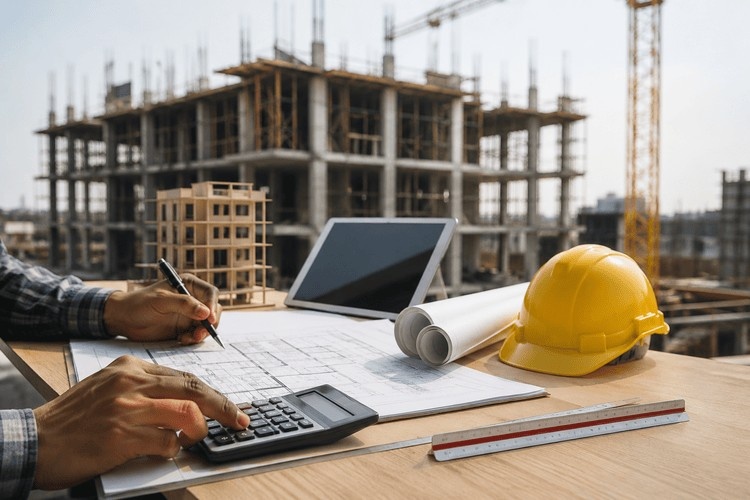
The construction industry is entering a new technological era, especially in MEP design. For years, engineers coordinated mechanical, electrical, and plumbing systems manually, often discovering clashes only on-site. This led to delays, rework, and increased costs, wasting valuable time and resources.
Artificial intelligence is no longer a future concept; it is now a part of everyday BIM workflows. Many MEP firms use AI-assisted design tools to speed up coordination and improve accuracy. These systems quickly evaluate multiple design options, optimise routing, and detect clashes early. This clearly shows how AI is transforming MEP design, from reactive, on-site problem-solving to proactive, data-driven decision-making during the design stage. Understanding these emerging trends is now essential for industry professionals.
Understanding AI-Driven Routing in MEP Design
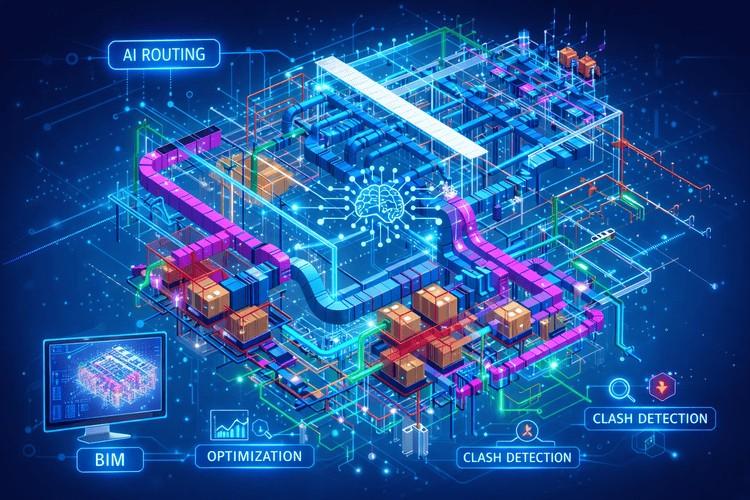
Automated routing systems are a major improvement over traditional MEP design methods. Earlier, engineers spent hours manually placing ducts, pipes, and cables while checking multiple drawings. Today, AI can create efficient routing layouts in minutes. It analyses building geometry, space limits, and system requirements to produce accurate designs with fewer errors and conflicts.
AI-powered MEP coordination works like an experienced engineer who can review countless options at once. It helps route lighting circuits, plumbing lines, and HVAC systems correctly while following codes and best practices. This allows engineers to focus more on optimisation, energy efficiency, and better design decisions instead of repetitive layout work.
The Technology Behind Intelligent Duct and Pipe Routing
Modern MEP routing is powered by intelligent technologies embedded within BIM workflows. These systems combine automation, data analysis, and advanced algorithms to deliver faster, more accurate, and optimised design outcomes.
How Generative Design Works
Generative design is where intelligent MEP routing truly comes to life. Instead of creating a single layout, engineers define key rules such as space constraints, structural clearances, and material efficiency, allowing the software to explore thousands of design options at once.
Based on these inputs, the system generates multiple routing solutions that are already checked for clashes and compliance. It then evaluates each option for cost, energy performance, material usage, and ease of maintenance, helping engineers confidently select the solution that best meets the project’s goals.
"We can't solve problems by using the same kind of thinking we used when we created them. AI-powered design tools allow us to think differently and explore possibilities we never imagined."
Machine Learning in MEP Coordination
Machine learning advances MEP coordination by learning from real project data. By analysing past building performance, these systems recommend smarter layouts for HVAC, plumbing, and electrical systems, improving continuously instead of relying on fixed rules.
As more projects are analysed, machine learning becomes better at predicting problem areas and suggesting proven solutions. This enables engineers to detect clashes earlier, reduce errors, and deliver more efficient project outcomes.
Real-World Benefits of Transforming MEP Projects
AI-driven MEP workflows deliver measurable improvements across coordination, cost control, and system performance. By shifting problem-solving to the design stage, teams can reduce risk, improve efficiency, and achieve more predictable project outcomes.
Clash Detection and Resolution
One of the biggest advantages of AI in MEP design is early clash detection. Instead of finding problems during construction, AI helps identify conflicts at the design stage. Earlier, teams manually compared drawings, which often led to missed issues and costly on-site fixes.
Today, AI-based tools detect clashes directly within the BIM model and suggest alternative routing options instantly. If a duct clashes with a beam, the system doesn’t just flag the issue; it recommends a better route that avoids the conflict while maintaining system performance.
Time and Cost Efficiency
AI significantly reduces the time needed for MEP design tasks. Load calculations, duct sizing, pipe routing, and electrical circuit analysis can now be completed in minutes instead of days. This helps teams explore multiple design options quickly and make better decisions early.
By identifying errors during the design phase, AI reduces rework and revision time by a large margin. For contractors and consultants, this means faster project delivery, fewer manual hours, and lower overall costs without compromising quality.
Energy Optimisation
AI also plays a major role in improving energy efficiency. It helps design MEP systems with optimal routing that reduces energy loss, such as minimising pressure drops in HVAC ducts. These smarter layouts lead to lower energy consumption and long-term operational savings.
By focusing on efficiency from the beginning, AI helps create buildings that perform better throughout their lifecycle, supporting sustainability goals and reducing environmental impact.
Case Study: Generative Design in Action
A compelling real-world example comes from a seven-story building project with unique spatial requirements. The building had an open-to-structure design, with the architect wanting to use chilled sails as a ceiling plane. The challenge was complex: maximise the cooling load offset while minimising open space in the layout, fit everything within structural bays, and maintain aesthetic appeal, all while controlling costs.
Using generative design for MEP, the engineering team programmed these constraints into the system. The AI evaluated countless configurations, considering thermal performance, spatial efficiency, and installation feasibility. The result? Multiple optimised solutions that the team could evaluate based on different priorities, whether emphasising energy efficiency, aesthetics, or cost.
This project exemplifies how AI doesn't replace engineering judgment; it enhances it. The engineers defined the parameters, evaluated the options, and made the final decisions. The AI simply expanded what was possible within the project timeline.
The Future of MEP Engineering with AI
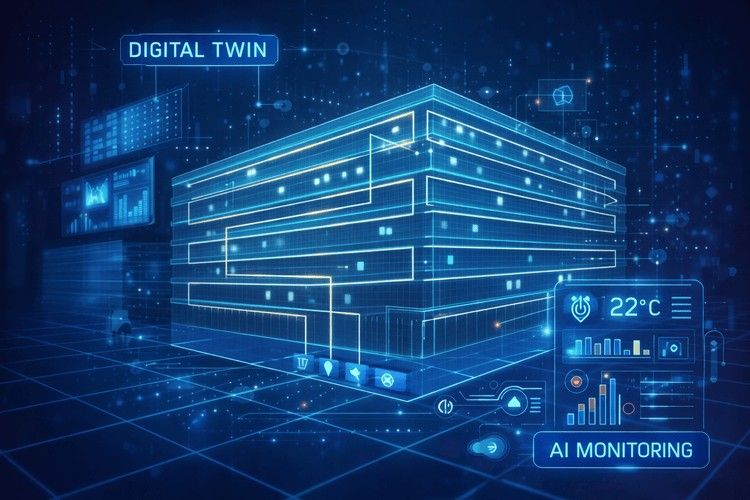
Looking ahead, AI combined with technologies like digital twins will further transform how MEP systems are designed and managed. By linking BIM models with real-time building data, digital twins help teams monitor performance, predict maintenance needs, and improve system efficiency throughout a building’s lifecycle. BIM will no longer support only design, but also construction and ongoing operations.
In the future, the same AI that designs duct and pipe layouts will continue to track system performance, highlight inefficiencies, and recommend maintenance actions. This evolution allows engineers to deliver long-term value well beyond the design phase.
“The future of construction is not about replacing engineers; it’s about empowering them with tools that amplify their expertise and expand what’s possible.”
For today’s MEP professionals, this shift brings both challenges and opportunities. As data-driven design and computational thinking become essential skills alongside core engineering knowledge, the right training and hands-on experience can significantly enhance career growth in modern MEP engineering.
Want to Master AI-Driven MEP Design? Explore the Professional BIM Certification for MEP Engineers, a comprehensive program covering generative design, automated routing, clash detection, and advanced BIM coordination for modern building systems.
Conclusion
AI-driven duct and pipe routing is changing the way MEP systems are designed and coordinated. It goes beyond being just a new technology and reshapes how engineers plan building services. By using generative design and machine learning, AI helps teams work faster, reduce errors, improve accuracy, and create more energy-efficient systems from the early design stage.
The results are clear: projects are completed more quickly, costs are reduced, and on-site clashes are minimised. For students and working professionals, learning these tools is no longer optional. Gaining practical knowledge through focused training, such as a BIM Masterclass for MEP Professionals, can help bridge the gap between traditional design methods and today’s AI-driven MEP workflows.
FAQ
1. What is AI-driven duct and pipe routing?
Automated software that uses artificial intelligence to design optimal MEP routing paths while avoiding clashes.
2. How does generative design work in MEP?
It creates thousands of design options based on your constraints, then ranks them by performance and cost.
3. Can AI replace MEP engineers?
No, AI assists engineers by automating repetitive tasks, allowing them to focus on optimisation and decision-making.
4. What are the main benefits of AI routing?
Faster design time, reduced clashes, lower costs, better energy efficiency, and fewer construction delays.
5. Which software tools support AI-driven MEP routing?
Autodesk Revit with generative design, Trimble solutions, and various BIM automation plugins.
6. How much time can AI save in MEP projects?
Studies show a 25-50% reduction in design revision time and completion of routing in minutes versus hours.
7. Is AI routing accurate for clash detection?
Yes, it identifies conflicts in real-time within the digital model before construction begins.
8. Do I need coding skills to use AI MEP tools?
No, most modern BIM platforms have user-friendly interfaces, though understanding parameters helps maximise benefits.
9. How does AI improve energy efficiency in MEP?
By optimising routing paths to minimise pressure drops, reduce material waste, and lower operational energy consumption.
10. Is AI-driven MEP design suitable for small projects?
Yes, while most beneficial for complex projects, it adds value to projects of all sizes through efficiency gains.