

If you’ve been around in the architecture and engineering industry for a few years now, you must have noticed something: the firms landing the best projects, such as the large-scale residential townships, infrastructure contracts, and international collaborations. If you look closely, they all have one thing in common: BIM.
It’s also about understanding the psyche of the professionals who have been working inside those firms and actually understand BIM. They are not just surviving this digital tsunami; they are steering this change. This not only gives them the position of a trailblazer, but also gives them that career edge they’ve been out bagging the opportunities of their life. Such skilled professionals are being headhunted aggressively and building careers that retain their value even amid unpredictable market shifts.
This guide is going to help you if you’re an AEC professional in India who is curious about what a career in BIM actually looks like—we’re talking real roles, real salaries, and the honest picture of what it actually takes to get there and what the map of opportunities in BIM looks like in 2026 and beyond.
Why BIM Is the Most Important Career Decision You Can Make Right Now
The global BIM market was valued at around $9.8 billion in 2025 and is projected to reach a whopping $29.9 billion by 2034—a growth rate of over 13% that’s compounded annually. This has led to a significant infrastructure boom in India, specifically. The government’s been laying emphasis on smart city projects, national highway expansion, metro rail projects and large-scale housing structures.
But, here’s a fact that will catch your attention: Despite this increasing demand, 42% of the global BIM talent requirement remains unmet because there are not enough trained professionals to fill it. That gap is wildest in markets like India, where BIM adaptation is soaring but the supply of trained professionals is still trying to catch up.
What does that mean for you?
If you develop and upskill in relevant skills like BIM in the upcoming months, you will be entering a job market where employers are competing for your job role, and not the other way around.
India has become a global hub for BIM services. Firms in the UK, UAE, Australia and the US constantly outsource BIM modellers, coordination and management work to India-based teams. Your career graph as a BIM professional in India is not restricted by the pace of domestic adoption, i.e. you can be working on a commercial tower in London or a hospital in Dubai without leaving your hometown.
Understanding the Role: What a BIM Modeller Actually Does
A BIM Modeller makes use of Building Information Modelling to build intelligent, data-rich 3D models of buildings and infrastructure. However, you must notice the keyword: “Intelligent”. Unlike a traditional CAD drawing, which is basically a digital version of an on-paper drawing, a BIM model is a complete database. Every column, door, pipe, and cable tray in the model is a carrier of information, including details like what it is made of, what it costs, when it will be installed, how it connects to its environment, and details about maintenance over a long period of time.
This is also why BIM has moved from being a competitive differentiator to a fundamental requirement on serious projects. It is not just efficient to draw buildings; in fact, it is a conscious system to manage construction information, and it is where the industry is moving.
The Core Responsibilities
Building and maintaining 3D models
Let’s start with a couple of foundational tasks like building parametric models using tools like Autodesk, Revit, ArchiCAD or Tekla Structures. Parametric means that once you add any alteration in any of the factors, like the height of a floor, every element that’s connected gets updated automatically. Getting this theory right needs genuine technical skill and a solid understanding of how buildings function as a whole.
Multi-disciplinary coordination
One of the most valuable steps that a BIM professional takes is bringing together the different models created by architects, structural engineers and MEP consultants into a single integrated model. This is where the real complexity lies and where real value is created.
Clash Detection
When a mechanical duct goes through a structural beam or a plumbing riser blocks a column’s location, that is a clash. Catching it on screen before it becomes a costly rework problem on site is one of the biggest pluses BIM can offer, and definitely a high-stakes contribution a BIM modeller has to offer. Studies also suggest that construction rework, caused by poor coordination, accounts for almost 30% of the project costs on poorly managed projects. But, BIM? Eliminates all of that.
Documentation production
From the model, BIM professionals pluck out fully coordinated plans, sections, elevations, specifications and schedules. Since these drawings are derived from the same source, they can stay consistent and uniform in general.
Model quality control
As projects evolve and teams expand, models get messy. BIM modellers run regular audits to ensure that the model remains clean, consistently named and compliant with the project’s BIM Execution Plan. It is also important to refer to the governance document that sets the rules for how information is structured and shared.
The BIM Career Ladder in India: Roles, Responsibilities & Salaries
One of the most fascinating things about a BIM career is how smoothly the progression of a workflow is structured. One can observe a clear ladder here, including defined roles, distinct skill requirements at each level and salary brackets that reflect the seniority of each role.
Entry Level (0–3 Years)
| Role | Salary (per annum) |
| Junior BIM Modeller | ₹1.5 – 4.5 Lakhs |
| BIM Technician | ₹4.5 – 8 Lakhs |
| Assistant BIM Coordinator | ₹3.5 – 14 Lakhs |
A junior BIM modeller works under the mentorship of a senior, who helps them build accuracy and speed in their core software, develop the muscle to build real-time projects, and learn project standards. At the end of the day, if you’re curious enough to learn, the sky’s the limit.
Mid Level (3–7 Years)
| Role | Salary (per annum) |
| BIM Coordinator | ₹3.5 – 24 Lakhs |
| BIM Analyst | ₹2.4 – 8.5 Lakhs |
| BIM Specialist | ₹5 – 14.1 Lakhs |
The BIM Coordinator is like the heart of any well-run BIM project, taking care of clash detection, chairing coordination meetings, managing information requests across multiple disciplines and keeping the associated model accurate all the time. The wide salary bracket reflects the real difference between a coordinator at a mid-size domestic firm and one managing coordination on a large global project from an India-based delivery spot.
At mid-level, your career starts to grow independent of location. Experienced BIM Coordinators in Bengaluru, Pune, and Hyderabad constantly work on projects in London, Sydney and Dubai without the hassle of relocating.
Senior Level (7–12 Years)
| Role | Salary (per annum) |
| Senior BIM Modeller | ₹6.6 – 30 Lakhs |
| BIM Manager | ₹10 – 15 Lakhs+ |
| BIM Implementation Specialist | ₹3.5 – 24 Lakhs |
A Senior BIM Modeller leads the modelling team, mentors the junior staff, sets the basic quality standards and owns most of the technically demanding elements of the model. The BIM Manager oversees the full BIM workflow across a project or organisation, builds and enforces the BIM Execution Plan and ensures the organisation’s investment in BIM brings in measurable value.
Advanced Level (12+ Years)
| Role | Salary (per annum) |
| BIM Consultant | ₹7.5 – 26 Lakhs |
| BIM Operations Manager | ₹6.5 – 39 Lakhs |
| Global BIM Lead | ₹4.3 – 26 Lakhs |
An Advanced BIM Professional is a strategic leader who goes above and beyond modelling to drive BIM implementation across various projects. They are at the forefront of BIM strategy, standards, managing intricate multidisciplinary coordination, resolving high-level clashes and workflow challenges and execution. Not only do they hold responsibility to mentor teams and improve overall project efficiency while leveraging tools like Navisworks and Autodesk Revit, but they also function as a BIM Lead or Manager, ensuring collaboration and quality alongside innovation across the project lifecycle.
The Specialisations: Which Path Is Yours?
BIM is not a single career track. It branches further into distinct specialisations, and picking the right one early in your career can impact your career trajectory. As an architect or civil engineer, your existing background provides a strong starting point.
Architectural BIM
The most well-known starting point for architects is Architecture BIM. BIM Modellers work primarily in Revit Architecture or ArchiCAD, translating design intent into detailed coordinated models. The work requires design literacy, a sharp eye for detail, and the grit to build models that multiple consultants will rely on as their point of reference.
Structural BIM
For civil and structural engineers, the role involves modelling foundations, frames, connections and the structural systems that carry the load of the entire building. Tekla Structures is the dominant platform here, though Revit Structure is used widely too. This specialisation rewards both rigour on site and engineering depth.
MEP BIM (Mechanical, Electrical & Plumbing)
MEP BIM is arguably the most coordination-focused specialisation because MEP systems share space with every other building element. The demand for skilled MEP BIM professionals is currently overtaking almost every other profession in major markets, making this one of the fastest paths to tread towards growing compensation.
Infrastructure and Civil BIM
BIM is no longer restricted to buildings. Using this technology in roads, bridges, tunnels, and airports is increasingly designed to and delivered using BIM systems, utilising tools like Autodesk Civil 3D, OpenRoads and Bentley OpenBridge. For civil engineers, this specialisation offers substantial project scale and falls in the category of India’s massive infrastructure pipeline.
BIM for Facilities Management
As digital twins are becoming quite mainstream, a growing specialisation has emerged around utilising BIM data for building operations like maintenance planning, energy optimisation and asset management after a smooth project handover. For professionals interested in the operational side of construction, this is the fastest-emerging frontline tech in BIM careers.
The Skills That Separate Good BIM Professionals from Great Ones
Software proficiency makes you feel noticed. However, what keeps you there and helps you climb the ladder is a much broader set of capabilities that most entry-level training programs underemphasise.
Technical Skills You Need to Build
- BIM Authoring in Revit, ArchiCAD, Civil 3D, or Tekla, anything that works for your specialisation.
- Clash detection and coordination using Solibri, Navisworks or BIM Collaborate Pro
- Dynamo Scripting is a visual programming tool within Revit that allows you to automate repetitive tasks (which becomes the single biggest differentiator at mid and senior levels)
- 4D and 5D BIM as linking model elements to construction schedules and cost data
- Point cloud and scan-to-BIM processing for as-built documentation and renovation projects
- ISO 19650 fluency to keep up with the international standard for BIM information management, which is highly required by clients on serious projects
- Cloud collaboration platforms, including Autodesk Construction Cloud, BIM 360, and their equivalents.
The Soft Skills That Actually Drive Promotions
While hard skills are the way to achieve your goals and bag opportunities, a couple of soft skills must also be looked into:
- Cross-disciplinary communication
- Problem-solving under extreme pressure
- Attention to detail
- Adaptability
The Software Landscape: What You Need to Know
| Software | What It Does | Why It Matters |
| Autodesk Revit | BIM authoring — architecture, structure, MEP | Most widely required globally |
| Autodesk Navisworks | Clash detection, model review, 4D scheduling | Essential for coordination roles |
| AutoCAD | 2D documentation, legacy support | Still used in most Indian firms |
| ArchiCAD (Graphisoft) | BIM authoring — architecture | Strong in European markets |
| Tekla Structures | Structural BIM, fabrication modelling | Go-to for structural projects |
| Autodesk Civil 3D | Infrastructure and civil BIM | Key for India's road and rail sector |
| Dynamo | Visual scripting and automation in Revit | Moves you from modeler to specialist |
| Autodesk BIM 360 / CC | Cloud-based project collaboration | Standard on international projects |
| Solibri | Model quality checking, IFC validation | Used by clients to verify compliance |
For architects who are beginning their BIM career, the priority sequence is quite clear: Start with Revit thoroughly, build Navisworks confidently and then add Dynamo strategically. This combination covers the major job segments in the Indian and the global market at junior through senior levels.
How to Get Started: Education, Certifications & Your Portfolio
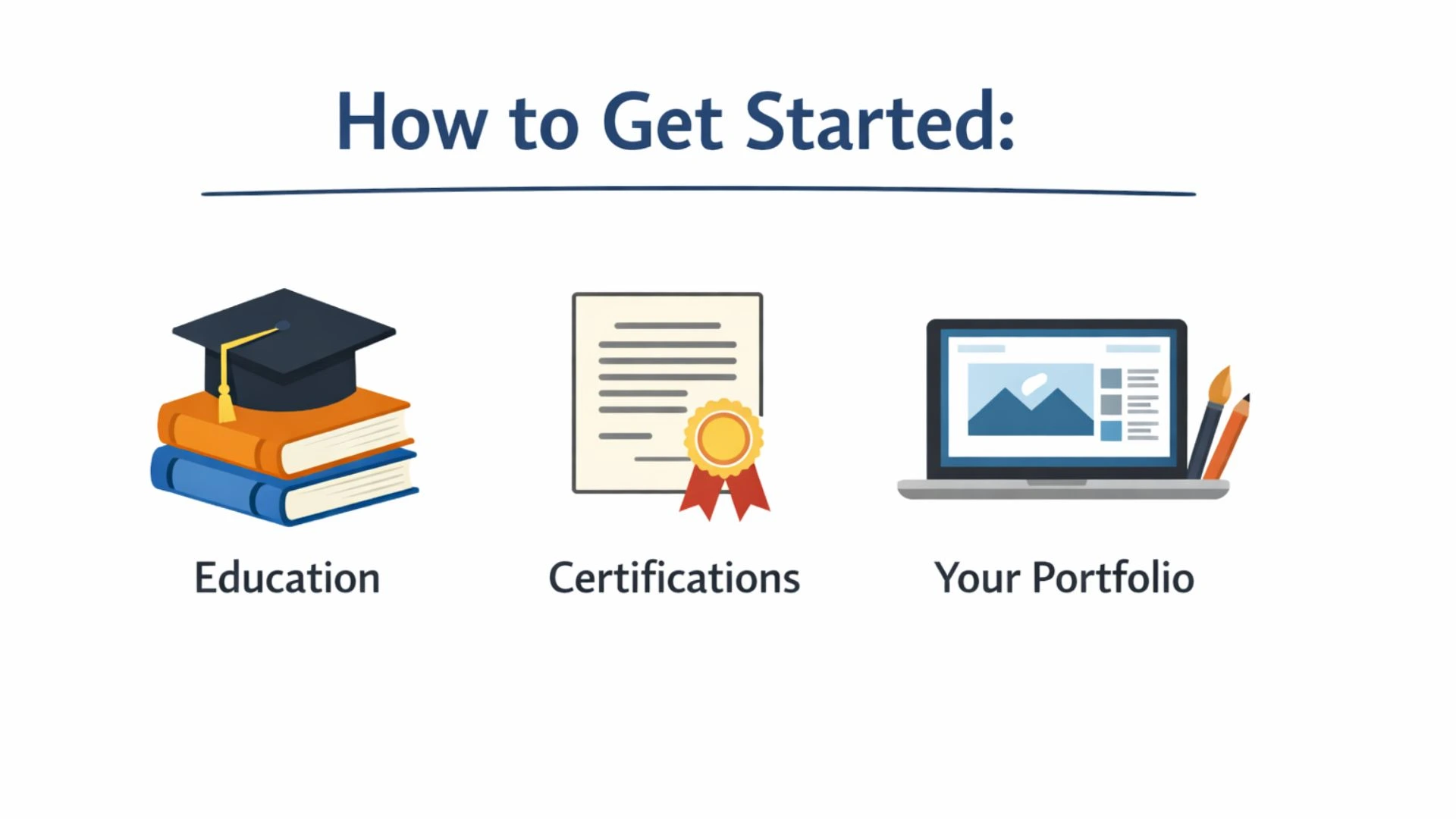
Think of BIM training as the last layer of garnish to your perfect career platter. If you have all the relevant skills and the educational base, with a little BIM training, you can add that technical layer to your digital workflow.
Certifications That Employers Recognise
1. Autodesk Certified Professional (ACP) in Revit
2. RICS BIM Manager Certification
3. ISO 19650 Practitioner / Coordinator
4. Comprehensive BIM Professional Programmes
Building a Portfolio That Gets You Hired
A strong portfolio is the most important thing that separates two equal candidates. Here’s what it should contain:
Project case studies: Two or three detailed examples showing what you modelled, the challenges you encountered and how you solved them with the help of a model.
Evidence of coordination work: A pre and post of a clash detection and resolution with a federated model view or a report that highlights your understanding of BIM.
Custom families and parametric components: Building your own Revit families highlights genuine technical depth and initiative
A BIM Execution Plan extract: Even a partial BEP can show the employer that you have an understanding of executing professional BIM projects—how they are structured and governed.
A digital-first format: A live portfolio hosted online or shared as an interactive PDF can build a stronger impression than any static image.
Where BIM Is Going: Trends That Will Shape Your Career
Understanding the path of success is not interesting; it directly informs the skills you should be building at this moment.
AI Is Already Changing What BIM Modellers Do
Around 27% of firms globally are actively using AI in their project processes, and that figure is still on the rise. AI tools are beginning to automate clash detection, generate model annotations, flag data clashes and check code compliance. And if you’d notice, all these tasks are a significant chunk of what a BIM Modeller does.
This is not a threat to BIM careers; it is a wave of transformation—in systems, in values, in design. The professionals who will benefit the most are those who can direct and validate AI tools diligently, focusing their expertise on coordination, judgment, and the higher-order decisions that no algorithm can actually make.
Digital Twins Are Creating New Career Territory
Around 52% of AEC leaders are already implementing digital twin technology, rising to 67% among building owners and facility managers. As this becomes standard practice on major projects, it is creating an entirely new category of BIM-adjacent roles, such as:
- Digital Twin Managers
- BIM-FM Integration Specialists
- Asset Data Managers
These professions will be some of the most sought-after positions in the industry within the next three to five years.
The Global Opportunity for Indian BIM Professionals Is Growing
India is already a BIM services export hub. Firms in the UK, Australia, the UAE, and Singapore rely on India-based BIM teams to deliver modelling, coordination, and management work on their projects.
With cloud collaboration becoming the default tech and the global talent shortage in BIM deepening, this opportunity will only expand. For an Indian architect or civil engineer with strong BIM skills and international project exposure, the career ceiling is not set by the domestic market. It is set by the global one. And this is where you fit in.
FAQs
1. What is BIM?
A process that creates data-rich 3D building models for design, construction, and management.
2. Is BIM a good career in India?
Yes, demand is high and talent supply is low, especially for roles like BIM modeler jobs in Chennai.
3. What qualifications are needed for BIM?
A degree in architecture or engineering, plus BIM software training.
4. Which software should I learn first?
Start with Revit, then move to Navisworks and Dynamo.
5. What is the salary of a BIM modeller?
₹1.5–₹4.5 LPA for beginners; higher with experience.
6. How long does it take to learn BIM?
3–6 months for basics; 6–12 months to become job-ready.
7. What are BIM specialisations?
Architectural, Structural, MEP, Infrastructure, and Facilities Management.
8. Is coding required in BIM?
No, but tools like Dynamo help you advance faster.
9. BIM vs CAD—what’s the difference?
CAD is 2D drafting; BIM is intelligent 3D modelling with data.
10. Can I switch to BIM from architecture or engineering?
Yes, with proper training and a strong portfolio.



.png)