In architecture, sustainability is no more a luxury; it is a need. Achieving green building certifications like LEED (Leadership in Energy and Environmental Design) has become very vital for architects and builders as we confront urgent environmental issues. How therefore may technology assist this process? Here comes Building Information Modelling (BIM) for LEED certification.
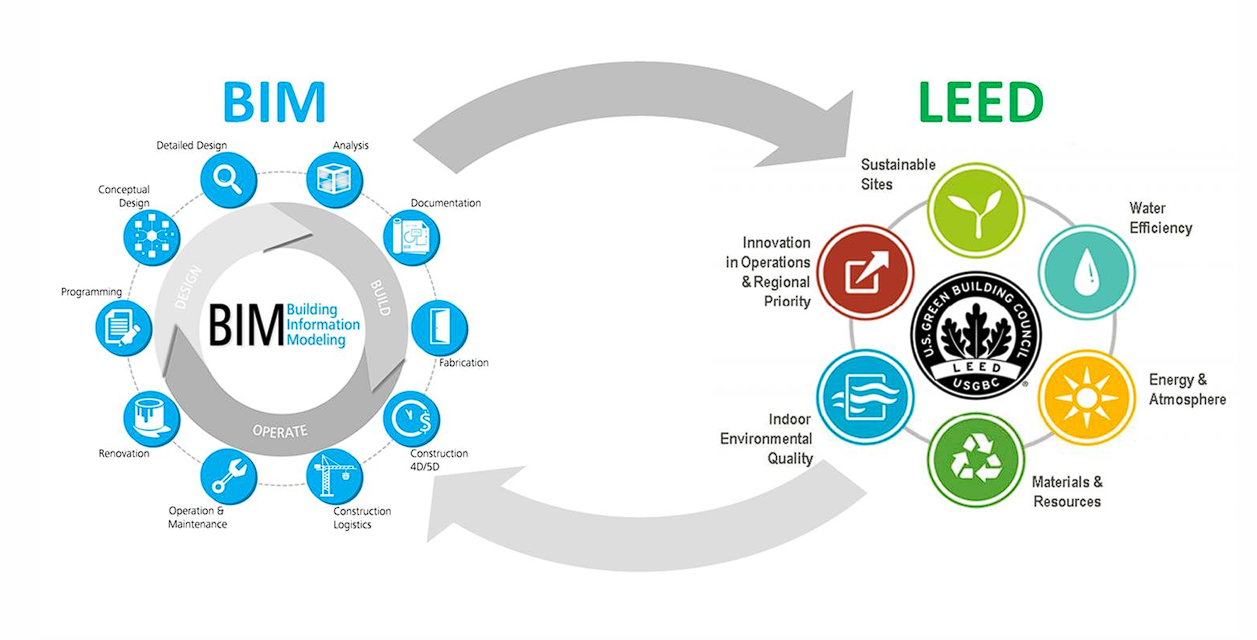
Image Credit: sustainableplaces.eu
Having worked with several BIM programs in building projects, I can boldly claim that including BIM into your process can greatly simplify the LEED certification process. Whether your goal is green credentials or you are a student studying architecture looking at sustainable design, BIM provides data-driven insights, streamlined processes, and improved teamwork to help reach environmental targets.
Read more: BIM and Sustainable Design: Leveraging Technology for Green Building Certification
Let's look at how BIM can enable quick LEED certification.
What is BIM, and why does it matter for LEED?
Knowing BIM in Building Construction
Digital representations of a structure's physical and functional traits are known as Building Information Modelling, or BIM. It helps builders, engineers, and architects to work on a common model, therefore enhancing cooperation and lowering mistakes.
Beyond design, BIM is a perfect tool for sustainable development since it combines lifecycle evaluation, energy analysis, and material economy.
Read more: 5 Ways BIM Enhances Sustainability in Construction
Why LEED Certification Needs BIM
LEED accreditation assesses buildings in relation to sustainability criteria like indoor environmental quality, material choice, water conservation, and energy efficiency. BIM facilitates reliable data, automated calculations, and real-time visualising of sustainability effects.
BIM Supporting LEED Certification
1. Energy Modelling and Performance Analysis
By integrating with energy analysis tools, BIM programs including Revit, Rhino, and AutoCAD help architects maximise designs for energy efficiency. These instruments enable you to:
- To cut dependency on artificial illumination, replicate daylighting and shading.
- Analysis of thermal performance will help to maximise HVAC systems and insulation.
- For LEED energy credits, figure carbon footprint and energy savings.
Energy modelling with BIM guarantees adherence to LEED's Energy & Atmosphere (EA) category, which counts a lot of the certification points.
2. Water Efficiency Strategy
Water-efficient plumbing, irrigation, and wastewater systems are designed by BIM under direction by architects and MEP engineers. Using BIM allows you:
- Include mechanisms for gathering rainwater into your design.
- Review water flow rates to cut waste.
- Track and control water use for credit towards LEED's Water Efficiency (WE).
Read more: Sustainability in BIM Architecture: Revolutionizing Green Building Design
Calculations can be automated using BIM applications such as Dynamo and Grasshopper, therefore guaranteeing water efficiency targets are compliant.
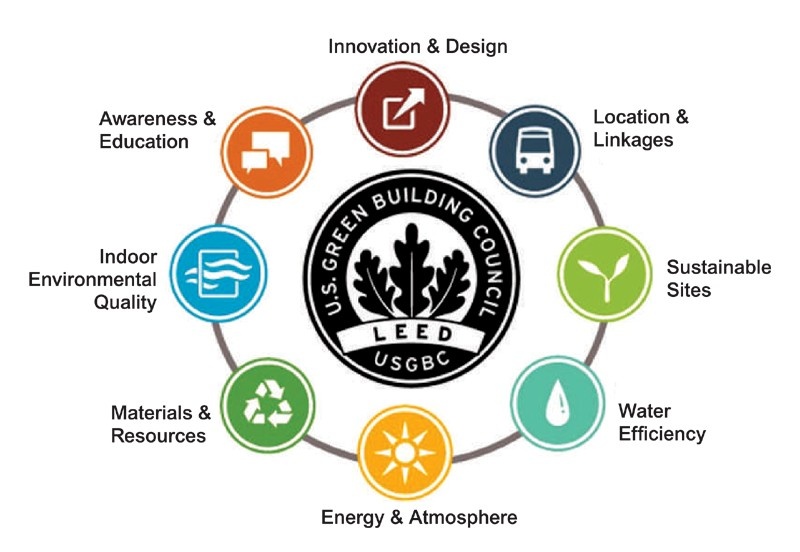
Image Credit: Conserve Solution
3. Waste Reducing and Sustainable Material Selection
Achieving LEED certification depends much on the materials chosen. BIM helps via:
- Monitoring life cycle, recyclability, and material embodied carbon.
- Turning on correct quantity take-offs to reduce building waste.
- Choosing locally based, non-toxic, renewable resources compliant with LEED criteria.
Material scheduling and procurement done using BIM guarantees projects match LEED's Materials & Resources (MR) criterion.
4. Improving Indoor Environmental Quality (IEQ)
LEED certification depends mostly on guaranteeing good interior conditions. BIM speeds up:
- Simulations of ventilation to improve the air quality.
- Acoustic modelling to lower noise levels.
- Thermal comfort study for occupant well-being.
Including these features into BIM processes would help architects guarantee user comfort and LEED Indoor Environmental Quality (IEQ) ratings.
Read more: The Future of Indian Architecture: Embracing BIM for Sustainable Design
5. Compliance Tracking and Documentation
LEED certification calls for a lot of time-consuming paperwork. BIM simplifies this by:
- Complying reports and data collecting automation.
- Connecting LEED credit criteria to the model straight forwardly.
- Offering graphic dashboards to monitor environmental data.
BIM software automates the documentation process, therefore lowering mistakes and saving time instead of hand preparing reports.
Key BIM Tools for LEED Certification
If you're not familiar with BIM, you could question which tools to begin with. Here are some important program choices:
- Autodesk Revit - Perfect for parametric design, documentation, and energy modelling.
- Rhino + Grasshopper - Great for form-finding, daylight analysis, and sustainability simulations.
- Navisworks - Addresses model coordination and clash detection.
- Archicad - Offers upgraded BIM for LEED certification processes.
Every one of these tools has certain advantages; choosing the correct one will rely on the requirements of your project.
Read more: Step-by-Step Guide to Integrating BIM and Prefabrication
Conclusion
For LEED certification and sustainable architecture, BIM marks a revolution. Using BIM will help you to simplify compliance tracking, streamline energy modelling, optimise water use, choose environmentally friendly materials, and simplify indoor air quality.
See Kaarwan's advanced Rhino course or BIM for Sustainable Architecture curriculum if you study architecture either professionally or for sustainability and want to learn BIM. These seminars provide practical understanding on how to combine BIM with environmentally friendly building techniques.
Visit our website Kaarwan for more!
FAQs
1. Can I apply BIM tools for any LEED grading system?
Indeed, BIM may support several LEED rating systems: LEED O+M (Operations and Maintenance), LEED BD+C (Building Design and Construction), LEED ID+C (Interior Design and Construction).
2. For LEED certification, which BIM program is best?
Among the most often utilised for sustainable-minded BIM processes are Autodesk Revit, Rhino, and Archicad.
3. In what ways may BIM increase building energy efficiency?
Real-time energy modelling, lighting analysis, and HVAC simulations made possible by BIM let designers maximise energy performance and lower carbon footprints.
4. Does LEED certification call for BIM?
No, however it automates documentation and offers precise sustainability data, therefore greatly simplifying the procedure.
5. Where might I find further information on applying BIM for sustainability?
Kaarwan's BIM courses allow you to get practical knowledge with environmentally friendly design methods.