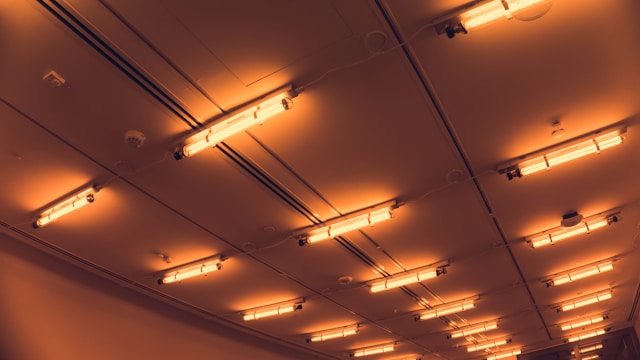
Types of False Ceiling Profiles in Interior Design:
False ceilings are more than just concealed surfaces for services — they’re powerful architectural tools that sculpt light, depth, and movement within interiors. The way a ceiling is profiled can subtly change how we perceive a space — guiding circulation, expanding visual width, or adding layers of illumination. Here’s a look at five common yet distinct false ceiling profiles and how each influences the design character of an interior.
1. Single-Sided Cove Ceiling
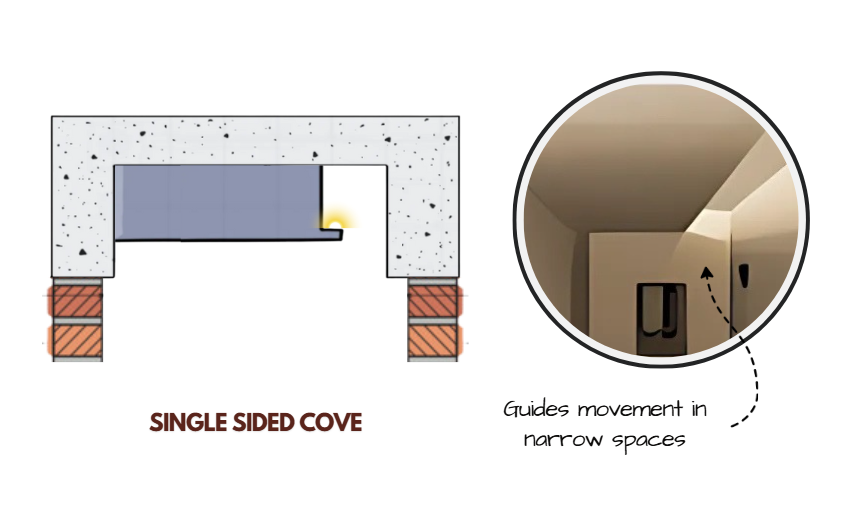
Image Credits: Shivani Chougula @Kaarwan
A single-sided cove profile features a recess or drop only along one side of the ceiling, typically with hidden LED strip lighting. This asymmetrical detail creates a gentle wash of light along one direction, enhancing linear movement and visual continuity. It’s especially effective in corridors, lobbies, or elongated rooms where directional flow needs subtle guidance. The single cove visually lightens one edge of the ceiling, adding dimension without overwhelming the space.
2. Double-Sided Cove Ceiling
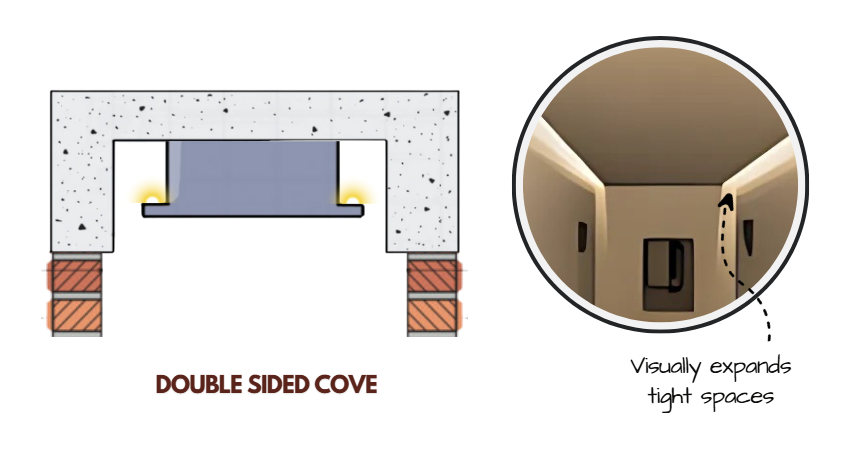
Image Credits: Shivani Chougula @Kaarwan
A double-sided cove is recessed on two opposite edges, casting light inward from both sides. This balanced illumination visually stretches a narrow space, making it appear wider and more open. The design diffuses light evenly across the ceiling, softening harsh shadows and creating a comfortable ambience. Commonly used in small bedrooms, compact offices, and conference rooms, double coves give a sense of expansiveness while maintaining a clean, modern look.
3. Perimeter Cove Ceiling
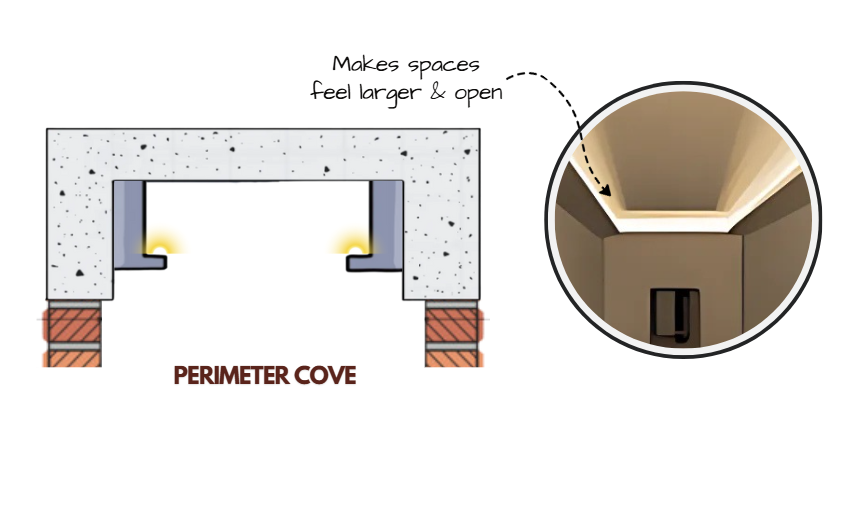
Image Credits: Shivani Chougula @Kaarwan
The perimeter cove runs along all four edges of the room, with concealed lighting outlining the ceiling’s boundary. This design makes the ceiling appear detached and floating, emphasizing spaciousness and continuity. The glow highlights the room’s geometry, making it ideal for living rooms, reception areas, or showrooms that benefit from a luxurious, open aesthetic. Perimeter coves also pair well with minimalist interiors, where indirect lighting replaces visible fixtures for a seamless finish.
4. Floating Ceiling
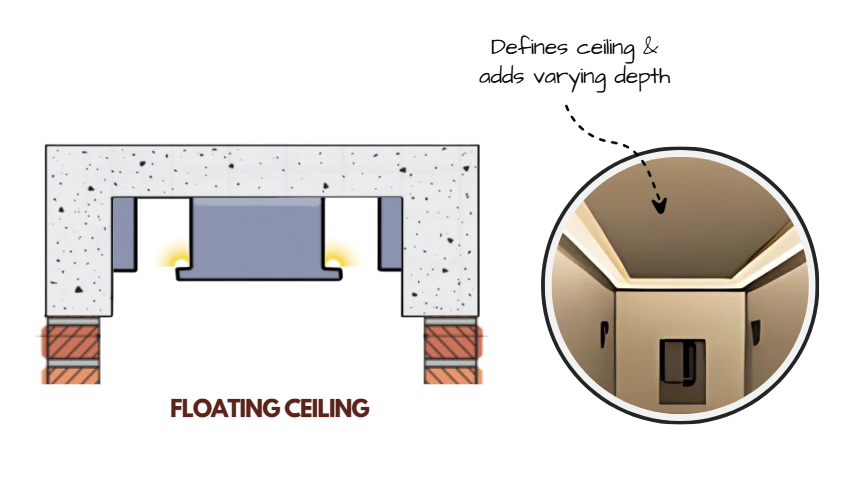
Image Credits: Shivani Chougula @Kaarwan
A floating ceiling features a dropped central panel surrounded by a narrow shadow gap or concealed lighting band that gives the illusion of a suspended surface. Made from gypsum, metal, or lightweight panels, it creates dramatic depth and visual hierarchy in interiors. Floating ceilings help define zones — like dining areas or workstations — within open plans, while their hidden lighting perimeter adds warmth and accentuates ceiling layers. This design offers both functional and aesthetic balance, blending architectural clarity with ambient softness.
5. Sloped Ceiling with Cove
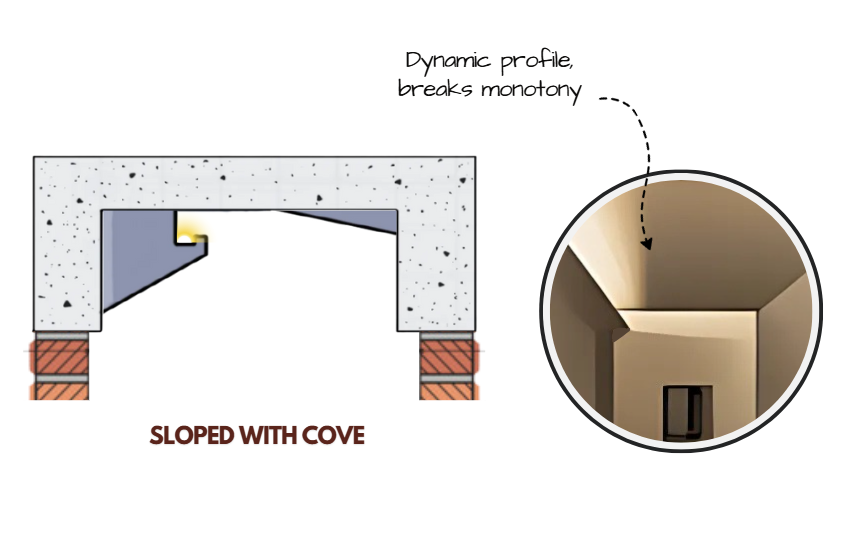
Image Credits: Shivani Chougula @Kaarwan
This dynamic profile combines a gentle slope on one side with a cove recess on the other. The result is a ceiling that feels kinetic — subtly changing in height and light intensity. The slope introduces motion and directionality, while the cove smooths transitions and softens illumination. It’s ideal for creative studios, lounges, or modern residences where ceilings can add an expressive architectural gesture. The mix of angles and light gradients prevents monotony and gives the space a sculptural identity.
Final Thoughts:
False ceiling profiles are not merely decorative elements — they’re spatial devices that articulate volume, guide light, and define mood. From the directional rhythm of a single cove to the openness of a perimeter profile or the drama of a sloped plane, each ceiling type has a unique dialogue with its space. Thoughtful selection and detailing of ceiling profiles can elevate any interior from functional to experientially rich — proving that the most subtle lines often have the greatest design impact.