The Konark Sun Temple is a 13th-century Hindu temple in Odisha, built by King Narasimhadeva I of the Eastern Ganga dynasty around 1250 CE and dedicated to the Sun God Surya. Designed as a colossal stone chariot with 24 elaborately carved wheels and seven horses, it stands as a UNESCO World Heritage Site and one of the finest surviving examples of Kalinga architecture in India.
Introduction :
Nestled on the eastern coast of India in the town of Konark, Odisha, the Sun Temple stands as an extraordinary example of ancient Indian architecture. Built in the 13th century by King Narasimhadeva I of the Eastern Ganga Dynasty, this temple is dedicated to Surya, the Sun God.
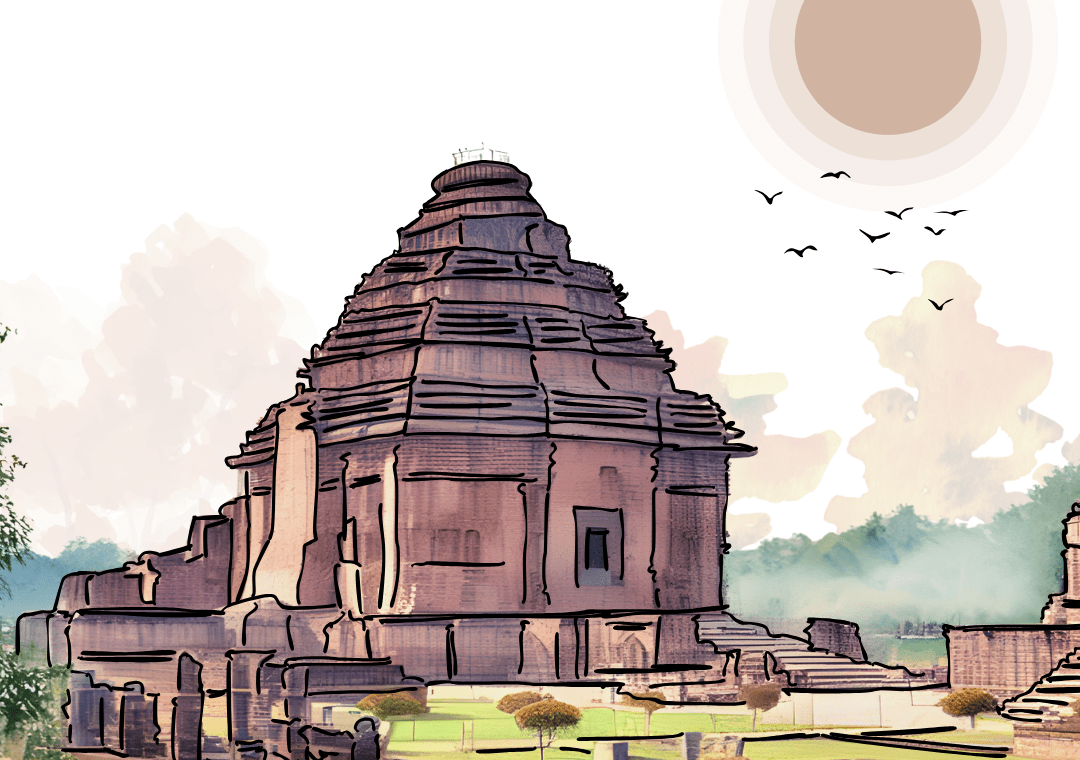
Image Credit: Shivani Chougula @Kaarwan
A UNESCO World Heritage Site, the temple is renowned for its grand scale, intricate carvings, and the unique concept of representing the celestial chariot of the Sun God. Historically, the temple played a significant role in Odisha's religious and cultural identity. Over time, however, parts of the structure, including the main sanctum, have been lost, yet its architectural brilliance continues to captivate historians, architects, and devotees alike.
Also Read : Kailasa Temple at Ellora: A Journey through Time and Stone
Quick facts about the Konark Sun Temple:
- Built by: King Narasimhadeva I of the Eastern Ganga Dynasty
- Year: Around 1250 CE (13th century)
- Location: Konark, Puri district, Odisha, India
- Dedicated to: Surya, the Sun God
- Architectural style: Kalinga Nagara
- UNESCO World Heritage Site: Designated in 1984
- Commonly called: The Black Pagoda
Planning and Design Principles :
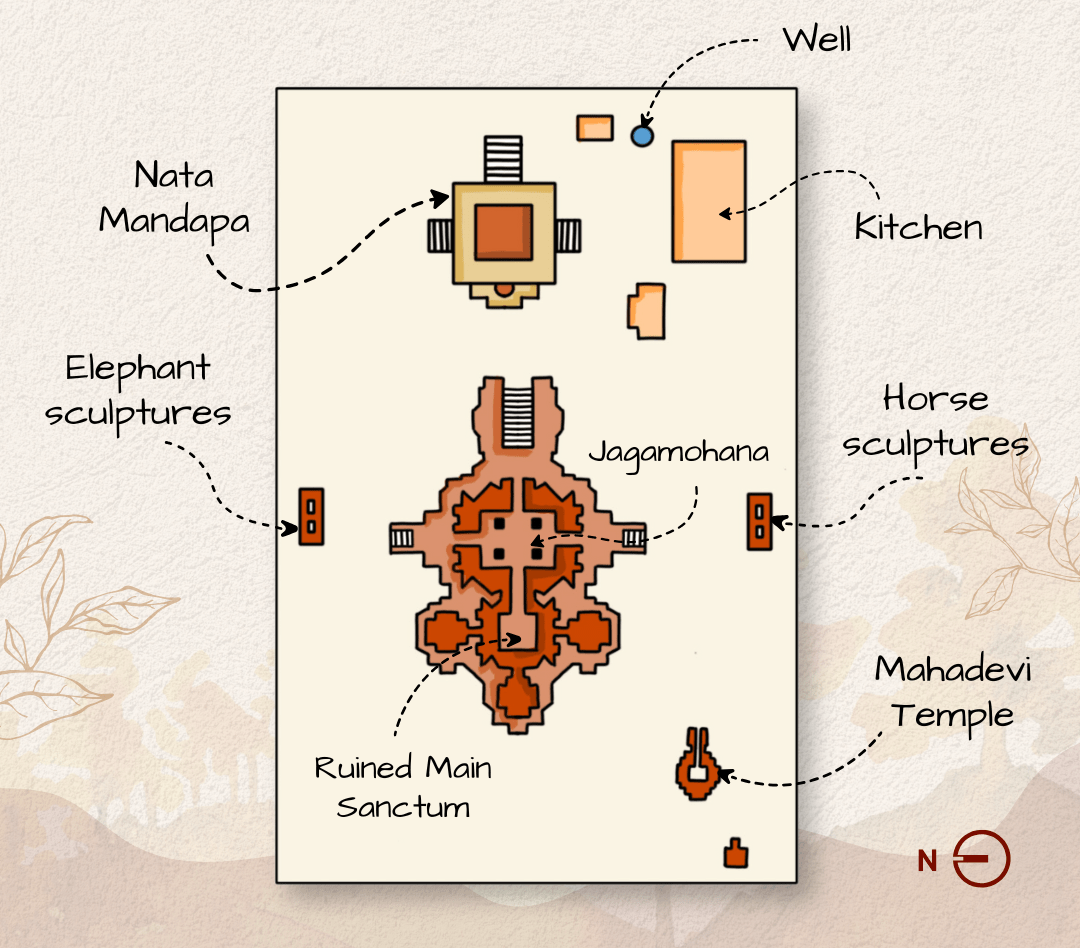
Image Credit: Shivani Chougula @Kaarwan
The Konark Sun Temple follows traditional Kalinga architecture, adhering to a precise geometric and axial layout. The entire temple complex is designed as a colossal chariot drawn by seven stone-carved horses and carried on twenty-four intricately designed wheels. This concept represents the Sun God's journey across the sky. The temple aligns perfectly with the east-west axis to capture the first rays of the rising sun, emphasizing its solar significance. The complex consists of three major sections: the Jagamohana (assembly hall), the Natamandapa (dancing hall), and the now-ruined Rekha Deula (main sanctum). The sanctum, which once housed the idol of the Sun God, has collapsed over time, leaving only remnants of its former grandeur. Despite this, the planning principles reflect a deep understanding of astronomy, religious symbolism, and construction expertise, making it an unparalleled architectural masterpiece.
Temple planning in India followed a deeply codified set of rules rooted in Vastu Shastra and astronomical alignment. You can explore how these principles were originally developed in our guide to Vastu Shastra and Vastu Purusha Mandala.
Architectural Style :
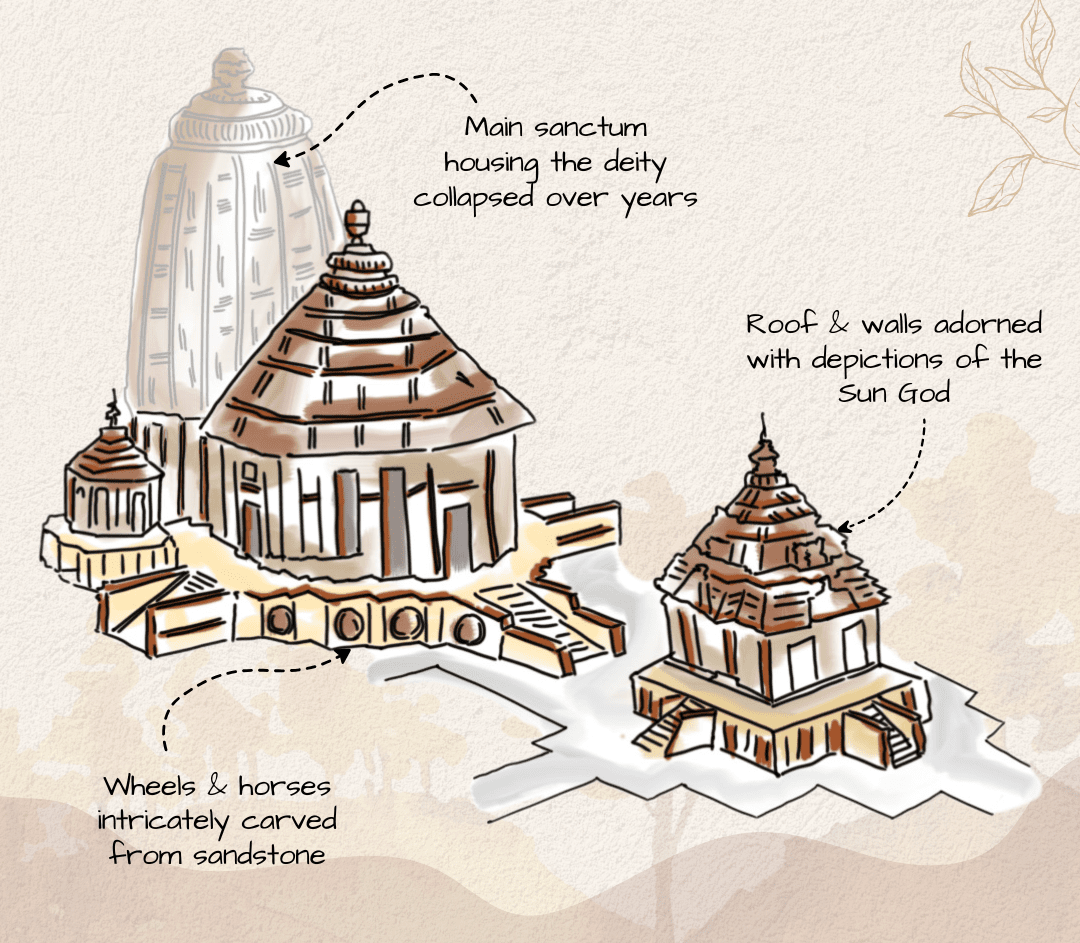
Image Credit: Shivani Chougula @Kaarwan
The temple follows the Kalinga style of Nagara architecture, characterized by a towering curvilinear spire (shikhara) and elaborate stone carvings. The concept of designing the temple as a chariot of Surya is its most striking feature, illustrating the celestial motion of the Sun God. The temple originally had a towering rekha deula (sanctum tower) that soared above the complex, but it collapsed over time, leaving the Jagamohana as the primary surviving structure. Despite this loss, the grandeur of the temple remains intact through the richly ornamented walls, detailed friezes, and the overwhelming scale of the stone-carved chariot. The use of laterite, chlorite, and khondalite stones showcases the durability and advanced craftsmanship of the time.
Students comparing Indian temple traditions with Islamic monumental architecture will find the contrasting vocabulary of domes, minarets, symmetry, and ornamentation explored in key characteristics of Mughal architecture — the tradition that developed alongside Kalinga architecture across the same centuries
Kalinga is just one of the major regional temple styles that shaped Indian architecture. To understand how it compares with Dravidian and Vesara styles, read our detailed overview of regional diversity in Indian architectural styles.
History and Construction of the Konark Sun Temple
King Narasimhadeva I commissioned the temple around 1250 CE, primarily to celebrate his military victory over the Muslim rulers who had repeatedly threatened Odisha's borders. The temple was not just a religious monument, it was a statement of political power and devotion to the Sun God, Surya. Architecture students researching Indian heritage for thesis projects can find relevant directions — heritage conservation, temple documentation, Vastu-compliant design — in 50 trending architecture thesis topics curated specifically for B.Arch final year students.
Construction was carried out by thousands of craftsmen over an estimated 12 years. The temple used three types of stone: khondalite, chlorite, and laterite each chosen for a specific structural role. Khondalite was used for the outer carvings because of how well it holds fine detail. Chlorite, being harder, was used for the sculptures and decorative elements. Laterite, the most durable, formed the core structure.
The main sanctum (rekha deula) was the tallest part of the complex, estimated to have risen to about 70 metres. It collapsed at some point between the 15th and 17th centuries — historians believe a combination of structural issues, the removal of the iron beams that held the tower together, and possibly deliberate damage during invasions all contributed to the collapse. Today, only the Jagamohana (assembly hall) and the Natamandapa (dance hall) remain standing.
If you are preparing for GATE Architecture, Konark frequently appears in exam questions on Kalinga style, Nagara architecture and Indian temple planning. Kaarwan's GATE Architecture Crash Course covers these topics in depth.
Chariot Wheels :
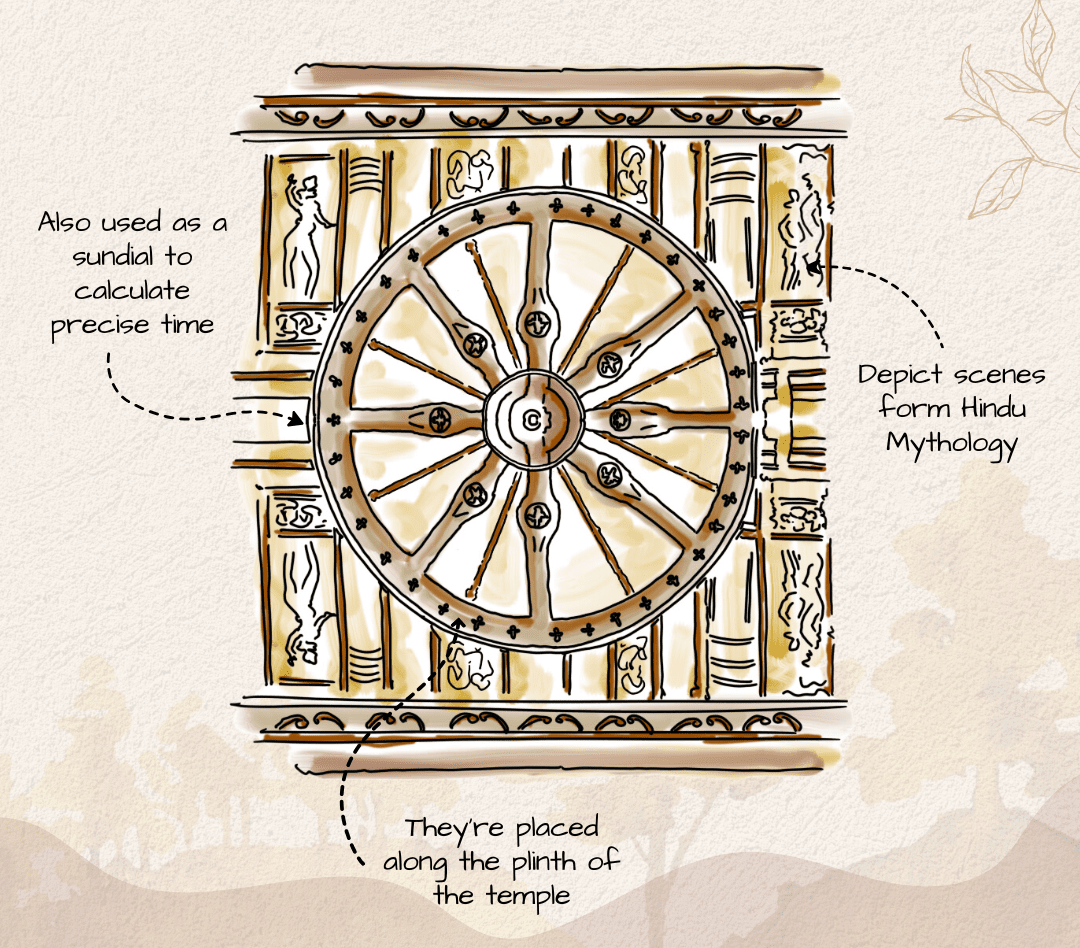
Image Credit: Shivani Chougula @Kaarwan
One of the most iconic elements of the Konark Sun Temple is its twenty-four intricately carved wheels, positioned along the plinth of the Jagamohana. Each wheel, with its elaborate floral and geometric motifs, represents the hours of the day and is believed to symbolize the passage of time. These wheels are not merely decorative; they function as sundials, with the ability to calculate time based on the position of the sun's shadow cast on their spokes.
The cosmological significance of cardinal directions in Indian sacred architecture — which directly informed the wheel's astronomical encoding connects to a wider system of 16 directional energies in Vastu Shastra that governed both temple orientation and domestic architecture planning across India.
The detailed craftsmanship of the wheels, featuring smaller carvings of deities, celestial beings, and mythological scenes, reflects the advanced astronomical knowledge possessed by the temple's architects.
Horse Sculptures :
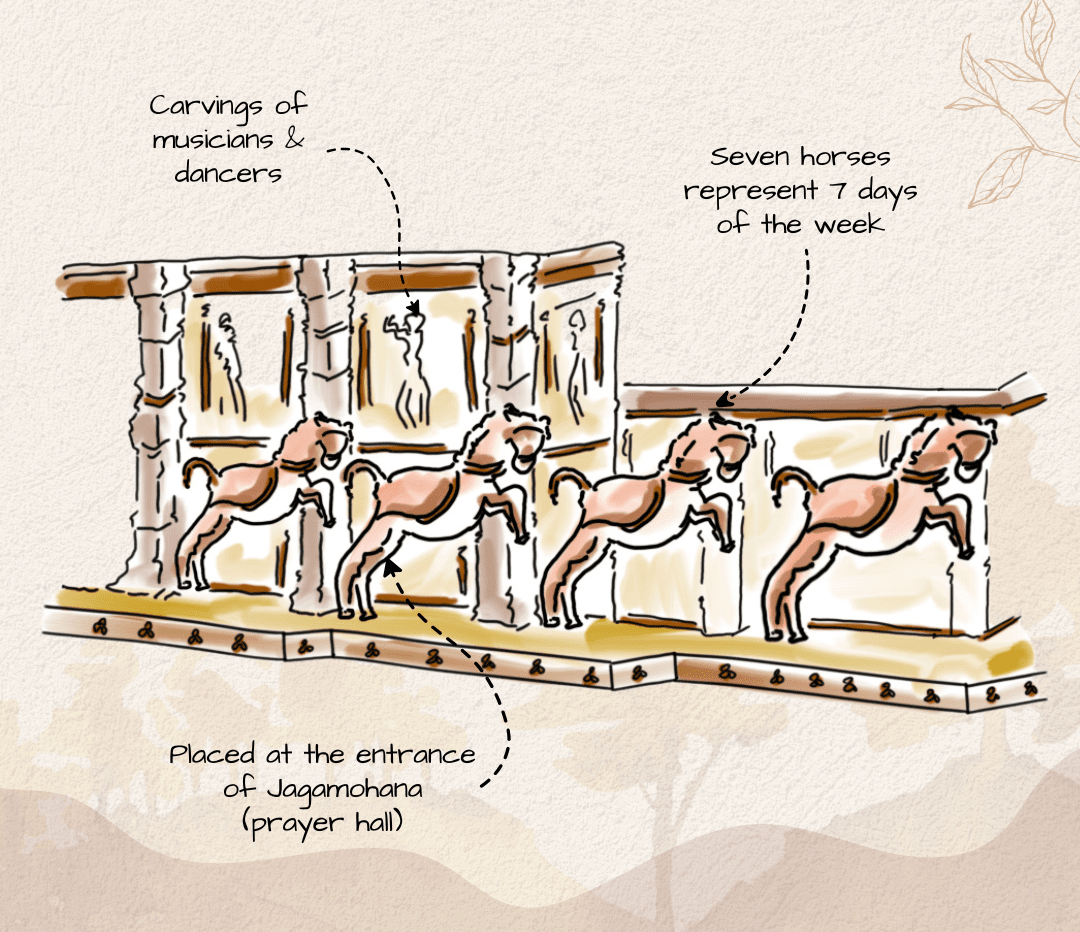
Image Credit: Shivani Chougula @Kaarwan
Complementing the chariot wheels are the seven intricately carved stone horses at the entrance of the temple complex. These horses symbolize the seven days of the week and the seven colors of sunlight, reinforcing the solar theme of the temple. Positioned as if they are pulling the chariot forward, these sculptures represent the celestial movement of Surya across the sky. The detailing in the musculature, harnesses, and expressions of the horses showcases the unparalleled artistry of Kalinga sculptors. While some of these horses have been damaged over time, they continue to stand as a testament to the temple's grand vision and execution.
The Legend of Dharmapada
One of the most enduring stories about Konark involves the chief architect's son, a young boy named Dharmapada. According to the legend, the temple's main shikhara (tower) could not be made to stand upright, the capstone refused to balance and the craftsmen had struggled for years. Dharmapada, who had inherited his father's architectural knowledge, solved the structural problem overnight and managed to place the capstone correctly.
Realising that his achievement would bring fame to him rather than to the craftsmen who had spent years on the project and fearing conflict. Dharmapada jumped from the top of the temple at dawn before anyone else arrived. The story is not historically verified, but it reflects how deeply the temple's construction mystery has captured the imagination of historians and architects for centuries.
The mystery of how the builders managed the iron beams, the magnetic lodestone at the top of the sanctum that supposedly kept the idol suspended in mid-air, and the precise solar alignment of the complex — these remain topics of genuine academic debate among architecture historians.
Why is Konark Sun Temple Called the Black Pagoda?
European sailors navigating the Bay of Bengal gave Konark the name "Black Pagoda" — likely because the dark stone of the temple appeared black from a distance at sea, and because the temple served as a landmark for navigation along the Odisha coast. The name was used in contrast to the Jagannath Temple in Puri, which was called the "White Pagoda." Both temples were used as navigation points by mariners for centuries.
The Konark wheel also holds a national significance beyond the temple itself. The 24-spoked Ashoka Chakra at the centre of India's national flag was inspired by the wheels of the Konark Sun Temple. Each of the 24 spokes represents one hour of the day, making it a symbol of time, progress, and perpetual motion values that carried directly into the design of independent India's flag.
The Konark style of architecture and its symbolism is closely studied in Indian architectural history. To explore how temple architecture evolved across India's different regions from Kalinga in the east to Dravidian in the south
Read our guide on the evolution of Indian architecture.
Conclusion :
The Konark Sun Temple is not just an architectural wonder but a symbol of India's rich cultural and scientific heritage. Though time has taken its toll on the temple, leaving parts of it in ruins, its brilliance remains evident in the surviving structures and sculptures. The precision of its design, the astronomical significance of its elements, and the masterful stonework make it one of the most remarkable temples in India. Whether viewed as a religious site, a historical relic, or an engineering marvel, the temple continues to inspire awe and admiration, standing as a tribute to the genius of ancient Indian architects. Konark is one of many architectural marvels that define India's built heritage. For a broader picture, explore our guide to iconic Indian architectural marvels — temples, palaces and forts.
Heritage documentation of Indian monuments increasingly uses BIM tools to create accurate digital records for conservation and adaptive reuse — Kaarwan's Revit BIM Certification Course covers these documentation workflows directly, relevant for architects working on historic structures across India.
Frequently Asked Questions About the Konark Sun Temple
1. Who built the Konark Sun Temple and when?
The Konark Sun Temple was built by King Narasimhadeva I of the Eastern Ganga Dynasty around 1250 CE. He commissioned it to celebrate military victory and as an act of devotion to the Sun God, Surya.
2. What architectural style does the Konark Sun Temple follow?
It follows the Kalinga style of Nagara architecture, which is specific to Odisha. Key features include a curvilinear shikhara (tower), a large assembly hall (jagamohana), and intricate stone carvings across every surface.
3. Why is the main sanctum of the Konark Sun Temple in ruins?
The main rekha deula (sanctum tower) collapsed sometime between the 15th and 17th centuries. The most widely accepted explanations include structural failure caused by the removal of iron beams that held the stones together, possible earthquake damage, and deliberate damage during invasions.
4. What do the 24 wheels of Konark represent?
The 24 wheels represent the 24 hours of the day. They are not merely decorative — each wheel functions as a sundial, with the spokes casting a shadow that tells the time of day when the sun shines on them.
5. Is the Konark Sun Temple a UNESCO World Heritage Site?
Yes. The Konark Sun Temple was inscribed as a UNESCO World Heritage Site in 1984, recognised for its outstanding universal value as a masterpiece of Kalinga architecture and its unique representation of a solar chariot.
6. What is the connection between Konark and India's national flag?
The 24-spoked Ashoka Chakra on India's national flag was inspired by the wheels of the Konark Sun Temple. It symbolises time, movement, and the dharma of perpetual progress.
7. Can we visit the Konark Sun Temple today?
Yes. The temple is open to visitors and managed by the Archaeological Survey of India. The Natamandapa (dance hall) and Jagamohana (assembly hall) can be explored. The Konark Dance Festival is also held here every December, showcasing classical Indian dance forms against the backdrop of the temple.
These were some interesting facts about the architecture of Sun Temple, Orissa. Stay tuned for more information on other significant topics in the AEC industry and follow Kaarwan for such detailed guides!