Key Types of Skylights to Use in Your Next Project:
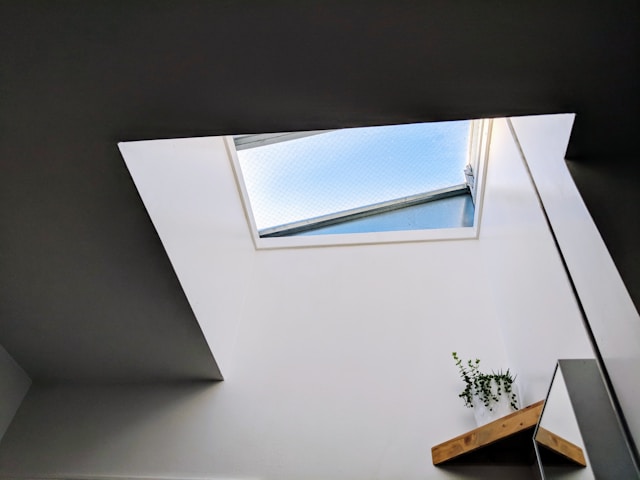
Skylights are among the most poetic architectural elements—cutting through solid roofs to draw light from above, shaping spatial mood, thermal comfort, and visual rhythm. They allow controlled daylight penetration, especially into deep-plan spaces where windows fall short. But not all skylights are created equal. Their form, orientation, and positioning dramatically impact the type and intensity of light received. This illustrated blog explores five distinct skylight types—shed, shaft, louvered, atrium, and lantern—examining how each can be leveraged for function, atmosphere, and visual drama in architectural design.
1. Shed Skylight:
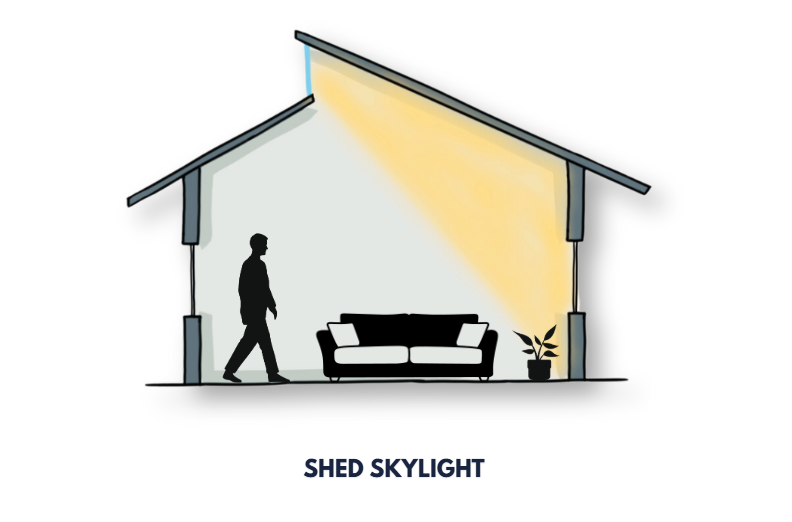
Image Credits: Shivani Chougula @Kaarwan
Shed skylights are single-pitched, often integrated into sloped roofs, directing daylight diagonally into a space. Their asymmetrical angle makes them ideal for bringing light deep into long-span rooms while avoiding glare or overheating. Typically installed on north-facing slopes in warm climates (or south-facing in cooler ones), they diffuse soft, ambient light throughout the day. Architecturally, they complement modern and industrial aesthetics, often featured in studios, lofts, and high-ceilinged living rooms. The gentle slope helps rainwater drain efficiently, while the angled glass catches diffused light without the harshness of direct sun. For best results, pair a shed skylight with a light-toned wall or ceiling opposite the opening to reflect and multiply daylight within the space. They're especially useful in rooms where uniform lighting is needed without the unpredictability of direct beams.
2. Shaft Skylight:
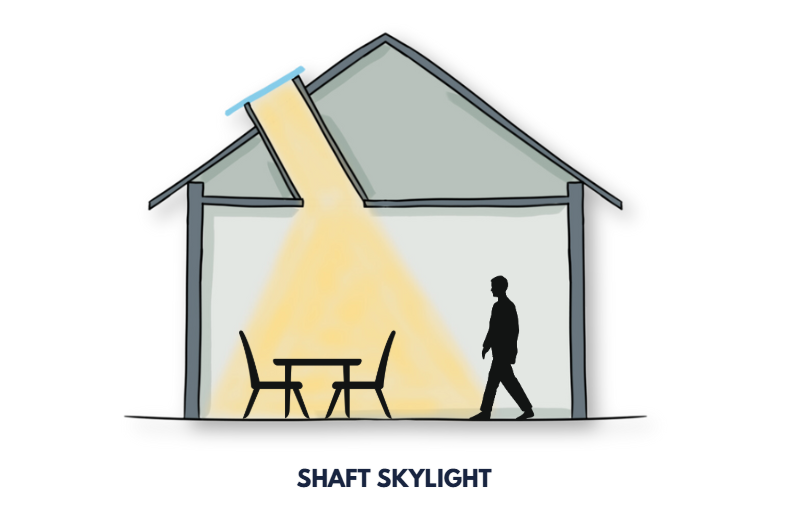
Image Credits: Shivani Chougula @Kaarwan
A shaft skylight delivers daylight through a vertical or angled tunnel, channeling light from roof to room via a narrow shaft. This type is ideal for spaces located deep within the building footprint—think interior dining areas, bathrooms, or corridors with no external walls. Shaft skylights create dramatic light columns that visually elongate vertical space, casting ever-shifting beams of light that change with the sun’s angle. Due to their focused delivery, the light intensity is high but localized, making them suitable for task lighting or highlighting a central element like a table or art piece. Architecturally, shaft skylights bring a sense of sculptural drama and volume to smaller or otherwise enclosed rooms. To maximize their effectiveness, reflective shaft linings or light wells may be used to amplify brightness and control heat gain. They are particularly valuable in dense urban sites or multi-storey homes where traditional windows are limited.
3. Louvered Skylight:
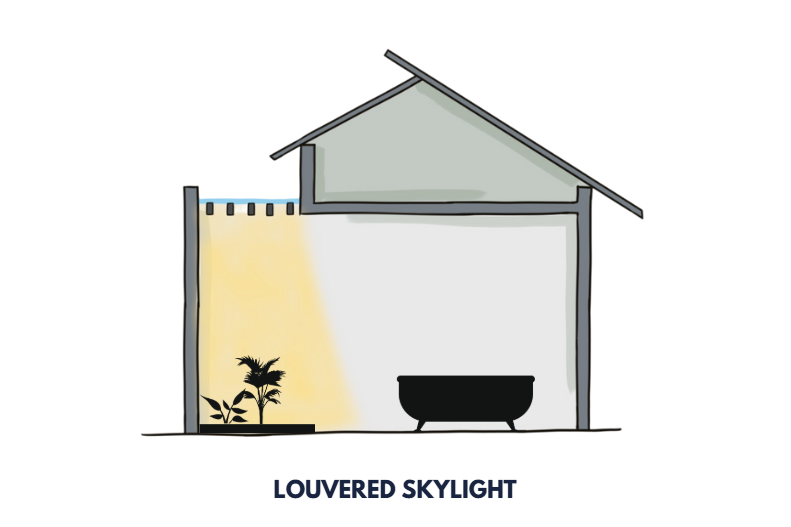
Image Credits: Shivani Chougula @Kaarwan
Louvered skylights feature a system of fixed or adjustable slats over the glass opening, offering a balance between daylight, privacy, and solar control. These are ideal for bathrooms, verandahs, or semi-open courtyards where some degree of shading & ventilation is also required. Architecturally, they lend a layered, refined look to the ceiling, especially when aligned with linear lighting or ceiling beams. Their defining feature is flexibility—allowing light to enter while shielding the interior from direct glare or overheating. Louvers can be oriented to admit northern skylight while cutting off low-angled sun from the east or west. In humid or tropical climates, operable louvered skylights can also promote stack ventilation by allowing hot air to escape through the top of a room. These skylights work best when customized to orientation and climatic needs, and they are often paired with greenery for dappled, courtyard-like light quality indoors.
4. Lantern Skylight:
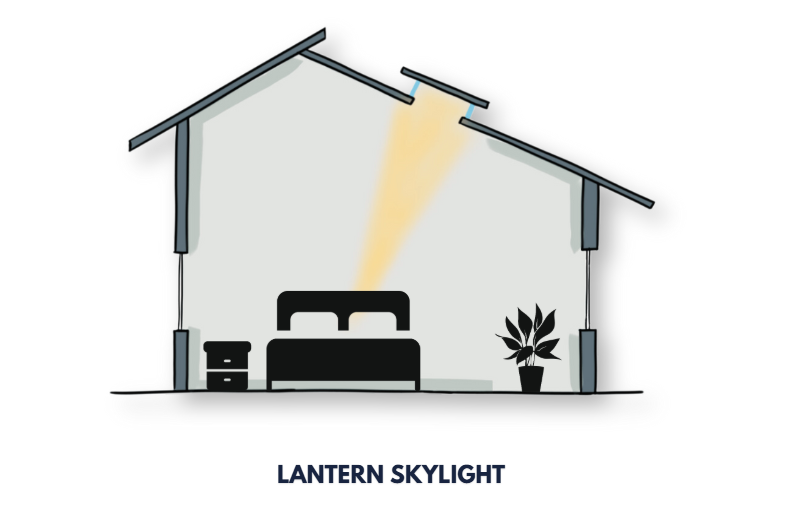
Image Credits: Shivani Chougula @Kaarwan
Lantern skylights are raised structures on the roof with glass on multiple sides, creating a vertical prism of light. Historically seen atop heritage buildings and atriums, they bring in even light from all directions and serve as a focal architectural gesture. Modern interpretations simplify their form but retain their 360-degree daylight advantage. These skylights are best used in central rooms where uniform overhead lighting is desired—like bedrooms, studies, or upper-floor lounges. The raised volume not only enhances light intake but also increases the perceived ceiling height, adding grandeur to compact spaces. Because they admit light from multiple angles, lantern skylights minimize harsh contrast and shadowing. Careful detailing is needed to manage heat gain and prevent water infiltration at the junctions. Visually, they add elegance and vertical interest to the roofline while bathing the room below in soft, consistent daylight.
5. Atrium Skylight:
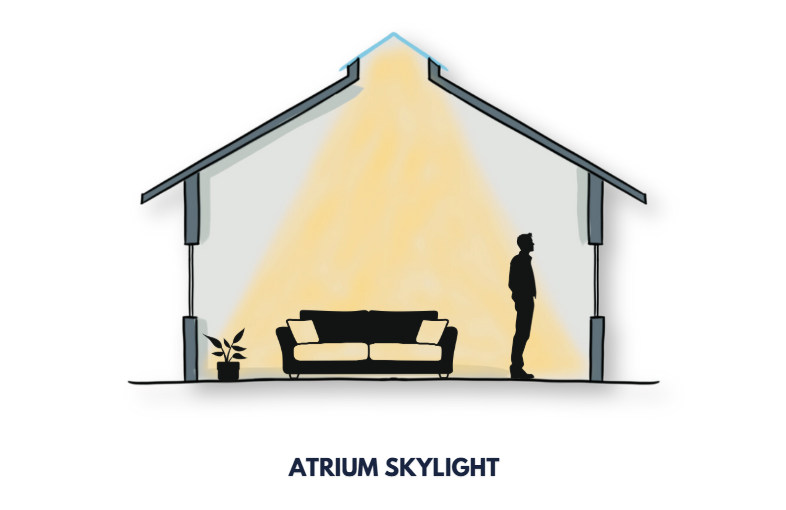
Image Credits: Shivani Chougula @Kaarwan
Atrium skylights span across double-height or multi-storey voids, bringing expansive daylight into the heart of a building. Positioned above internal courtyards, stairwells, or lobbies, they create dramatic light-filled volumes that enhance spatial connectivity. These skylights are especially powerful in passive design—allowing for stack ventilation and daylight penetration that reduces artificial lighting loads. Because of their size and central placement, atrium skylights often become the emotional and visual core of a building. They’re frequently paired with indoor planting, water features, or seating, turning transitional zones into vibrant, lived-in spaces. Atrium skylights are best used in large homes, institutions, or cultural buildings where vertical interaction is celebrated. For optimal performance, glass type, UV control, and shading strategies should be factored in, especially in hot climates. The result is a soaring, light-filled interior that feels both grounded and uplifting.
Final Thoughts:
Skylights are not simply roof openings—they’re sculptors of light, orchestrating how daylight moves, shifts, and shapes our built spaces. Whether you're designing a small bathroom or a vast atrium, the choice of skylight—shed, shaft, louvered, lantern, or atrium—can define the spatial experience and comfort of the interior. With the right detailing, orientation, and application, skylights become active participants in architecture, delivering light, mood, and movement from above. Use these illustrated types as a guide to elevate your design vocabulary through natural illumination.