

If you’re an architecture scholar or practising architect in India, you must have noticed how easily parametric design is becoming a basic skill. What was once a niche is now expected across many studios. That’s exactly why the number of searches for a rhino grasshopper course in India in 2026 and a parametric design course online in India have picked up quite a pace.
But the real question is not whether you should learn it or not; it’s about choosing the right kind of course and translating it into relevant skills, portfolio work and job opportunities.
Now, let’s walk through it properly…
What a Rhino Grasshopper Course India 2026 Actually Covers
At the centre, a good rhino grasshopper course in India in 2026 is less about software and more about the path that you take to solve your design problems.
Most well-structured courses are designed with a layered approach.
Building a Strong Rhino Foundation
You begin with Rhino because Grasshopper depends on it. This stage mainly focuses on:
- Surface generation and manipulation
- Working with intricate curves and forms
- NURBS geometry and precision modelling
This matters more than people anticipate. Many learners also struggle with Grasshopper simply because their Rhino basics are weak.
Learning Parametric Logic Through Grasshopper
This is where the shift begins to surface. Instead of drawing forms directly, you specify the rules that create them. You’ll deal with:
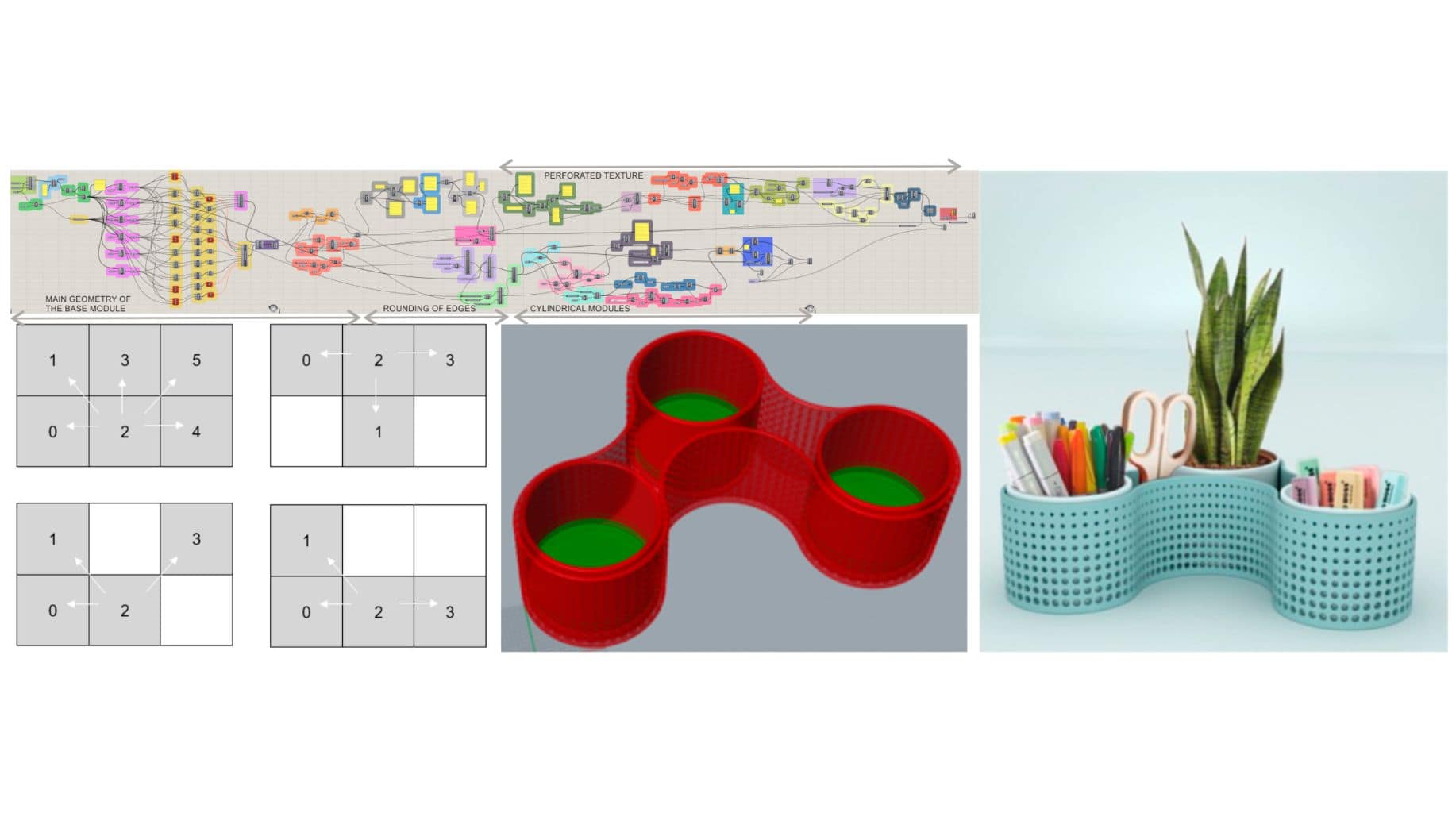
- Data trees, which are often the hardest but most important concept
- Relationships between parameters and geometry
- Nodes and visual scripting systems
A common observation shared across architecture forums is that Grasshopper feels quite menacing at first, but once the data flow connects, everything becomes accessible to control and modify.
Applying It to Real Architectural Problems
This is what filters a useful parametric design course online in India from a generic one. An online course must enable you to learn:
- Generate modular systems
- Run simple environmental or performance-driven studies
- Design responsive facades
In everyday practice, companies are not looking for people who can create abstract forms; they want designers who can solve real restrictions using parametric logic.
Who This Course Is Really For
Not everyone benefits similarly from learning Grasshopper.
It works really well for:
- Graduates targeting firms taking care of complex geometry
- Architects moving ahead with computational or digital design roles
- Architecture students who build a competitive portfolio
A consistent theme that was observed across industry discussions is that Grasshopper is most valuable when kept parallel to design intent. People who treat it as just another software often lose it midway through.
It’s less useful if:
- You don’t plan to apply it in the studio or any professional work
- You’re too focused on conventional drafting systems
- You expect quick results without any practice
That is not a tool you “just finish learning” in a couple of weeks. It builds up over time.
What You’ll Actually Build (And Why It Matters)
One of the largest gaps in many courses is the absence of tangible output. A strong rhino grasshopper course in India in 2026 should help you get a clear portfolio of work.
Parametric Facades
You’ll develop systems where geometry responds to inputs like spacing, sunlight or density. For instance:
- Patterns that differ across a surface
- Panels that open and close based on sun exposure
These are directly related because facade design is one of the most well-known applications of parametric tools in global and Indian firms.
Generative Structures
You’ll dive into systems like:
- Space frames
- Algorithm-driven structural patterns
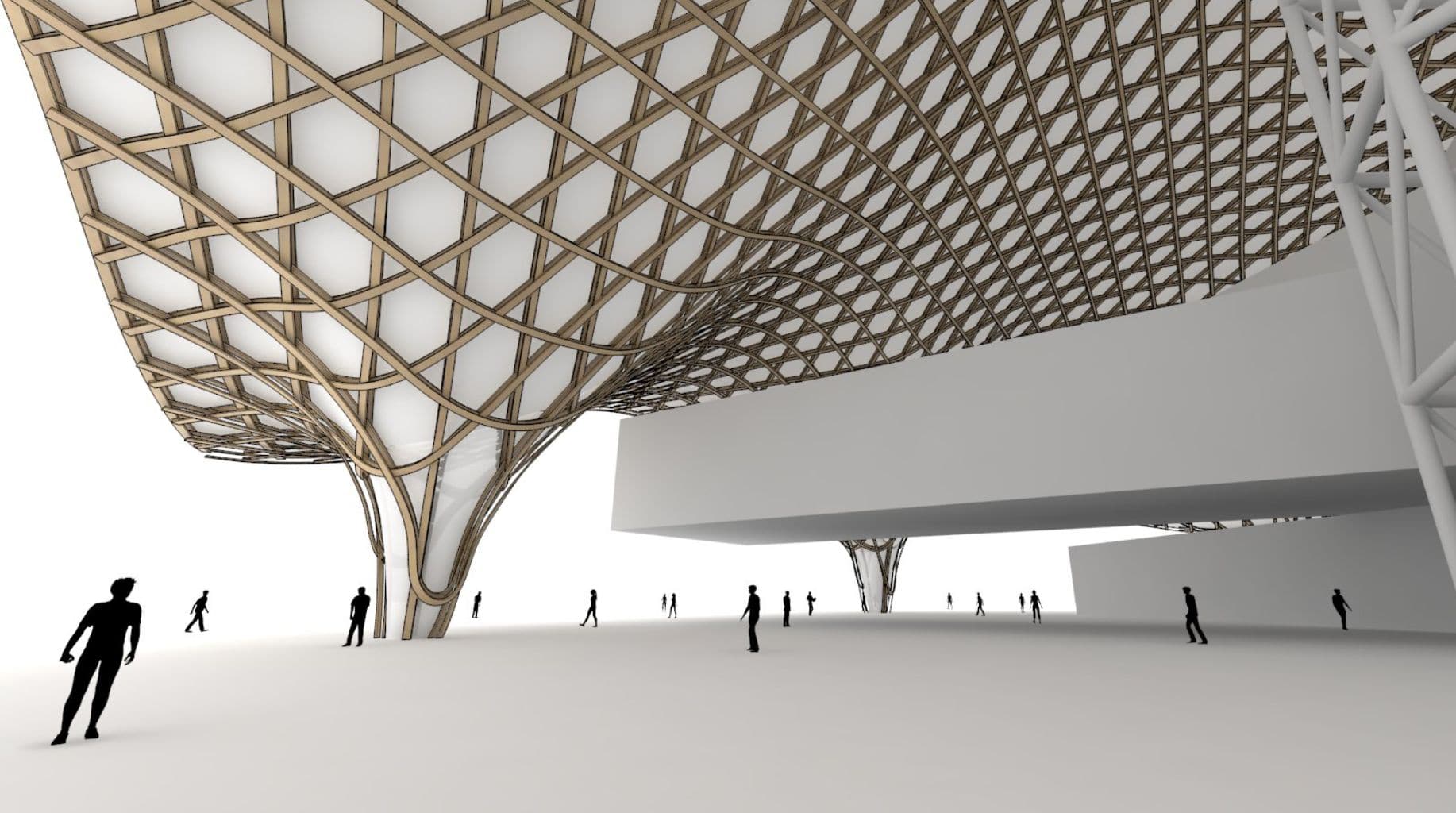
- Gridshells
These are not just visual tests; they actually reflect how structure and form can be manifested early in the design process.
Pavilion and Installation Design
Most courses come with a mid-scale project, such as a pavilion. This helps you:
- Think about fabrication
- Translate digital models into buildable geometry
- Understand modular systems
Optimization Workflows
You’ll also figure out how to iterate on designs in an instant.
Instead of redesigning from scratch, you work with parameters and test multiple variations. This is one of the biggest reasons why firms go ahead with parametric workflows—speed and flexibility.
Career Use Cases: Where This Skill Pays Off
A parametric design course online in India is only justified if it connects to real-time opportunities.
Growing Demand in Architecture Firms
Many mid-to-large firms are now bringing in parametric workflows, especially for:
- Complex public projects
- Competition entries
- Facade development
Even basic Grasshopper knowledge can make you indispensable because it reduces modelling time and improves the iterative process of time.
Computational Design as a Career Path
There’s also an evolving niche for specialists:
- Digital design consultants
- BIM and parametric integration job roles
- Computational designers
While still evolving in India, these roles are already well established across the globe.
Stronger Portfolios and Better Shortlisting
This is where most students observe immediate results. Parametric work indicates:
- Logical thinking
- Ability to handle intricate briefs
- Advanced technical understanding
In many scenarios, this is what differentiates one candidate from another with similar academic backgrounds.
Is It Worth It? A Ground Reality Check
Across blogs, forums, and professional discussions, the answer is constant but nuanced.
Why is it worth it?
- You build two to three strong portfolio-ready projects
- You actively use it in your projects
- You get the logic, not just the steps
Why it might not be worth your time:
- You don’t practice after the course
- You expect instant job placement
- You treat it like a checkbox certification
One insight that keeps coming back to us is that while Grasshopper is powerful, it’s only in the hands of someone who is quite acquainted with it and uses it regularly.
Rhino Grasshopper Course India 2026: Kaarwan’s 50-Hour Program Breakdown
If you’re deciding on a rhino grasshopper course in India in 2026, the point that stands out is not certification or duration, it’s the structure.
Kaarwan’s 50-hour program stands out because it treads on a clear progression from fundamentals to application to portfolio. Instead of jumping into complex scripts too soon, it builds your understanding gradually.
Here’s exactly how the course is built week by week.
Course Structure and Flow (Week-by-Week Breakdown)
Here’s the structure and flow that you’ll encounter after entering the course:
Week 1: Complete Rhino Modelling (Beginner to Advanced)
This is where most course either oversimplify concepts or rush into modules. Here, it’s treated as the core base.
- Introduction to parametric design and student induction
- Exploring Rhino interface and workflows
- Surface manipulation and geometry control
- Working with NURBS and surface continuity
- Realistic rendering techniques for architectural visualisation
- Adnced subdivision (SubD) modelling
What this does:
You build control and precision. Without this, Grasshopper becomes difficult to manage after some time.
Week 2: Foundational Grasshopper for Parametric Design
This is your gateway into parametric thinking.
- Grasshopper interface and navigation
- Working with lists to generate 3D forms
- Understanding data trees (critical concept building)
- Algorithmic design fundamentals
- Geometry, parameters, and logical relationships
- Troubleshooting workflows
What this does: You go from static modelling to rule-base design development. This is the first major shift in how you ideate about concepts.
Week 3: Advanced Grasshopper for Algorithmic Designs
Now the course increases the complexity, but with some structure.
- Advanced lists and pattern creation
- Tree structures and mesh-based modelling
- Plugins like LunchBox for extended systems
- Range and series for controlled variations
- Elefront integration between Rhino and Grasshopper
- Panelling tools and tessellation systems
What this does: You begin creating systems that can be utilised in real architectural projects, especially facades and modular structures.
Week 4: Form-Finding Explorations
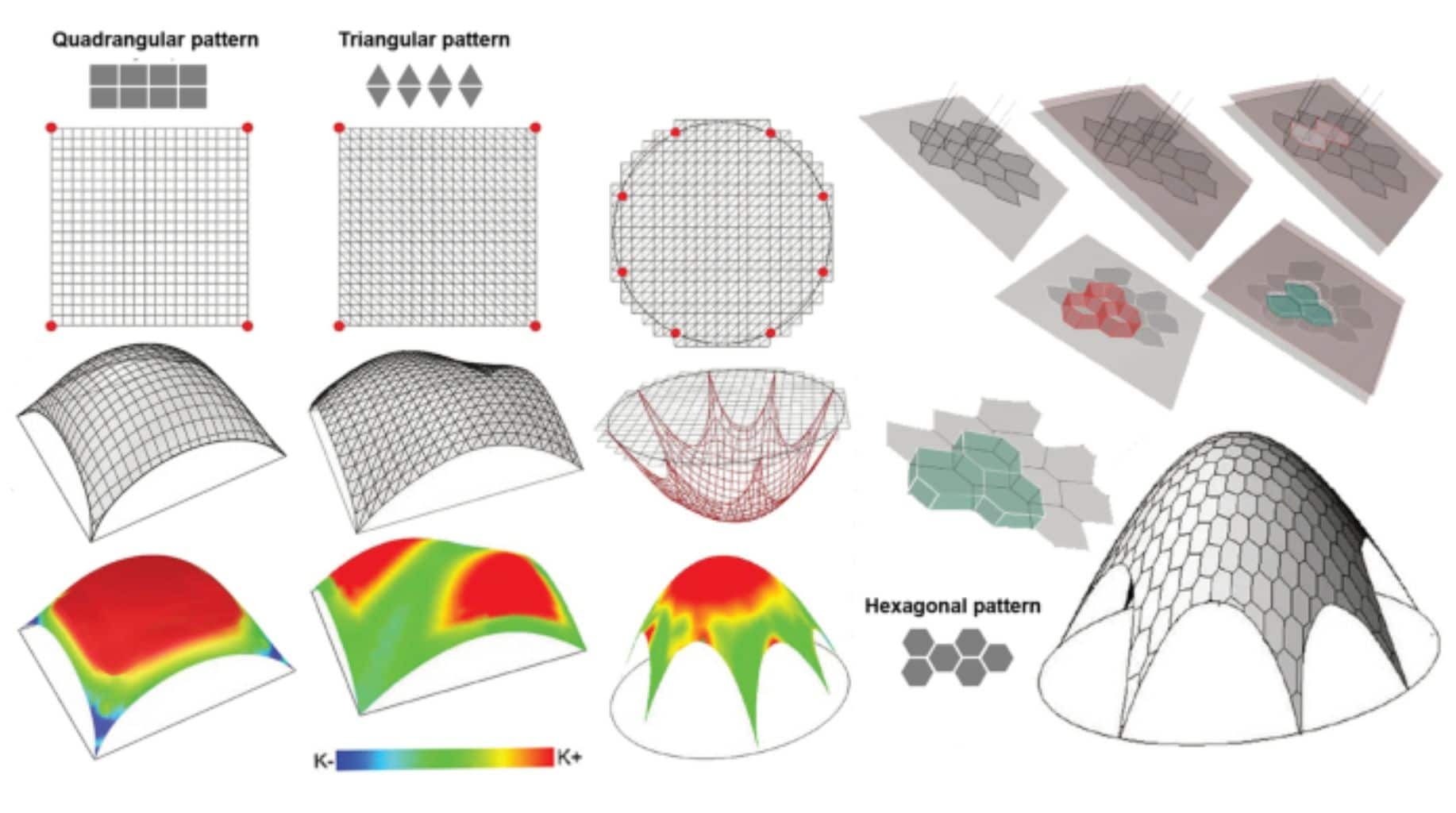
This is the point where parametric design starts becoming exploratory and dynamic.
- Form-finding using Grasshopper
- Kangaroo and Weaverbird plugins for simulations and smoothing
- Pufferfish for advanced transformations
- Generative design strategies
- Real-time simulations and feedback sessions
What this does: You stop creating fixed forms and start developing geometry based on forces and relationships.
Week 5: Environmental Analysis and Generative Design
Now performance beomces part of the design development process.
- Ladybug and Honeybee for environmental analysis
- Climate-responsive design planning
- Radiation and performance-based optimisation
- Generaive tools like Galapagos and Biomorpher
- Advanced geometry manipulation and plugins
What this does: Your designs interact to real-world conditions, not just aesthetics. This is increasingly expected in modern architecture.
Week 6: Fabrication, Documentation, and Presentation
Design moves towards execution.
- Introduction to to fabrication workflows using Grasshopper
- File conversion and optimisation for digital fabrication
- RhinoCAM and Fabtools for advanced workflows
- Translating parametric models into 2D drawings
What this does: You get how to move from parametricism to buildable results, which is often missing in most courses.
Week 7 & 8: Portfolio and Job Support
This is the point where the course interlinks to outcomes.
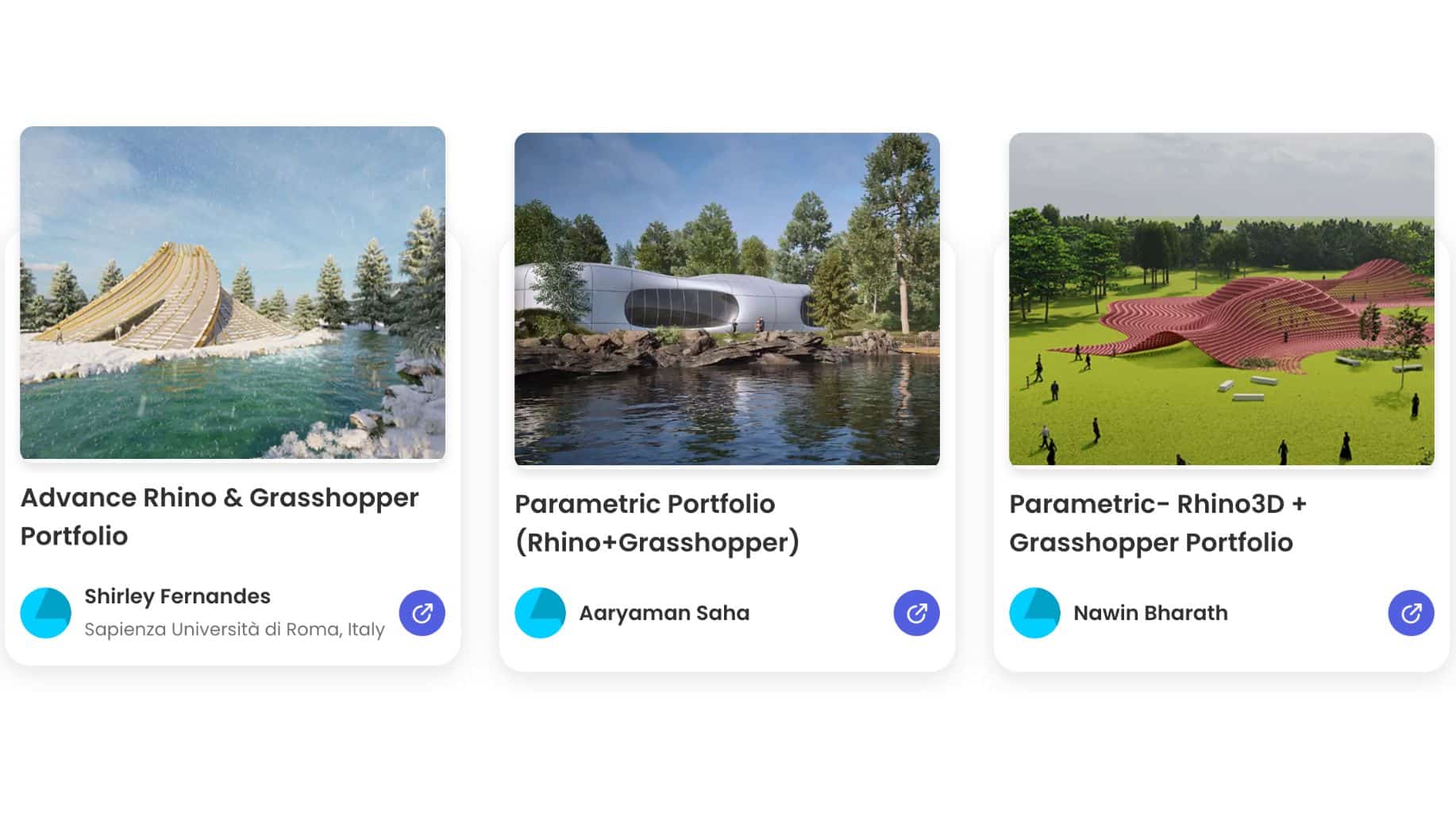
- Portfolio structuring and presentation (including Behance)
- Job search strategies and career growth
- Interview preparation and common questions
- Creating a professional network
What this does: You leave with a way to present them.
What Sets This Apart
Compared to most options in the rhino grasshopper course in India in 2026 space, this structure solves a common problem: incomplete learning.

Many learners drop off because:
- They don’t understand data structures
- They jump into advanced scripts too soon
- They don’t build usable projects
This program avoids that by:
- Building and basics first
- Gradually increasing complexity
- Focusing on architectural applications
- Ensuring portfolio-ready results
Pricing and Batch Details
Our typical structure includes:
- Mid-range pricing compared to similar programs
- Live-mentor-led online sessions
- Limited batch sizes for better interaction
This is more important than it seems. Completion rates are notably higher in guided formats compared to self-paced courses, especially for something as technical as parametric design. For more details, you can check out our course page: Link
How to Choose the Right Course
If you’re trying to compare options, here’s what you should be keeping in mind.
- Does the course include real architectural projects?
- Will you leave with portfolio-ready work?
- Is there mentor feedback throughout the course?
- Does it properly entail details about both Rhino and Grasshopper?
A good parametric design course online in India should check all of these boxes. However, you can also create versions of your individual criteria that align with your goals and aspirations.
This will surely help you narrow down your quest.
Final Take
Parametric design is not replacing traditional wotkflows for sure, but if you ask: Is it becoming a core layer in how architecture is explored and delivered?
Our answer would be yes.
A structured rhino grasshopper course in India in 2026 like this can assist you:
- Work faster and with more control
- Explore many design iterations efficiently
- Build a portfolio that outshines others in a competitive field.
However, the real value comes after the course. The more you apply it, the more it compounds. Upskilling in this skill can really amp up your portfolio and prepare you for every industry challenge.
So, if you’re serious about architecture from this point onward, this is a skillset worth building the right way. You can start by exploring the course now.
FAQs
1. What is the best Rhino Grasshopper course in India in 2026?
The best rhino grasshopper course India 2026 focuses on real architectural projects, not just tools. Look for structured learning, mentor support, and portfolio outcomes like Kaarwan’s program.
2. Is a parametric design course online in India worth it?
Yes, a parametric design course online India is worth it if you apply the skills. It helps you design faster, explore iterations, and build a stronger portfolio.
3. Do I need prior experience to join?
No. Most rhino grasshopper course India 2026 programs start from basics and build up to advanced concepts.
4. What will I learn in the course?
You’ll learn Rhino modelling, Grasshopper scripting, parametric design systems, environmental analysis, and portfolio development.
5. How long does it take to learn Rhino and Grasshopper?
A typical parametric design course online India runs 40–60 hours. Basics come quickly, but mastery takes practice.
6. What projects will I build?
You’ll create parametric facades, generative structures, and a final portfolio-ready design project.
7. Does this help with architecture jobs?
Yes. A rhino grasshopper course India 2026 helps you stand out with advanced skills and a stronger portfolio.
8. What does Kaarwan’s certification include?
The parametric design certification Kaarwan includes live sessions, plugins, real projects, and portfolio + job support.
9. Can I take this course while studying or working?
Yes. Most parametric design course online India options are flexible and designed for students and professionals.
10. How do I choose the right course?
Pick a rhino grasshopper course India 2026 that offers structured learning, real projects, and mentorship.


.png)