.jpeg)
The construction industry is changing faster than ever, and two skill sets are leading that change: MEP engineering and Building Information Modelling. Whether you're a student stepping into the AEC industry or a working professional looking to level up, understanding these disciplines isn't just a good idea anymore; it's becoming essential. Buildings today don't just need to stand; they need to breathe, power up, and perform intelligently.
As projects grow more complex and timelines tighten, employers worldwide are actively seeking professionals who combine technical knowledge with digital fluency. MEP BIM courses are no longer niche offerings; they're career accelerators. If you're new to this space, start with what MEP BIM modelling actually means before diving deeper. And if you've been wondering where to focus your energy, the answer is right here.
What Is MEP and BIM, And Why Does It Matter?
MEP engineering refers to the mechanical, electrical, and plumbing systems that make a building functional. Think HVAC units, electrical wiring, fire suppression, and water supply; without these, a building is essentially just walls and floors. MEP is the invisible backbone of every structure.
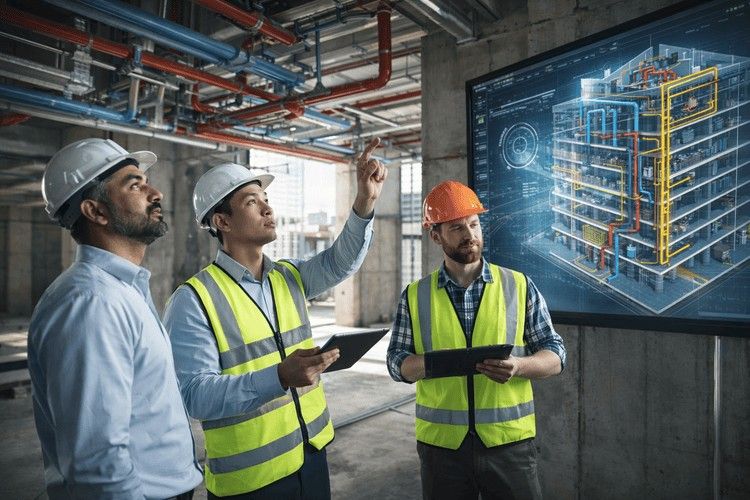
Building Information Modelling, or BIM, is the digital process through which all of these components, and the entire building, are designed, coordinated, and managed in a 3D environment. Instead of working off scattered 2D drawings, teams now operate from a shared, data-rich model. This model can house everything: materials, costs, timelines, spatial relationships, and system interactions.
More Than Just Software
It's a common misconception that BIM is just about using Revit MEP or similar software. In reality, BIM is a workflow, a mindset, and a collaboration methodology. It transforms the way the entire project team, architects, engineers, and contractors communicate and makes decisions. Understanding the essential best practices for MEP BIM design early on can make a significant difference in how effectively you apply these tools on real projects.
The Demand Surge: Why the Industry Can't Get Enough
According to Global Market Insights, the MEP services market is projected to reach $51.81 billion by 2025, growing at a CAGR of 7.73%. That's not a slow climb, that's a sprint. And driving this growth is the rapid adoption of smart building technologies, stricter building codes, and the global push for sustainability. The AEC industry is shifting away from traditional CAD workflows at a rapid pace, and companies are scrambling to find people who can hit the ground running with BIM skills. According to a Dodge Construction Network SmartMarket Report, BIM adoption among contractors and engineers has grown significantly year-over-year, with MEP coordination being one of the fastest-growing applications.
Global Skill Shortage Is Opening Doors
A LinkedIn Workforce Report highlights that skilled BIM and MEP professionals are among the most in-demand roles across infrastructure-heavy markets, including the Middle East, the UK, and Southeast Asia. For Indian professionals and students, especially, this is a window of opportunity that doesn't come often.
"In 2026, BIM is no longer just a technology trend. It is a strategic capability that shapes how projects are conceived, delivered, and operated.", United BIM
How MEP and BIM Work Together on Real Projects
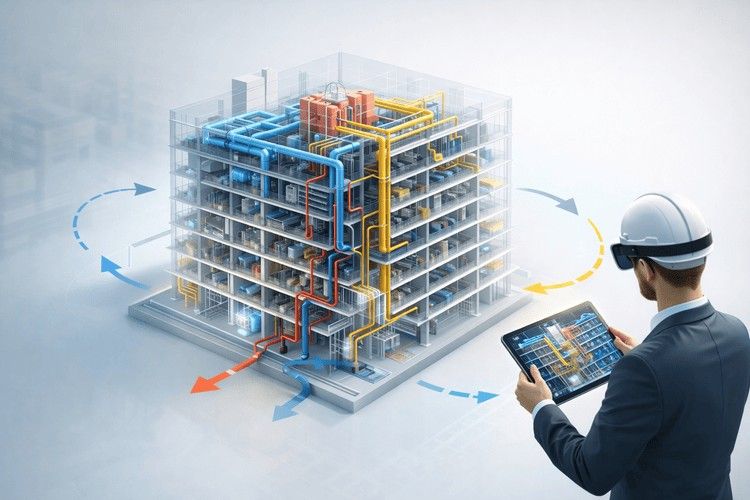
When MEP engineering meets Building Information Modelling, the result is far greater than the sum of its parts. One of the biggest advantages is clash detection, the ability to identify conflicts between building systems before construction even begins. Imagine a plumbing pipe and an air duct trying to occupy the same ceiling space. In a traditional workflow, this gets caught on-site, causing costly delays. With BIM skills, it's caught in the model.
According to McKinsey & Company, rework due to poor coordination accounts for up to 30% of construction costs in large projects, a problem that BIM-powered MEP coordination directly solves.
Case Study: Burj Khalifa's MEP Coordination
One of the clearest real-world examples of MEP and BIM working in tandem is the construction of the Burj Khalifa in Dubai. With over 160 floors and some of the most complex mechanical, electrical, and plumbing systems in the world, the project relied heavily on BIM-powered coordination among hundreds of consultants and contractors.
The use of 3D BIM models allowed teams to manage thousands of system conflicts before they ever reached the site, saving millions in rework costs and keeping the project on its ambitious schedule. It stands as a defining proof point of what construction technology can achieve when used at scale.
Career Paths and Salary Growth in MEP BIM
The roles in MEP BIM are diverse and well-paying. If you're exploring where to begin, the top MEP BIM courses in India can help you find the right path.
MEP Coordinator — Oversees coordination between MEP teams to ensure conflict-free system integration. According to Glassdoor India, salaries range from ₹5–12 LPA, with international roles paying significantly more.
Revit MEP Modeller — Translates engineering designs into 3D models using Revit MEP. A popular entry-level role for students entering the industry.
BIM Manager — Leads BIM standards and model quality across projects. The NBS National BIM Report ranks this among the most strategically critical hires in construction firms today.
Digital Twin Specialist — Manages virtual replicas of built assets for real-time monitoring and maintenance. The World Economic Forum identifies digital twins as one of the top technologies reshaping global infrastructure.
The Future Is Green, Smart, and BIM-Driven

Sustainability is no longer a "nice to have" — it's the new business standard in construction. According to the World Green Building Council, the built environment accounts for nearly 40% of global carbon emissions, making energy-efficient MEP engineering and Building Information Modelling essential tools in driving greener outcomes.
A Gartner report on smart building technologies notes that by 2030, intelligent building systems deeply tied to MEP infrastructure will be standard globally. Construction technology is rapidly evolving toward AI-powered clash detection, AR walkthroughs, and cloud collaboration — and the Autodesk Construction Cloud is already leading that charge. Professionals who build these BIM skills today will be the ones running projects tomorrow.
Ready to take your MEP career to the next level? Explore Kaarwan's Professional BIM Certification for MEP Engineers — a comprehensive program designed for engineering students and working professionals, covering MEP BIM coordination, Revit MEP workflows, clash detection, and hands-on project experience that the industry actually demands.
Conclusion
MEP and BIM aren't just trending buzzwords; they represent a structural shift in how the world builds. From smart skyscrapers to sustainable hospitals, the buildings of tomorrow are being designed, coordinated, and delivered by professionals who understand both the engineering and the digital layer behind it. For students and professionals in the AEC industry, there has never been a better time to invest in an MEP BIM course and develop skills that the industry genuinely cannot get enough of.
At Kaarwan, our programs are built for exactly this moment — combining practical, project-based learning with real-world tools like Revit MEP and BIM coordination workflows. If you're looking for a focused, fast-track start, our BIM Masterclass for MEP Professionals is a one-day intensive designed to give you a strong, practical foundation in MEP BIM, ideal whether you're just stepping in or levelling up. The industry needs you to be skilled, and we're here to help you get there.
FAQs
1. What is MEP in construction?
MEP stands for Mechanical, Electrical, and Plumbing, the core systems that make a building functional, comfortable, and safe to occupy.
2. What does BIM mean in the construction industry?
BIM, or Building Information Modelling, is a digital process of designing, coordinating, and managing building projects using intelligent 3D models.
3. Why is MEP BIM in such high demand right now?
The global construction boom, smart building adoption, and a shortage of skilled professionals have made MEP BIM one of the most sought-after skill sets in the AEC industry.
4. Can a fresher start learning an MEP BIM course?
Yes. MEP BIM courses are designed for both beginners and working professionals, with no prior software experience required.
5. What software is used in MEP BIM?
Revit MEP is the most widely used tool, along with AutoCAD MEP, Navisworks for clash detection, and various energy simulation tools.
6. What is clash detection in BIM?
Clash detection is the process of identifying conflicts between building systems, like pipes and ducts overlapping, before construction begins, preventing costly on-site errors.
7. Is Revit MEP hard to learn?
Revit MEP has a learning curve, but with structured training and hands-on practice, most students become proficient within a few months.
8. What is a digital twin in construction?
A digital twin is a virtual replica of a physical building used to monitor performance, run simulations, and guide maintenance decisions in real time.
9. What is the salary of an MEP BIM coordinator in India?
MEP BIM coordinators in India typically earn between ₹5–12 LPA, depending on experience, with higher packages offered for international projects.
10. How does BIM help with sustainable building design?
BIM allows engineers to simulate energy use, airflow, and lighting before construction, enabling more efficient MEP systems and greener, net-zero building designs.