The circular economy is changing the way buildings are designed, constructed, and maintained in 2025, and sustainable architecture is changing at a rapid pace. In their pursuit of ecologically conscious and practically useful buildings, architects and designers are increasingly turning to regenerative design, which places an emphasis on minimising resource consumption and maximising reuse of materials.
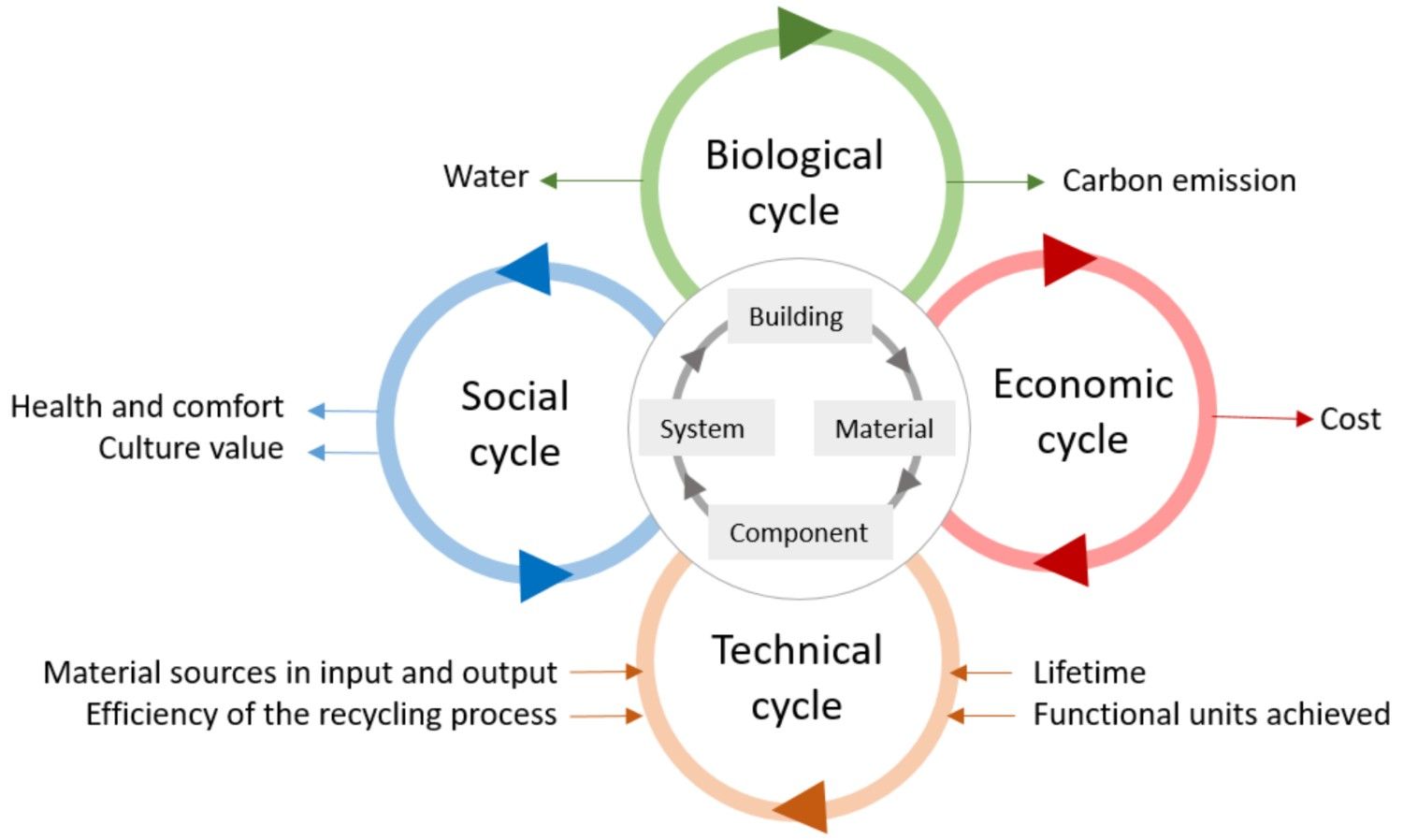
Image Credit: https://doi.org/10.3390/su132212466
Concerning architects and those aspiring to the field, nevertheless, what does this imply? How does it affect the advancement of one's job and personal skill set? Learn how sustainable design is being shaped by the circular economy and how you can take advantage of these developments to boost your skills and advance in your career with this comprehensive guide.
Read more: How BIM is Reducing the Carbon Footprint in Construction
How Does the Circular Economy Affect Building Design?
The circular economy seeks to establish a closed-loop system, as opposed to the conventional linear economy that involves the extraction, use, and disposal of materials. What this indicates is:
- Planning the disassembly and subsequent reuse of structures.
- Utilising materials that can be recycled and broken down naturally.
- By utilising modular construction, upgrades and repairs can be easily accomplished.
- Implementing zero-waste solutions in design and construction.
Incorporating these concepts into their work allows architects to lessen their negative effects on the environment, save money, and build stronger buildings.
Moving Forward with the Circular Economy and Buildings in the Year 2025
1. Repurposing and Upgrading
Adaptive reuse, which involves finding new uses for old buildings rather than tearing them down, is growing in popularity as city limits continue to tighten. Making older structures more energy efficient and practical is the goal of retrofitting, which entails incorporating sustainable technology.
What You Need to Know:
- Sustainable retrofitting using Building Information Modelling (BIM).
- The environmental impact of a building can be determined through a lifecycle evaluation.
- Applied materials science for incorporating environmentally conscious enhancements.
Read more: How BIM Supports Sustainable Construction
2. Materials That Can Be Biodegraded and Recycled
Recyclable and compostable materials are replacing more conventional ones in today's architectural projects. A few well-liked options are:
- One eco-friendly substitute for traditional concrete is hempcrete.
- Build your own biodegradable mycelium bricks with fungus.
- Metal and wood that have been repurposed from previous structures.
Interestingly, many of the sustainable concepts used in ancient Vastu architecture are in line with the current trends in the circular economy. Modern sustainable design incorporates these principles into traditional Vastu shastra courses.
3. Modular and Prefabricated Buildings
Modular buildings are incredibly eco-friendly since their components may be easily swapped out. Parts can be reused across many projects, building can be accelerated, and waste can be reduced through prefabrication.
Critical Skills to Acquire:
- Rhino and Revit for structured design.
- 3D printing is a method for producing parts in advance.
- Modular building architecture based on sound engineering guidelines.
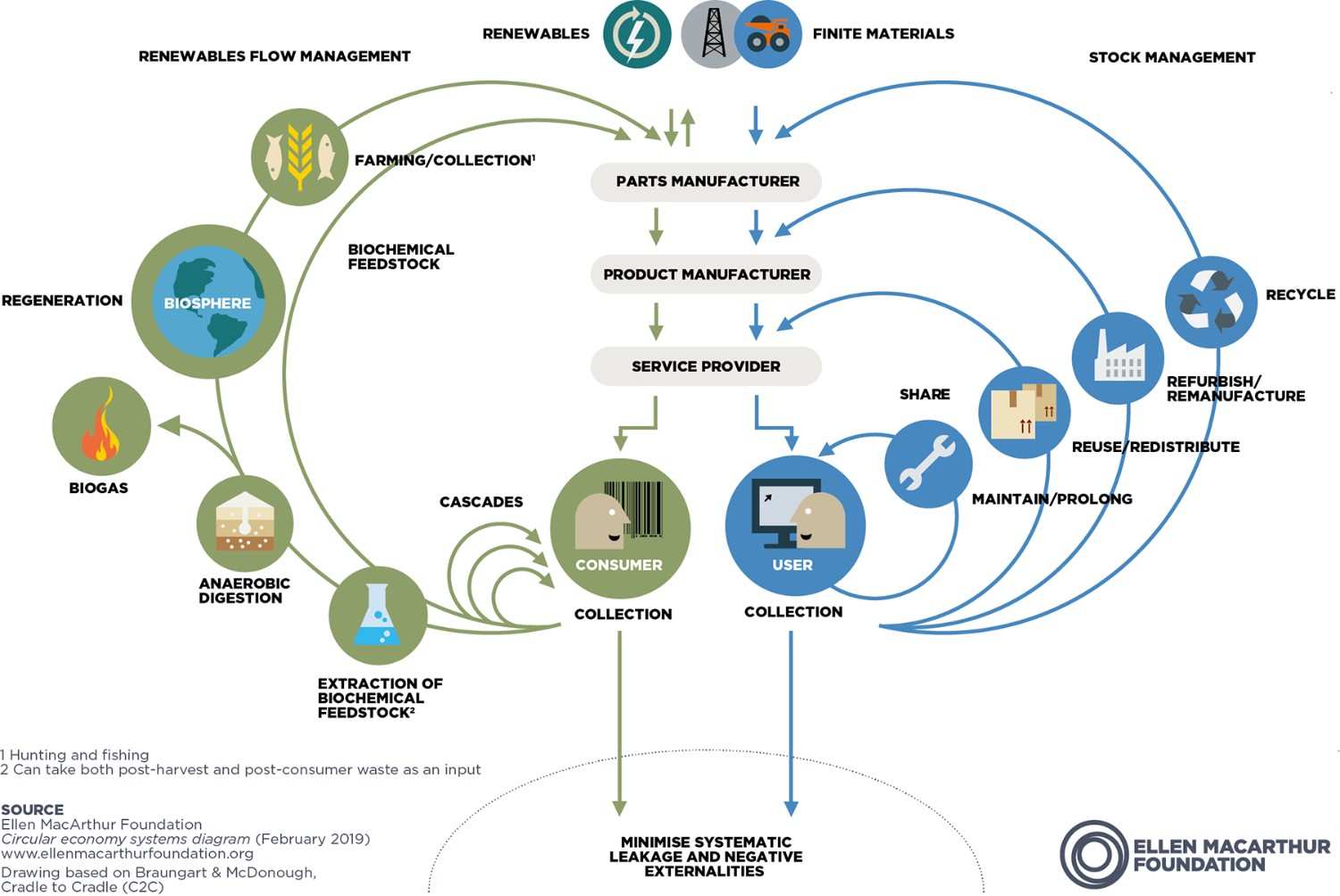
Image Credit: Ellen Macarthu Foundation
-
Advanced Opportunities in Eco-Friendly Building Design
1. Focusing on Round Shapes
Services provided by experts versed in the concepts of the circular economy are in great demand as many nations make sustainability a legal obligation. Skills in building information modelling (BIM), energy modelling (EM), and materials science will help you stand out from the competition when applying for jobs.
Read more: Sustainability in BIM Architecture: Revolutionizing Green Building Design
2. Changing Gears to Eco-Friendly Consulting
Sustainability consulting is becoming more popular among architects, who advise businesses on how to lessen their negative effects on the environment, make better use of their resources, and create greener structures. Earning credentials such as LEED, WELL, and BREEAM can improve one's employment chances in this industry.
3. Academics and Research
Opportunities for doing research, penning white papers, and creating instructional content are expanding in the field of sustainable architecture. If you're serious about this, taking some advanced Vastu shastra classes can give you a new outlook on eco-friendly policies and procedures.
Read more: The Future of Indian Architecture: Embracing BIM for Sustainable Design
Tools for Enhancing Competence
Learning is an ongoing process here at Kaarwan. Check out our advanced building information modelling (BIM), Rhino, and sustainable architecture courses if you're seeking to hone your skills. Coursework in these areas includes in-depth case studies, practical exercises, and real-world applications.
Find out more by enrolling in our advanced Rhino course.
Conclusion
Opportunities for both students and professionals in the field of sustainable design are opening up as a result of the circular economy's transformation of the industry. If you want to become a better designer, an expert in material innovation, or a sustainability consultant, you need to keep up with these developments.
Shape the future of architecture while creating a beneficial influence on the earth by incorporating principles of circular design, modular building, adaptive reuse, and sustainable materials.
Visit our website Kaarwan for more!
FAQs
1. How is the circular economy different from more conventional forms of eco-friendly building design?
Contrasted with conventional sustainability, which frequently centres on decreasing energy usage without considering material lifecycles, the circular economy prioritises closed-loop technologies that guarantee materials are continuously reused.
2. For circular architecture, what are the most important software tools to learn?
Software for energy modelling, such as Sefaira and IES VE, and building information modelling (BIM) tools, such as Revit, Rhino, and Grasshopper, are crucial for the design of sustainable and circular buildings.
3. Are concepts of ancient Vastu applicable to sustainable design in the present era?
The principles of passive design, natural ventilation, and energy flow are central to Vastu and are in line with modern sustainable building practices.
4. Can you give me a few buildings that really exemplify the circular economy?
Two prominent examples are the Bullitt Centre in Seattle, which was designed for total sustainability and energy efficiency, and the EDGE Olympic Building in Amsterdam, which incorporates circular materials.
5. What steps can I take to shift my career focus from conventional design to environmental consulting?
First things first: connect with sustainability-focused businesses, study energy modelling and lifecycle assessment, and get certifications like LEED or WELL.