Important Terminology Used in Urban Design:
Urban design is the bridge between architecture and city planning — it shapes how buildings, streets, and public spaces come together to create liveable, legible, and sustainable environments. To understand cities as systems of form and experience, architects and designers rely on a shared vocabulary of core terms. This glossary unpacks essential concepts in urban design — from built form to blue space — explaining what they mean, why they matter, and how they influence the urban experience.
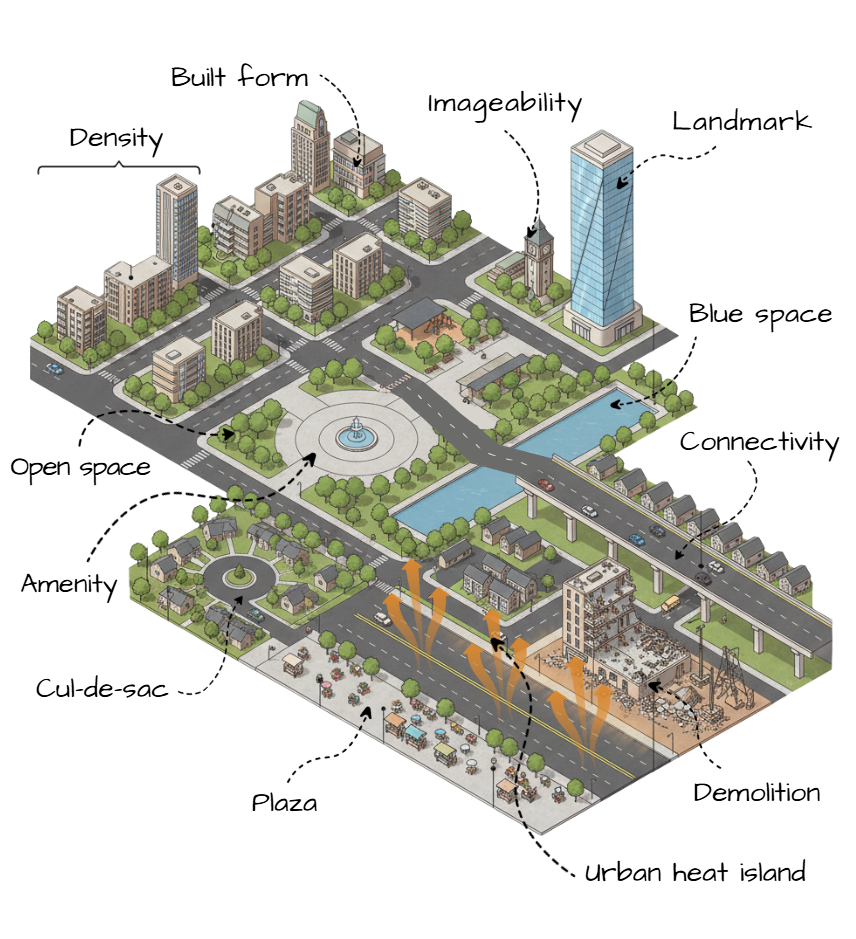
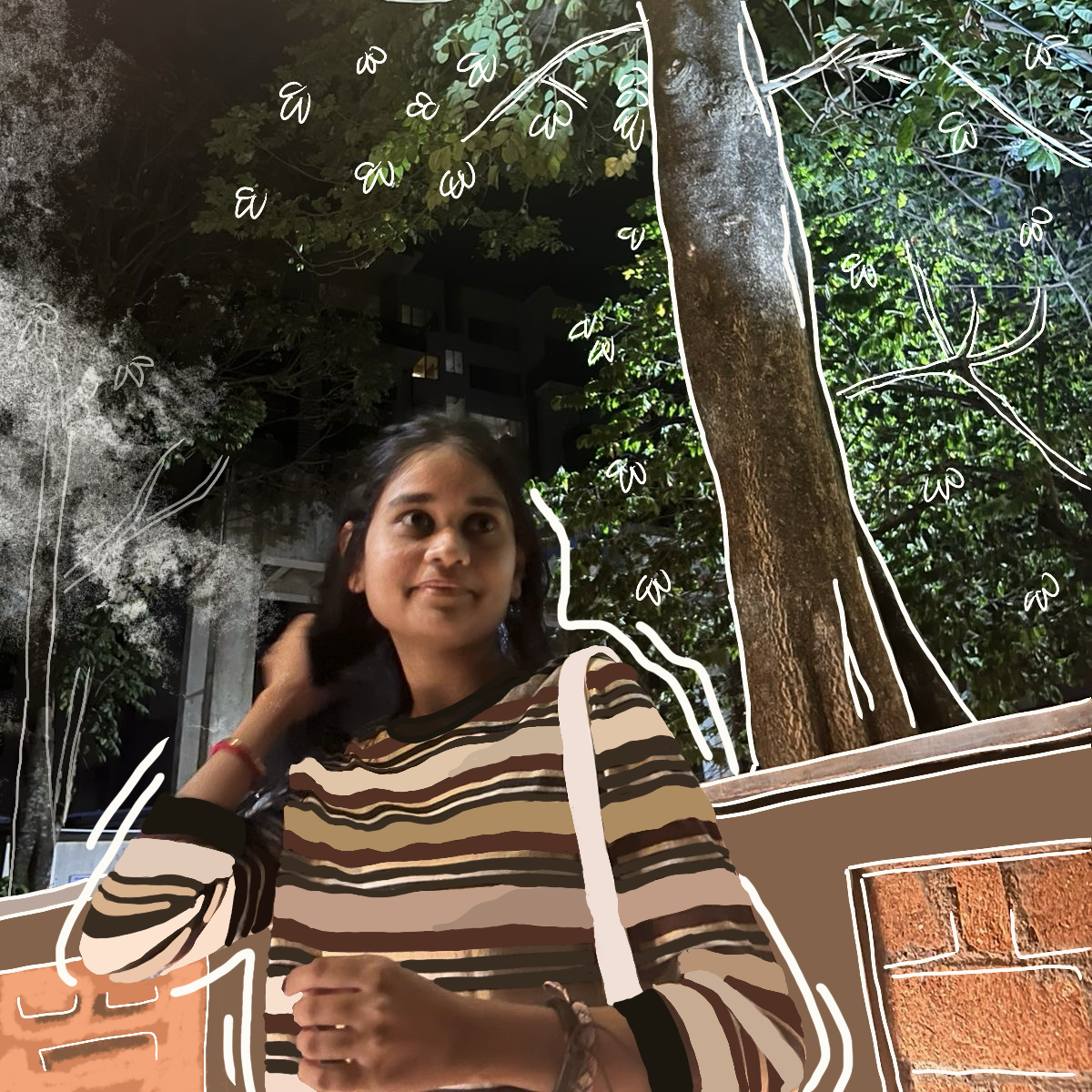
Image Credits: Shivani Chougula @Kaarwan
1. Amenity
In urban design, amenities refer to the facilities and services that improve daily life and comfort within a community — such as parks, schools, benches, lighting, and public restrooms. They directly influence livability, accessibility, and social interaction in cities.
2. Blue Space
Blue spaces are the water-based elements of an urban environment — rivers, lakes, canals, fountains, and waterfronts. These spaces not only enhance visual and ecological quality but also help regulate microclimate, encourage recreation, and promote mental well-being.
3. Built Form
Built form refers to the physical shape and structure of buildings and spaces within a city — including their height, massing, volume, and arrangement. It defines the urban fabric, influencing how streets are experienced and how density or openness is perceived.
4. Connectivity
Connectivity describes how well different parts of a city are linked together through streets, paths, or transit networks. High connectivity supports walkability, accessibility, and social interaction, while low connectivity can isolate communities or encourage car dependency.
5. Cul-de-sac
A cul-de-sac is a short, dead-end street with a single entry and exit point. While it reduces through traffic and creates quieter residential environments, overuse of cul-de-sacs can limit pedestrian movement and weaken overall street connectivity.
6. Density
Density in urban design measures the intensity of development — typically expressed as the number of people, dwellings, or built area per unit of land. Well-balanced density fosters vibrancy, supports public transport, and reduces sprawl, while overcrowding can strain infrastructure and open space.
7. Demolition
Demolition refers to the removal of existing buildings or structures, often to make way for redevelopment. While sometimes necessary for safety or renewal, unplanned demolition can erase heritage, disrupt communities, and waste embodied energy — making adaptive reuse a preferred alternative.
8. Imageability
Coined by urban planner Kevin Lynch, imageability is the quality of a city that makes it memorable and easily understood. High imageability comes from distinctive landmarks, paths, and edges that help people form a clear mental map of their surroundings.
9. Landmark
A landmark is a visually distinctive element — a tower, monument, or building — that stands out within the urban fabric. Landmarks act as reference points, aid orientation, and often symbolize collective identity or cultural memory within the city.
10. Open Space
Open space refers to any undeveloped or publicly accessible area — parks, plazas, playgrounds, or green corridors. These spaces provide breathing room in dense urban environments, offering recreation, social interaction, and ecological balance.
11. Plaza
A plaza is a hardscaped public open space — typically surrounded by buildings — designed for gathering, events, and social activity. Historically serving as civic centers, plazas remain vital for fostering community interaction and urban life.
12. Urban Heat Island
The urban heat island (UHI) effect occurs when built-up areas retain more heat than natural surroundings due to materials like concrete and asphalt. Strategies such as increasing vegetation, using reflective materials, and enhancing blue–green infrastructure help mitigate UHI impacts.
Final Thoughts:
Understanding urban design terminology equips architects and planners with the language to analyze, communicate, and improve city environments. Each term — from built form to blue space — reflects a way in which humans interact with urban systems. Together, these concepts help shape cities that are not only functional and efficient but also memorable, inclusive, and deeply connected to their natural context.