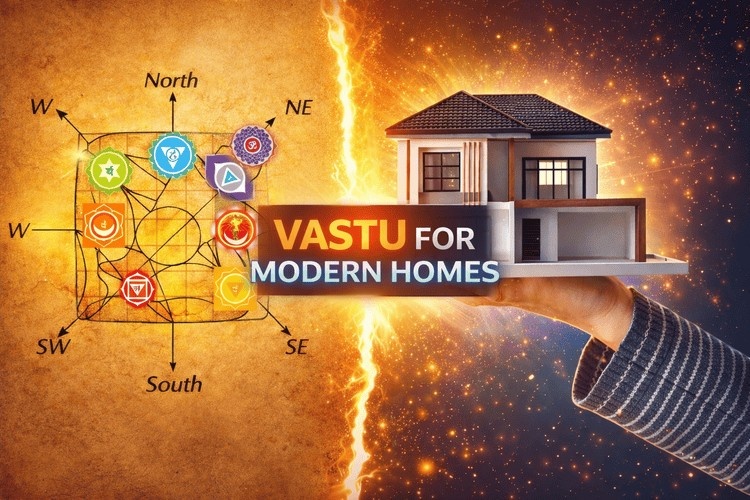
If you've ever heard someone reject a perfectly good apartment because it was "south-facing," or seen a family hesitate to renovate because of Vastu Shastra concerns, you're not alone. Vastu is one of those subjects that carries both deep cultural weight and a fair share of misunderstanding. For students and professionals in architecture and interior design, knowing what's fact and what's myth isn't just interesting, it's practically useful.
The truth is, Vastu for modern homes is far more flexible and logical than most people assume. At its core, it is a design philosophy rooted in nature, direction, light, and spatial balance. Once you strip away the misconceptions, what remains is a surprisingly thoughtful framework, one that translates well into contemporary living spaces.
What Is Vastu Shastra, Really?
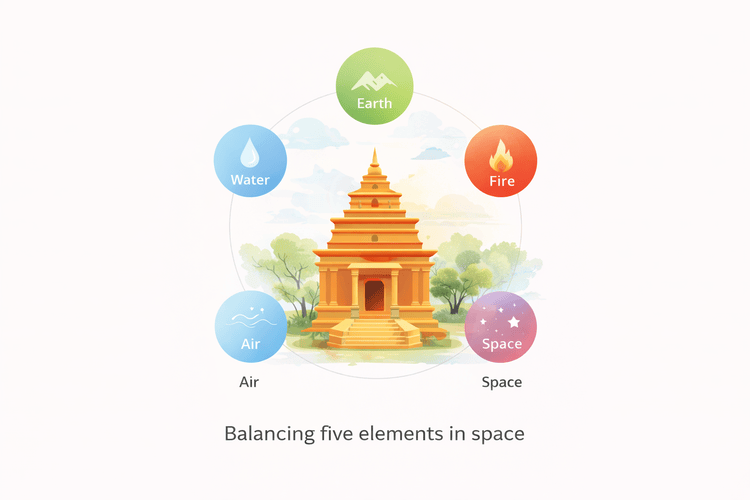
Vastu Shastra is an ancient Indian architectural science focused on harmonising the built environment with nature. It is built around balancing five elements, Earth, Water, Fire, Air, and Space, across specific directions in a space.
Think of it as environmental design logic with a centuries-old foundation. Many of its principles around light, ventilation, and spatial flow align closely with what modern sustainable architecture already practices today.
"Vastu Shastra is not about creating homes that gods will bless — it's about creating homes that people will thrive in." — Design principle, widely cited in Vastu literature
Common Vastu Myths
Before we get to what actually works, let's clear the air on some of the most common misconceptions floating around.
Myth 1: South-Facing Homes Are Always Inauspicious
This is the most widespread Vastu myth in India. Many homebuyers reject south-facing properties without reason. The truth is, the direction of the main door matters far more than the building's facing. A south-facing home with a well-placed entrance and good light flow can be entirely Vastu compliant.
Myth 2: Vastu Requires Major Structural Changes
Following Vastu principles doesn't mean demolishing walls or redesigning floor plans. Most imbalances, called doshas, can be corrected through simple Vastu remedies — repositioning furniture, using specific wall colours, placing mirrors, or adding indoor plants. This makes it especially practical for renters and apartment dwellers with limited structural control.
Myth 3: Vastu Is Religious, Not Scientific
Vastu and architecture have always shared the same core goal — creating spaces that support human well-being. The preference for north or east-facing entrances is simply about maximising natural morning light and improving airflow. That's environmental reasoning, not superstition, and it closely mirrors what modern sustainable design already practises.
Myth 4: Every Rule Must Be Followed Strictly
Vastu Shastra was never designed as a rigid, all-or-nothing checklist. Minor deviations from Vastu rules rarely produce any noticeable impact on a space. It is a guiding framework meant to be applied intelligently — adapted to context, site constraints, and the practical needs of the people living there.
The Real Rules That Still Matter
Now that the myths are out of the way, here are the Vastu principles that genuinely hold up in contemporary living and why they make sense even from a purely design standpoint.
Light, Ventilation and Orientation
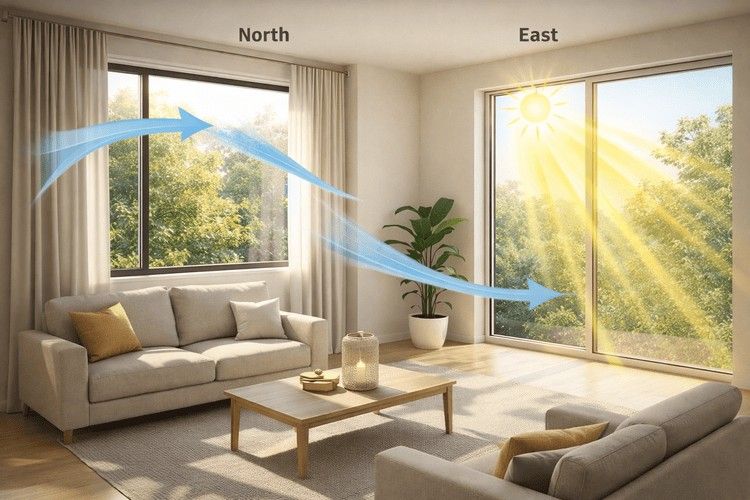
The most universally applicable Vastu rule is simple — let light and air move freely through the home. North and east-facing windows invite soft morning sunlight and consistent airflow. This principle sits at the heart of good Vastu-compliant design and aligns naturally with modern passive and sustainable architecture approaches.
The Five Elements and Spatial Balance
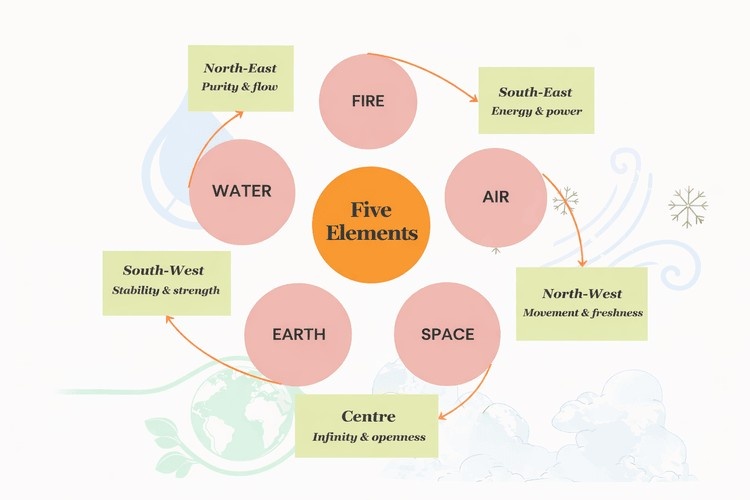
Image Source: OmSpiritualShop
In Vastu compliant design, every room connects to one of the five elements. The kitchen belongs in the southeast, the master bedroom in the southwest, and the bathrooms in the northwest. These aren't random — they reflect actual sunlight patterns and air movement, giving directional placement a clear, nature-backed design logic.
The Brahmasthan — The Heart of the Home
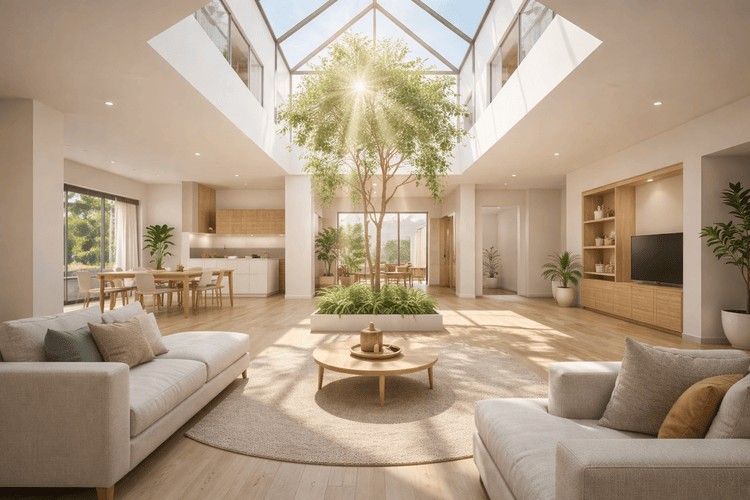
The centre of the home, called the Brahmasthan, should always remain open, uncluttered, and well-lit. Blocking it with heavy furniture or bulky partitions disrupts positive energy flow and, from a purely design standpoint, prevents natural light from reaching and distributing evenly across the rest of the living space.
Vastu in Action: A Real-World Example
Consider a Mumbai-based family that moved into a pre-built apartment with a northwest-facing kitchen and a bedroom closer to the northeast, not the "ideal" Vastu layout. Rather than opting for a costly renovation, they worked with an interior designer who applied simple Vastu remedies: warm earthy tones were added to the bedroom walls, the kitchen counter was reorganised so the cooking direction shifted slightly eastward, and indoor plants were placed in the north corner of the living room.
The family reported better sleep, a more focused work-from-home environment, and a noticeably calmer domestic atmosphere, none of which required breaking a single wall. This kind of approach, intelligent, adaptable, and non-invasive, is exactly how Vastu Shastra is meant to work in a modern context.
How Designers & Students Can Apply Vastu Today
For architecture and interior design students, Vastu and architecture don't need to exist in separate boxes. Here's a practical starting point:
Start with orientation, and analyse the site's directional alignment before placing rooms. Prioritise natural light in living and working areas. Keep central spaces open. Use colour intentionally based on directional Vastu logic. And when a layout has constraints, lean on Vastu remedies like mirrors, specific materials, and plants rather than treating the space as a lost cause.
Understanding Vastu Shastra as a design tool, not a set of rigid restrictions, opens up a genuinely interesting layer of spatial thinking. It's the kind of nuanced approach that separates good designers from great ones.
Want to deepen your knowledge of design principles like Vastu and their role in modern architecture? Explore Kaarwan's Advanced Vastu Design & Compliance Course — built for curious, skilled professionals like you.
Conclusion
Vastu Shastra for modern homes is far less intimidating once you separate the myths from the real, principle-based rules. It was never about blind compliance or turning away good homes because of direction alone. It was always about creating spaces where people genuinely feel comfortable, focused, and at ease, which, at the end of the day, is exactly what good design does.
For students and professionals, approaching Vastu principles with curiosity is the way forward. The core ideas of light, balance, and thoughtful directional placement are timeless and worth knowing well. Dive deeper with A Practical Guide to Vastu-Compliant Designs for Architects, which bridges theory with real-world design practice.
FAQs
1. Is Vastu Shastra applicable to modern apartments?
Yes. Vastu for modern homes works through furniture placement, colour choices, mirrors, and directional adjustments; no structural changes needed in most cases.
2. Are south-facing homes bad according to Vastu?
No. This is a Vastu myth. With correct entrance placement and room orientation, south-facing homes can be perfectly balanced and Vastu-compliant.
3. What are Vastu doshas, and how are they fixed?
Doshas are energy imbalances. Simple Vastu remedies like mirrors, earthy colours, salt bowls, or plant placement can correct them without any major renovation work.
4. What is the best direction for the main entrance?
North, northeast, or east-facing entrances are ideal. They invite natural light and support positive energy flow right from the entry point of the home.
5. Can Vastu work alongside modern interior design?
Absolutely. Many Vastu principles, natural light, open centres, and elemental balance already align with biophilic and sustainable design approaches used in contemporary spaces.
6. Is Vastu Shastra religious or scientific?
It has cultural roots, but Vastu and architecture share a logical, element-based foundation. Its core ideas around direction and light are grounded in environmental reasoning.
7. What is the Brahmasthan?
The central zone of a home. Vastu rules recommend keeping it open and well-lit to allow positive energy flow and natural light to move freely through the space.
8. Does Vastu guarantee prosperity?
No. Vastu Shastra creates a supportive, balanced environment. It is a design tool — not a replacement for effort, planning, or good financial decisions.
9. Which direction is ideal for the kitchen?
Southeast is ideal, as it aligns with the fire element. Northwest works as a practical alternative in Vastu-compliant design when southeast placement isn't possible.
10. How can design students apply Vastu in projects?
By studying Vastu principles alongside environmental design, applying orientation analysis, directional placement, and spatial balance in both academic briefs and real-world projects.