


In the year 2026, a lot of interesting incidents have taken place in the construction industry. Engineers are no longer restricted geographically; they once were, and for many, the career path is no longer tethered to the local job market. A huge part of this transition can be seen in the rise of the MEP BIM international jobs in India in 2026, where Indian engineers are increasingly preferred for projects across the Middle East, the UK, and Australia.
This is not just about globalisation in a general sense. It tells a greater story about how buildings are designed and delivered. As projects get more complex and coordination-centric, companies are no longer looking to hire engineers; they are hiring engineers who can work within BIM-specific environments.
Why BIM has changed the role of MEP engineers
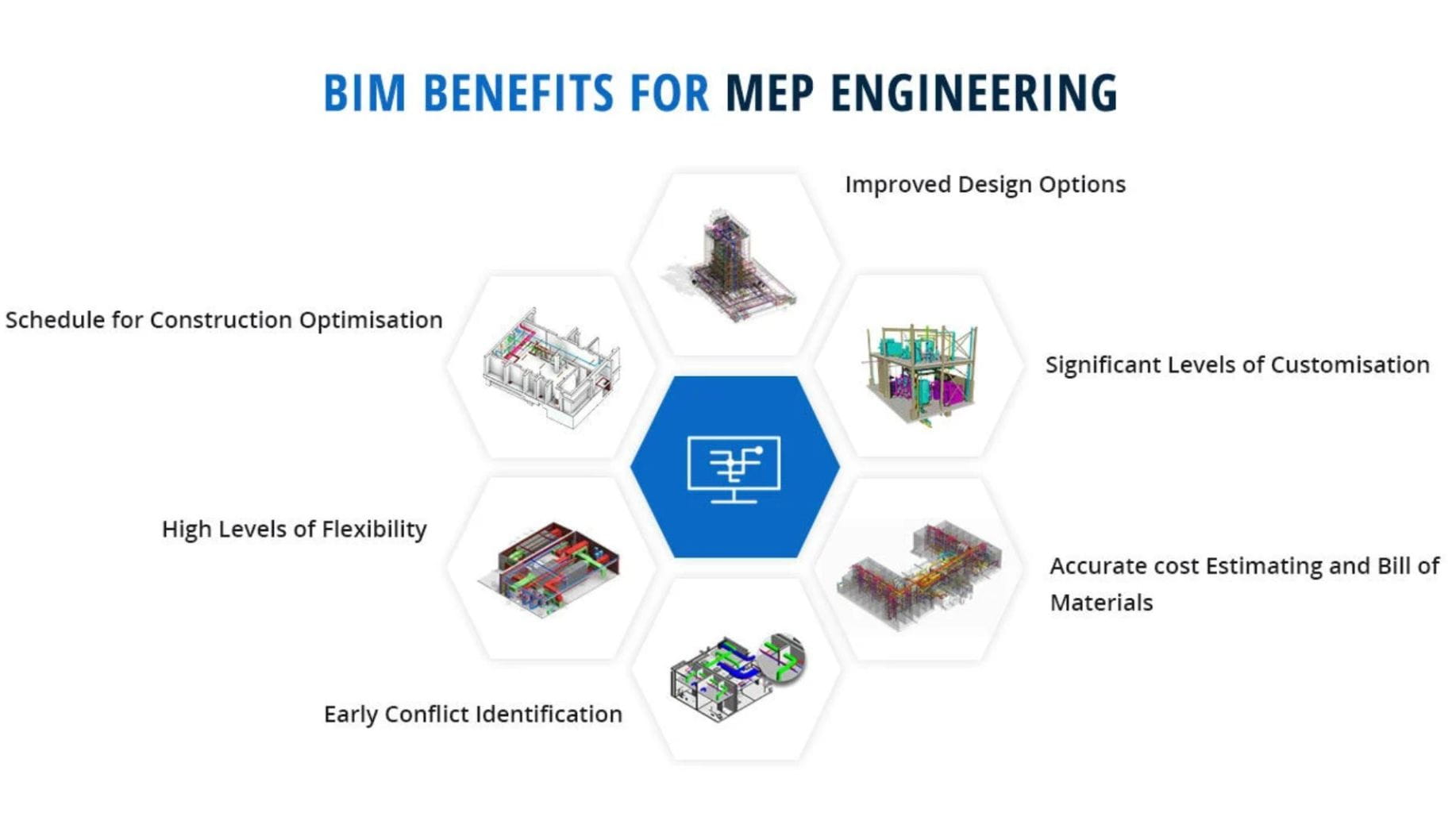
If you observe modern construction projects closely, MEP systems are no longer treated as secondary layers. They are pivotal to how building systems function, which leads to precision planning from the outset.
So, instead of depending on fragmenting 2D drawings, engineers now develop models using a shared digital framework where HVAC, electrical, and plumbing systems are coordinated in real time. This makes space for teams to track crashes early, optimise layouts and lessen costly errors during project execution.
The shift is gradual, but also crucial. Engineers are no longer just creating systems; they are participating in a collaborative system across geographies and disciplines. This is one of the reasons why MEP BIM international jobs in India in 2026 are progressing. Some companies require professionals who can step into this workflow without taking too long to adjust to the evolved working environment.
MEP BIM international jobs India 2026: Where are the real opportunities?
The requirement for a BIM-skilled MEP engineer doesn’t sprawl across the world. It is quite concentrated in regions where the construction is at large-scale, fast-paced, and extremely dependent on coordination.
Middle Eastern countries like the UAE and Saudi Arabia are leading the large-scale infrastructure and smart city developments. Projects like NEOM are not aggressive in scale but are intricate to handle, which leads to BIM becoming an essential part of project delivery. Hiring cycles here are much faster, and companies look for engineers who are well-versed with BIM workflows.
The UK comes up with a more structured approach where BIM is a mandate for public sector projects, which means engineers are believed to follow certain standards and a documentation process. It is not enough to just know the basics of these tools; understanding frameworks like ISO 19650 is equally important.
Australia, on the other hand, integrates a constant infrastructure growth with long-term planning. This system enables the use of BIM widely, not just in design processes, but also in lifecycle management and sustainability-first projects. For engineers eyeing up a MEP engineer role in the Gulf, UK or Australia pathway, it’s fair to assume that Australia is the best option to manifest long-term career growth.
What brings together all three regions is that they are not randomly hiring BIM talent; they are inherently dependent on it. With BIM becoming a mandatory requirement, without those skills, professionals might find it hard to find opportunities there.
Why BIM skills are replacing experience as a hiring filter
One of the massive shifts while hiring in today’s era is how engineers are being evaluated. Earlier, years of experience were the first filter, but now the focus has shifted towards capabilities and skillset.
Recruiters prioritise engineers who can make their way around tools like Revit MEP and Navisworks, alongside handling clash detection workflows and producing coordinated models. This indicates that a 2-3 year experienced engineer with a strong BIM exposure can often stand up against someone who has spent much longer working in traditional CAD systems.
For MEP roles, specifically, the ability to coordinate systems digitally has emerged as one of the most valuable skills to have, rather than just understanding them on a conceptual level. This is also one of the key reasons why MEP BIM international jobs in India in 2026 are opening up much faster for those who put in money on the right skills.
Salary expectations across countries
One of the biggest reasons why engineers look for international roles is compensation, and the gap is pretty hard to keep aside. While individual salaries differ based on experience and role, the comparison states a story.
| Region | Salary Range | Key Benefit |
| Middle East | ₹8–25 LPA (equivalent) | Tax-free income, high savings |
| UK | £30,000–£55,000 annually | Stable growth, structured roles |
| Australia | AUD 70,000–110,000 annually | Long-term growth, migration pathways |
The pattern here is quite uniform. Gulf roles lead to an increase in short-term savings due to tax advantages, while the UK and Australia bring a stronger and longer career progression to the table, along with stability.
To lay it out simply, the salary disparity between domestic and international roles has become one of the biggest motivations for engineers to upskill in BIM.
What skills and certifications do employers expect?
International employers are not just looking for software users; they are also looking for engineers who understand how projects can function within a BIM framework.
This includes being proficient in tools like Revit MEP, along with the skills to utilise Navisworks for clash detection and coordination. Beyond these tools, there is a strong emphasis on understanding concepts like Level of Development (LOD) and getting acquainted with standards such as ISO 19650.
Here’s a quick snapshot of what’s typically expected:
| Skill Area | What Employers are Looking For |
| Software | Navisworks, Revit MEP |
| Coordination | Clash detection, model coordination workflows |
| Standards | ISO 19650, LOD understanding |
| Documentation | Ability to create coordinated drawings |
| Workflow Knowledge | BIM execution plans, collaboration systems |
Certifications such as Autodesk credentials can make your profile much stronger, but what really matters is whether you can make use of these skills in real project environments.
Why Indian engineers are in a strong position right now
Indian MEP engineers already come with a strong base in engineering principles, along with the ability to adapt with ease within varying project environments. This makes them an indispensable asset in global project systems.
However, the real advantage shows up when BIM is added to that base. Without it, even experienced professionals can find it tricky to meet international standards. With it, however, the gap closes quickly.
For engineers focusing on MEP BIM international jobs in India in 2026, this combination creates a unique opportunity. It enables them to keep themselves intact in markets where the demand is high, but the job pool for skilled candidates is limited.
The role of structured training in bridging the gap
Getting to know the importance of BIM is something else, and learning it in a way that aligns with the industry expectations is another.
This is where structured programs like the ones offered by Kaarwan become relevant. Instead of focusing solely on software, these programs lay emphasis on real-world workflows, coordination processes, and international standards. This also allows engineers to be trained in thinking about projects as a whole and not just tools.
For anyone who’s planning to be an MEP engineer in the Gulf, UK, or Australia, this kind of training can lead to a smoother transition. In turn, it bridges the gap between theoretical knowledge and practical application, which is exactly what employers are looking for right now.
Why the opportunity is bigger than it seems
There is a common misconception that international roles are harder to lock in, but in many cases, the opposite is true. While the number of applicants may be high, the number of candidates who meet BIM and workflow requirements is still comparatively lower.
Many engineers either underestimate their potential or delay upskilling, which then creates a gap in the market. Those who invest in the right skills can sometimes find that MEP BIM in international jobs in India 2026 are more accessible than one can anticipate.
Final thoughts
The demand for BIM-skilled MEP engineers is not a trend that’s going to vanish into thin air. It also reflects a fundamental change in how the construction industry operates on a global scale. Projects are getting more intricate, timelines are tighter, and coordination is more crucial than ever before.
For Indian engineers, this shift reflects a clear opportunity, and with the right skills, it is now viable to move beyond local roles and build a career across global markets.
The path towards MEP BIM international jobs in India in 2026 is not just about switching your field; it’s about upgrading how you work within it. And for those who make that transition, the opportunities are not just wider, they are significantly more rewarding.
So here’s where you can begin…
FAQs
1. What is the MEP BIM career path in India?
It typically starts from fresher roles (₹4–6 LPA) and progresses to BIM Modeler, Coordinator, and BIM Manager roles with salaries up to ₹25 LPA+.
2. How long does it take to become a BIM Manager?
Usually 6–8 years, but faster if you learn BIM early and gain real project experience.
3. What skills are needed for MEP BIM roles?
Revit MEP, Navisworks, clash detection, coordination workflows, and basic knowledge of ISO standards.
4. What is BIM manager salary growth in India?
Salaries can grow from ₹4–6 LPA at entry level to ₹25 LPA+ at the BIM Manager level.
5. Is BIM better than traditional MEP roles?
Yes, BIM offers faster growth, better salaries, and more global opportunities.
6. Can freshers start directly in BIM?
Yes, with the right training, freshers can directly enter BIM roles.
7. How do I switch from MEP to BIM?
Learn BIM tools and workflows through structured training and project-based practice.
8. Is BIM in demand in India in 2026?
Yes, demand is growing rapidly across infrastructure and global projects.
9. Do I need certifications for BIM jobs?
Certifications help, but practical skills and project experience matter more to employers.
10. Which countries hire Indian MEP BIM engineers?
The Middle East, UK, and Australia are the top regions hiring BIM-skilled MEP engineers.




.png)