

-(1).jpeg)
Finding joy in your job can be tough, and it’s not just about luck. It’s really about understanding what you enjoy and where your strengths lie. In the world of architecture, many people only hear about a few common roles and might miss out on other exciting options like writing, technology, urban design, or creating amazing interiors. When you discover a role that matches how you think and work, everything changes. You’ll feel less stuck, gain confidence, and start thriving instead of just getting by.
Instead of asking, “Am I good enough?” try asking, “Where can I truly be myself?”
You don’t have to change careers entirely; you just need to find your perfect fit within your current path. With the right skills, guidance, or a new perspective, you can shift into a role that feels just right for you. And with time, you’ll only get better at it!
Kaarwan has launched a Skilltest to help you explore what it looks like entering your suitable niche. Here are some of the career paths that might appear, as per the answers you fill in the quiz. :-
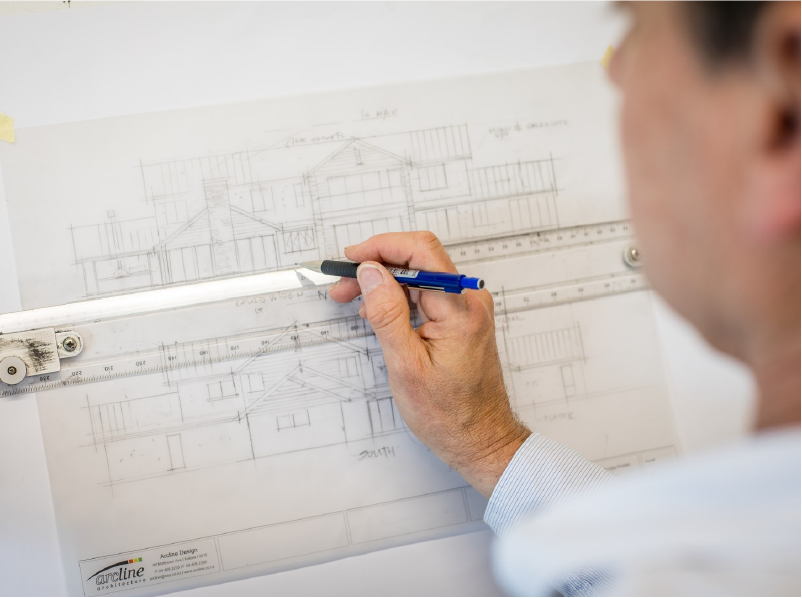
Image Source: Arcline Architecture
Architectural Designer
Most of us begin here. Architectural designers are the ones who conceptualise buildings, from the layout of a small house to the form of a public museum. Their focus is on planning spaces, developing facades, zoning circulation, and creating human-centric forms. If you enjoy making sense of space, love sketching ideas, and often imagine alternate ways of designing what you see around, this might be your place.
Early on, you may intern at small local studios or ambitious firms like Sanjay Puri Architects or Studio Ants, which love design experimentation. With experience, you could lead design teams at commercial firms like CP Kukreja or Morphogenesis. Many senior designers eventually take on part-time teaching or run studios of their own, blending creativity with mentoring.

Image Source: The New School
Architectural Writer
Architecture needs thinkers who can write. Architectural writers translate complex design ideas into words — whether through articles, books, research reports, or competition narratives. They work with design studios, publishing platforms, or as independent consultants who document design work with clarity and depth.
You might begin by writing blogs or captions for studios like S+PS Architects or contribute to platforms like ArchitectureLive! or Rethinking the Future. With time, you can curate exhibitions, assist senior architects with books, or even become a design editor at major journals. Many combine this role with academic involvement, helping young designers frame their thoughts better.
-(2)_1752744505453.png)
Not sure which path is “right” for you? Take a fun career-personality Skill Test—a quick, reflective tool designed to help you discover where your strengths align.
The goal?To find where your curiosity leads and to help you make confident, informed choices before making big decisions. Here's a bingeable blog series that directs your reflection & adds to your research journey :🔹 Blog 1: The Secret to Loving What You Do? — Choosing a Design Role That Fits You 🔹 Blog 2: Top Creative Career Options After Studying Architecture in 2025 🔹 Blog 3: What to Do After B.Arch? Top Technical Master’s Paths in Architecture 2025 🔹 Blog 4: I Took the Skill Test — Now What? 🔹 Blog 5: Career Pathways in Architecture — Roles, Experience, Salaries & Skills 🔹 Blog 6: How to Upskill Without Burning Out? (our favourite - for real guidance and cute visuals in bonus ;)
.png)
Image Source: goodreturns
UI/UX Designer
For architects who love systems, interactions, and simplicity — UI/UX is a natural transition. UI/UX designers create digital experiences: apps for real estate, dashboards for site review, or VR walkthrough interfaces. You’ll work on wireframes, test user journeys, and design interfaces people actually enjoy using.
Many transition from architecture to UX after developing an eye for layout and detail. Early roles can be found in product startups like Trezi or Snaptrude. With time, you can move into leading design teams in platforms like Urban Company, or work with prop-tech firms building digital tools for the built environment. Some architects also consult on experience design for museums and public installations.
Explore budget-friendly previews, short masterclasses on Modelling & Visualisation tools, or our all-in-one Interior Design course. Feel free to book a free counselling call to discover what fits you!
.png)
Image Source: Urbanist Architecture
BIM Architect
If you're the kind of person who likes clarity, coordination, and technology, the role of a BIM Architect could suit you well. BIM (Building Information Modelling) architects don’t just draw — they manage data. They build intelligent 3D models, collaborate across disciplines, and ensure that clashes between plumbing, structure, or electrical lines are detected early.
You might begin as a BIM modeler in a consultancy like L&T, Tata Consulting Engineers, or TechnoStruct. With 3–5 years of experience, you could become a BIM Coordinator or BIM Manager, leading entire project workflows. This is a growing field, with high demand across global AEC firms, especially if you’re confident with Revit, Navisworks, and project standards.
.png)
Image Source: Parametric Archtecture
Computational Designer
This is where design meets algorithms. Computational designers use tools like Grasshopper or Dynamo to develop parametric models — think responsive facades, optimised layouts, or generative forms. It’s a niche role, but one that's highly sought after in cutting-edge design practices.
Firms like Zaha Hadid Architects, Studio Symbiosis, and Rat[LAB] in India explore this space deeply. Computational designers also consult on performance optimisation and often transition into R&D roles. If you love problem-solving, maths, and coding — and don’t mind long experimentation hours — this can be deeply fulfilling.
.png)
Image Source: New Orleans
Urban Designer
Urban designers see the city as their canvas. They work at the scale of neighbourhoods, masterplans, and public spaces — designing street sections, transport nodes, waterfronts, or even regional development plans. It’s a deeply collaborative and policy-driven space.
You might start out with firms like CRDF CEPT, HCP, or government bodies working on Smart Cities. Strong communication and visualisation skills are key. Later in your career, you might contribute to public policy, lead government tenders, or work with think tanks like NIUA. Many pursue a Master’s in Urban Design from CEPT or SPA to deepen their impact.
.png)
Image Source: Chron
Interior Designer
If you have a natural eye for aesthetics, materials, light, and user experience, interior design can be your niche. Interior designers work on everything from furniture layout and wall finishes to lighting and styling for both residential and commercial spaces.
Early internships might be at studios like Studio Bipolar, FADD Studio, or Design Cafe. Visualisation tools like SketchUp, Enscape and Photoshop will serve you well. Senior designers often freelance or start their own studios, while some lead interior departments in multidisciplinary firms.
Explore budget-friendly previews, short masterclasses on Modelling & Visualisation tools, or our all-in-one Interior Design course. Feel free to book a free counselling call to discover what fits you!
.png)
Image Source: PSD Architects and Builders
Landscape Architect
Landscape architects design the in-between — gardens, parks, public plazas, campuses, and natural environments. This role blends ecology, sustainability, and spatial design. You’ll often work with civil engineers and environmental consultants to create spaces that are more breathable and biodiverse. While BIM is helping several small landscape firms, looking to scale in their niche, to work on larger and quality projects, like township societies, etc, where more than one stakeholder is involved. As the workflow allows a small office better way of coordination, and cuts down time taken on revisions in 2D drawings and SketchUp models. Whatever niche you choose, if one if well versed with global / national workflow, taking up prominent projects becomes easy for the teams.
Firms like Roha, Design Cell, Oikos, and Shaheer Associates are known for landscape work in India. You may begin by working on planting plans and grading drawings. Many go on to lead sustainability and ecology projects, or work closely with urban planners to rethink open space networks in cities.
Final Thoughts
Somewhere between the juries, the deadlines, and the job-hopping, a quiet pattern begins to show: We stop exploring. We stop asking what we enjoy, and start asking only what we can finish in time.
Architecture is demanding, and it often leaves little space to experiment. So, it’s no surprise that many young professionals find themselves sticking to the parts they know: planning layouts, designing facades, and managing checklists. And yet, beneath the surface, there’s often a subtle restlessness. Is this all I’m meant to do? What if I could find a space in the industry that actually fits me, not just the role I was assigned?
That’s where Karawan’s new Skill Test comes in. It’s designed to help you pause for a moment, reflect on what comes naturally to you, and explore roles that align with both your instincts and today’s opportunities.
No pressure. Just perspective.
Thus Kaarwan is bringing a series of articles that will nudge you towards greater clarity, in aspects of your creative career path:-
🔹 Blog 1: The Secret to Loving What You Do? — Choosing a Design Role That Fits You
🔹 Blog 2: Top Creative Career Options After Studying Architecture in 2025
🔹 Blog 3: What to Do After B.Arch? Top Technical Master’s Paths in Architecture 2025
🔹 Blog 4: I Took the Skill Test — Now What?
🔹 Blog 5: Career Pathways in Architecture — Roles, Experience, Salaries & Skills
🔹 Blog 6: How to Upskill Without Burning Out? (our favourite - for real guidance and cute visuals in bonus ;)


.png)