Landscape Design Do’s and Don’ts:
A well-designed landscape doesn’t just look beautiful; it serves as a cohesive extension of architecture and enhances how we experience outdoor space. Yet, many design attempts go wrong due to a lack of deliberate thought in organizing plantings, elevation composition, and spatial planning. A haphazard approach leads to visual clutter, unbalanced layouts, and poor spatial function. In this guide, we will highlight three essential scenarios where designers often go wrong and demonstrate the correct techniques that elevate landscape design from ordinary to extraordinary.
1. Pairing and Grouping of Plants:
A common mistake in landscape design is the random placement of plants, which results in a scattered and cluttered appearance. Without careful consideration of plant characteristics and arrangement, the landscape feels disjointed and lacks visual flow or unity. Such designs fail to engage the eye in a meaningful way and instead leave the space feeling chaotic, especially as plants grow and crowd each other.
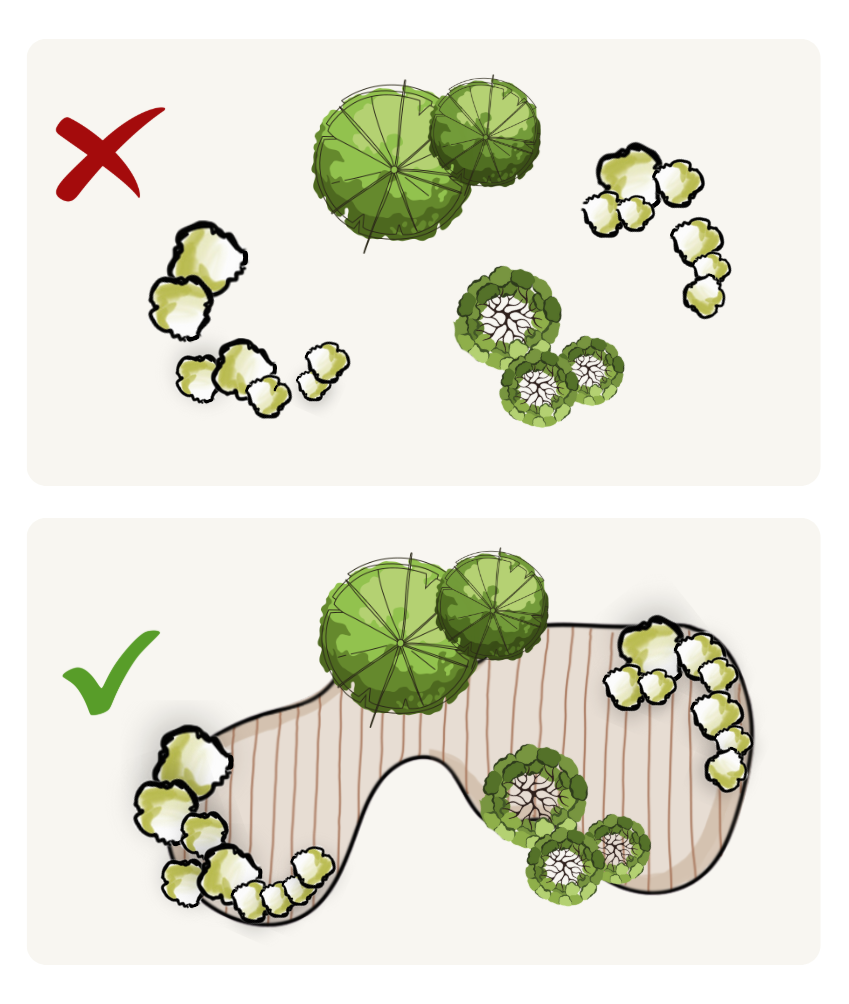
Image Credits: Shivani Chougula @Kaarwan
The correct approach involves creating intentional plant groupings based on size, texture, color, and ecological compatibility. The goal is to anchor plants using a defined base element like a mound, raised bed, or deck, which gives structure and visual balance to the composition. Grouping plants in odd numbers (typically three or five) enhances rhythm and avoids symmetry that feels too rigid. Complementary textures—such as pairing soft, fine-leaved grasses with bold broad-leaved shrubs—add depth and visual interest without overwhelming the viewer. Plants selected for a grouping should have similar light and water needs to ensure healthy growth over time, and seasonal variation should be considered to keep the landscape vibrant year-round. A cohesive grouping tells a story rather than feeling like a collection of random elements.
2. Layering of Plants:
Improper vertical layering of vegetation is another common pitfall. When plants are arranged without attention to their heights and growth density, it leads to awkward gaps, blocked views, and a lack of hierarchy. This not only impacts the aesthetic but also affects airflow and plant health, with taller plants overshadowing smaller ones indefinitely.
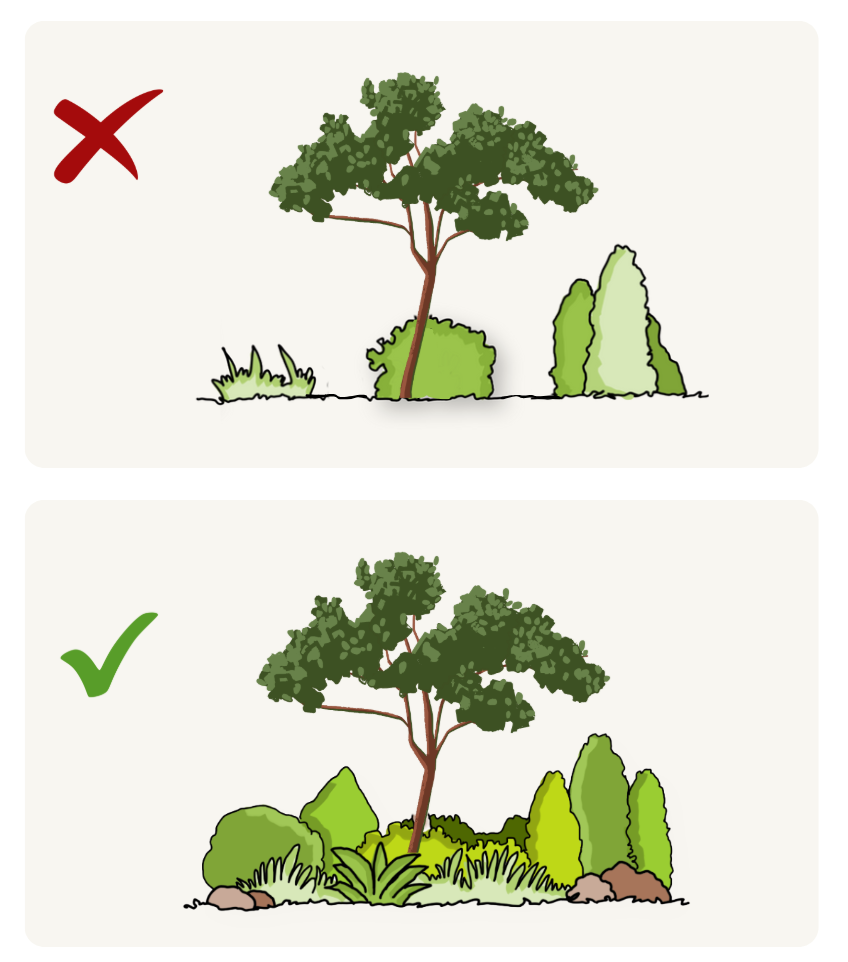
Image Credits: Shivani Chougula @Kaarwan
An effective landscape creates clear vertical layering that respects plant height and density. Begin with the tallest layer—trees or large shrubs—forming the background structure and providing shade and scale. Next, medium-sized shrubs and perennials create the middle layer, adding seasonal color and textural variation. The foreground layer consists of low-growing groundcovers, small flowering plants, or ornamental grasses that visually anchor the composition and soften edges. The key principle is ensuring each layer is visible and harmonious, without crowding or blocking its neighbors. This approach generates a natural flow and hierarchy, adding depth and richness to the landscape. Additionally, grouping plants with complementary growth habits (like dense shrubs next to feathery grasses) creates a balanced visual rhythm that feels intentional and dynamic.
3. Planning Layouts:
A major misstep in landscape design is failing to plan spatial layouts, which often results in a scattered, disorganized appearance. Simply placing elements without a focal point or spatial logic leads to a layout that lacks clarity, purpose, and rhythm, making maintenance complicated and the space uninviting.
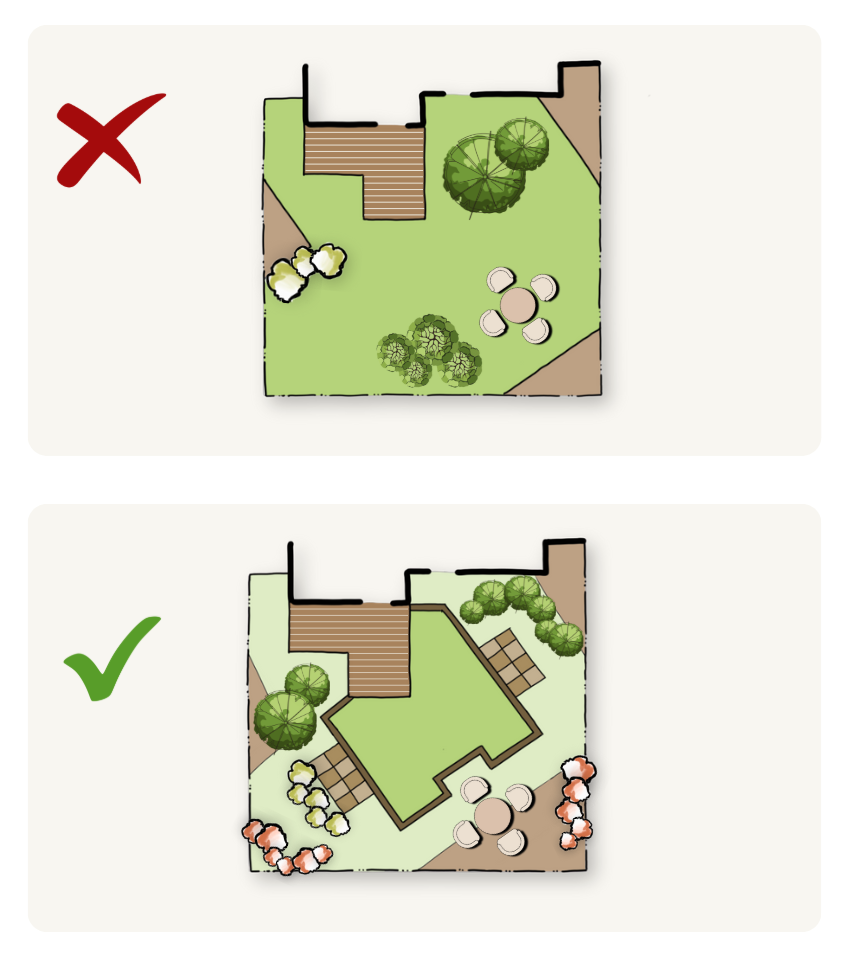
Image Credits: Shivani Chougula @Kaarwan
A thoughtfully planned layout begins by establishing a dominant focal point, such as a central lawn, sculpture, or seating area, which organizes surrounding elements in a coherent manner. The central lawn acts as a visual and functional hub, guiding pathways, seating arrangements, and planting beds around it. Pathways should flow naturally toward this focal point, allowing intuitive movement through the space. Planting beds are strategically placed to frame views or provide seasonal highlights, rather than filling space arbitrarily. Careful spacing ensures that each plant has room to grow while maintaining balance and proportionality. Furthermore, hardscape elements such as decks or stepping stones help structure the layout by providing visual and physical anchors, breaking up open green areas, and integrating functional zones seamlessly with the softscape. The result is a balanced, organized landscape that invites both exploration and relaxation.
Final Thoughts:
Successful landscape design hinges on thoughtful decisions, not random choices. Avoiding mistakes like scattered plant placement, poorly considered elevation layering, and unplanned layouts leads to more balanced, functional, and visually appealing spaces. Instead, aim to create intentional plant groupings, harmonious vertical layers, and a spatially organized layout that provides hierarchy, rhythm, and a clear focal point. These strategies will help your landscape flourish as a cohesive, well-designed extension of architectural space, inviting enjoyment and sustainability for years to come.